


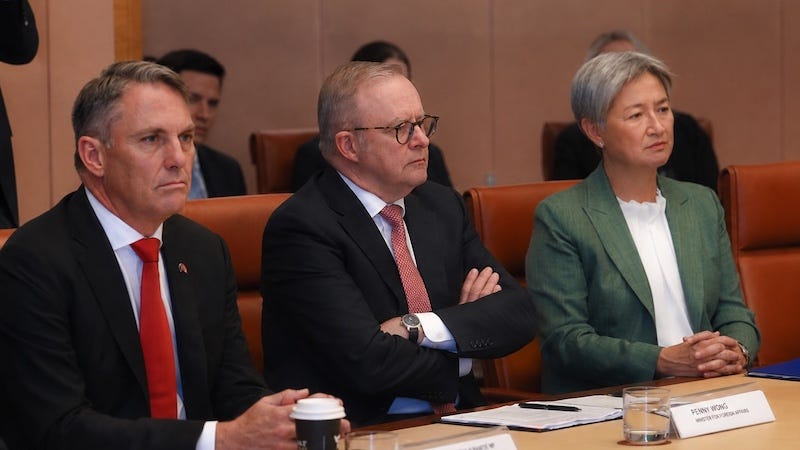
This week’s briefing outlines the big issues to look out for: the growing pressure on the Albanese government over Gaza; questions about the future of the teal independents; the AUKUS debacle continues; and the ongoing credibility crisis facing the National Anti-Corruption Commission.
The slow-burn war Albanese and Wong don’t want to talk about
The Gaza conflict is becoming a more politically difficult issue for the Albanese government, not because it’s difficult to understand – everyone else in the world can see what’s going on – but because it’s an issue that is becoming too difficult to keep ignoring.
While the Prime Minister, Anthony Albanese, and Foreign Minister Senator Penny Wong continue to carefully word their diplomatic messaging so they don’t offend the government of Israel and their Zionist supporters here in Australia, there have been allegations from the film-maker and activist, Juliet Lamont – who was illegally detained by Israel for attempting to bring aid to Gaza as part of the Global Sumud Flotilla – of psychosexual abuse, torture and rape by members of the Israel Defense Forces.
As if it wasn’t bad enough for the Australian government to constantly ignore all the war crimes, collective punishment and the humanitarian catastrophe inflicted by Israel upon the people in Gaza, it’s obvious that even when the punishment is inflicted upon Australian citizens, the government will continue with the self-imposed blind spot when it comes to Israel.
In the case of Zomi Frankcom, the Australia aid worker who was killed in the targeted attack by the IDF in 2024, Senator Wong expressed some outrage but then went on to say that it’s “hard to judge from afar”, which surely will the included on the Senator’s political epitaph, whenever that’s written up. Thoughts and prayers were also offered at the time by the Senator, that mealy-mouthed response that’s so meaningless that it’s almost offensive – up there with sympathy trolling of I’m sorry you feel that way – that’s offered at those times when there are no witnesses to explain what really happened.
But thoughts and prayers won’t be enough this time around. Lamont’s evidence is a bit more problematic for the government. She’s alive and well – as well as can be after such an ordeal – and well enough to give her accounts of the torture, sexual abuse and rape perpetrated by the IDF. There’s also 10 other Australian citizens who were on the flotilla, who have provided their documentation of the abuse and their allegations to the International Criminal Court, a far more reliable arbiter of these types of crimes than the Australian government will ever be.
The message for many years within the Australian community has been that women have to be believed when it comes to sexual violence but, obviously, there are many asterisks, exclusions, subclauses and other assorted fine print: women are not believed when the actions of sexual violence and rape are committed by the Israel Defense Forces; the likes of Albanese and Wong will make sure of that.
Are the teals independent or a party in disguise?
The discussion about the teal independents forming a political party has been floating around ever since so many of them were elected at the 2022 federal election – and many of them still remain – but it’s becoming more pertinent with the increasingly fragmented political landscape, especially on the centre-right side of politics. In reality, it brings up a question that critics have been asking since the teals first emerged: how independent are the independents? And if they form a party, does it really matter anyway?
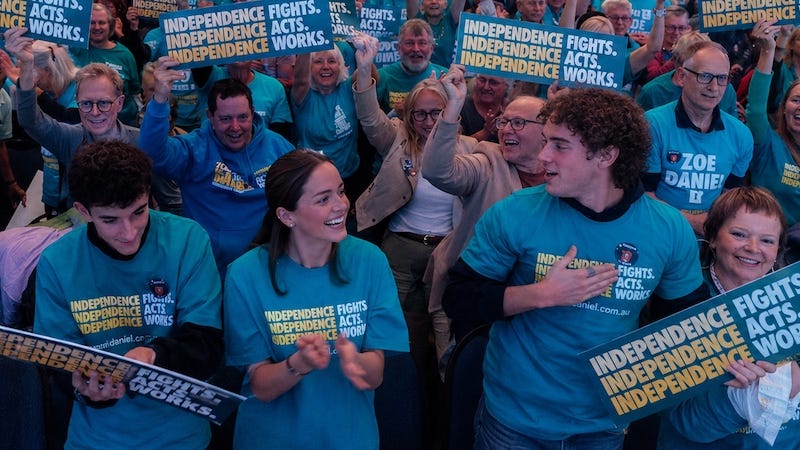
The teals – like all other independents – benefit from being able to campaign as the representative of the local community, free from the talking-point discipline and the factions that dominate the major parties. But in the case of the teals, they’ve been able to benefit from a party-like structure, by receiving support primarily from Climate 200, and shared fundraising networks, similar policy ideals, especially on climate, and a similar political brand, although there have been several independents regarded as “teal” who haven’t used the colour teal at all.
The suggestion that they may now formalise those arrangements into a party structure raises the possibility that the distinction was never quite as clear as it was once claimed. But, then again, how much will the voters in these electorates be concerned about whether the successful member for Warringah, Zali Steggall, arrives at the next federal election campaign as the teal independent candidate, or as a member of the Teal Party? Will the idea of the “small-t Teal” become a part of the political vernacular, to replace the “small-l Liberal”?
Former prime minister Malcolm Turnbull – who we can easily imagine either handing out leaflets for a prospective Teal Party or, indeed, as a candidate – sees the formation of a party as an opportunity for the teals. With the major parties suffering declining primary votes and public trust continuing to erode – as it has been for many years – there is room for a new force to occupy the political centre ground, to counter the actions of One Nation on the centre-right. Yet creating a party could also destroy much of the teal movement’s unique selling point. Voters who backed local independents in elections past, may not sign up again if they see the teals as just another national political machine. And maybe they just won’t care.
The irony in this case is that the teals emerged as a reaction against the many failures of party politics and the two-party duopoly. If they now become a party themselves, they risk inheriting exactly the problems they once condemned: centralised decision-making, strict “talking points” messaging and discipline, factional disputes and the inevitable gap between grassroots rhetoric and political reality. And wouldn’t that be as boring as the proverbial batshit.
AUKUS: Pay more, get less
The latest adjustment to the AUKUS submarine program has been presented Defence Minister Richard Marles as a “sensible simplification” of an “extraordinarily complex defence project”. But we just have to have a good laugh here: whenever Marles crosses paths with the US Secretary of War, Pete Hegseth – as he did last week at the annual Shangri-La Dialogue in Singapore – he always returns with ridiculous gifts that we have to pay for. Last year, Hegseth demanded a lift of defence spending to 3.5 per cent of GDP; this year, Australia quietly lifted defence spending from 2.3 per cent to 3.0 per cent of GDP, with more promised spending coming soon.
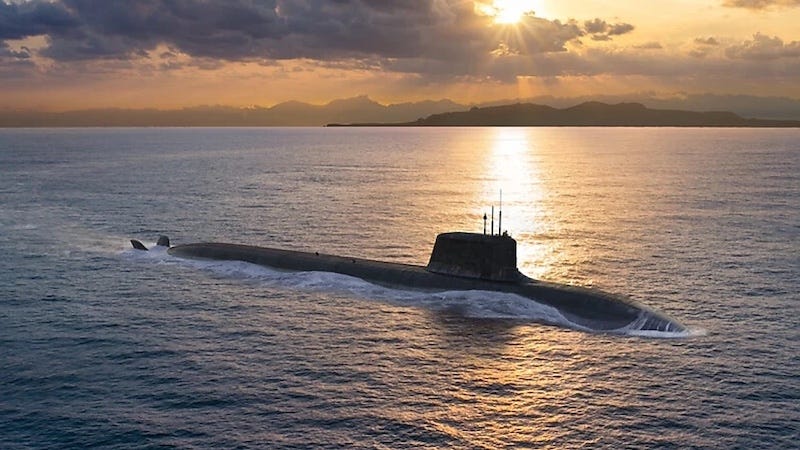
This year, Marles has announced that Australia will now purchase three second-hand Virginia-class submarines from the United States rather than the promised newly built vessels. The argument put forward by Marles seems straightforward: fewer submarine classes mean less costs, less complexity and a more manageable transition.
But beneath the bureaucratic language and talking points is the reality that we’re not being told about. After years of announcements, reviews, summits and promises of a “sovereign submarine capability”, Australia appears to be moving closer to becoming a long-term customer of American military hardware – and from the used car junk-yard section in front of the scrap metal division – rather than an independent defence power in its own right.
Take your pick: A Bug’s Life, Seven Samurai, The Magnificent Seven, or the even the Three Amigos!. In our version of the story, Australia is the endless servant of the United States, sending off Australian taxpayers money to Washington, and getting scraps in return. But no-one comes to the rescue: we’re stuck in this endless subservience until at least 2070. And by that stage, we’ll be so embedded in the military architecture of a diminishing American power, that it will be too late to change anything.
Thank you Scott Morrison for signing Australia up to this calamity. And thank you Anthony Albanese, for continuing with this debacle. Future generations will look back and be ashamed of your actions.
The corruption of the anti-corruption commission
The resignation of Commissioner Paul Brereton is a reminder of how quickly one of Australia’s most anticipated integrity bodies has fallen by the wayside and moved so far away from public expectations.
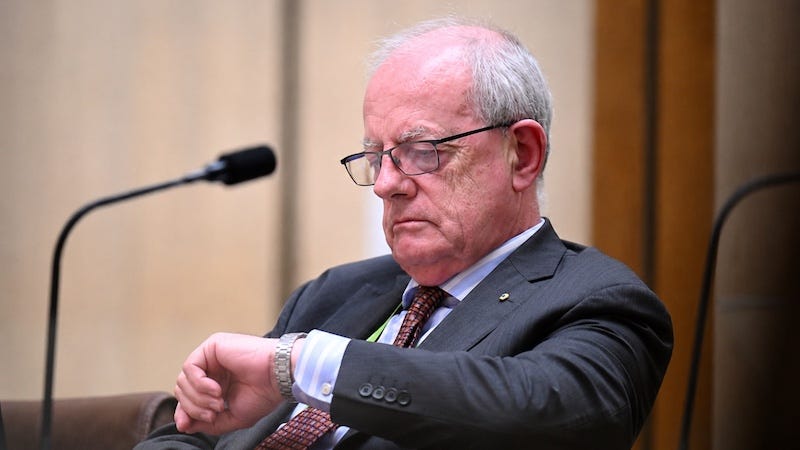
When the National Anti-Corruption Commission was established in 2023 – just three years ago – it was sold by the Albanese government as a powerful watchdog that would restore trust in government after the many years of scandals, questionable procurement decisions and controversies, especially those committed by the Morrison government. Instead, many Australians now see it as an organisation that’s more comfortable managing expectations than investigating actual corruption.
The decision not to pursue any referrals that came out of the Robodebt Royal Commission was perhaps a turning point for NACC. The most egregious cases of deliberate departmental mismanagement and overriding the law in the history of Australia politics was detected within this Commission, but no-one was held accountable for a scheme which ultimately killed over 2,000 people, and cost the Australian taxpayers $2.4 billion. Not one person.
It’s a complete failure, and if an anti-corruption commission can’t pick such low-hanging fruit – and fail to determine such obvious corruption, that was evident to everyone else except for the Commission itself – then there’s not much reason for that commission to exist. Best to start again.


That number is based of figures released by the Department of Human Services in 2019, and was widely reported by the media at the time. Here’s one sample: https://www.thesaturdaypaper.com.au/2019/03/02/robo-debts-potential-toll/15514452007563. Also this information: https://www.abc.net.au/triplej/programs/hack/2030-people-have-died-after-receiving-centrelink-robodebt-notice/10821272 - Albanese also made reference to that number. There is dispute about the figure, but targeting vunerable people with multiple health issues wouldn't have helped.
I am gobsmacked, that ridiculous English word that somehow manages to capture a feeling of total and utter bewilderment at a situation that defies any reasonable understanding whatsoever, by the Senators response to what is going on in Gaza. The failure to call out abject brutality by Israel (that others have described as genocide and ethnic cleansing and war crimes), even when Australian citizens are victims, is itself I think a war crime. This Zionist regime in Israel must be condemned by Australia. It is an ugly and brutal regime and she is facilitating it.