


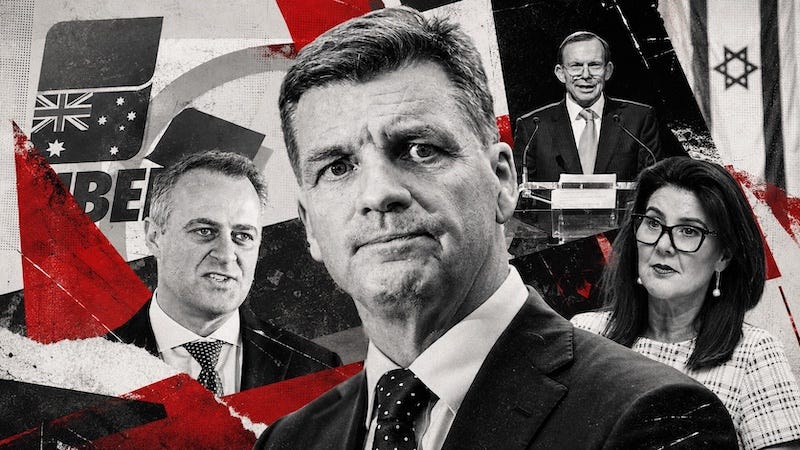
The Liberal Party is no longer going through a short-term and cyclical downturn – it’s facing a continuing crisis of political identity, it’s lacking organisation skills which makes it more susceptible to extremist interest groups and, most importantly, its relevance is fading within the electorate. Despite losing two consecutive federal elections – badly – it’s still unable to decide whether a turnaround in its electoral fortunes will need moving closer to the centre of mainstream voters, or going further into the right-wing ideological pipe hole that has driven them away.
Recent opinion polling has the Coalition’s primary vote hovering between 17–24 per cent, with Newspoll currently showing 18 per cent, after a record low of 17 per cent in the previous month. This compares with its 41 per cent primary vote recorded at the 2019 federal election, just over seven years ago.
If a political party doesn’t offer anything meaningful to the public, it’s obvious that the public will start looking somewhere else and, even on this most basic level, the party hasn’t managed to work this out yet. One Nation has replaced the Coalition within the conservative part of the electorate, while Labor, the Greens and community independents have been able to take votes from the metropolitan seats that were previously held by the Liberal Party, and it’s unlikely that these seats will be returning any time soon.
There’s also leadership issues. Angus Taylor was installed as the Liberal leader in February this year, with the task of rebuilding the Coalition after its second consecutive federal defeat. Six months later, there’s almost no evidence that he’s established a viable political identity for himself or gained much traction with the national debate.
His personal ratings have been poor for a relatively new opposition leader, with the most recent Newspoll suggesting 34 per cent of the electorate approves of his performance, while 46 per cent disapprove. Prime Minister Albanese’s net satisfaction ratings are actually worse, but the problem for Taylor is that the dissatisfaction with the government hasn’t translated into support for the Coalition. And it also shows that voters can be both unhappy with the Labor government, while also knowing that the Liberal Party is failing to offer a credible alternative.
The current political environment should be providing the opposition with many opportunities. Housing affordability is still a big problem, cost-of-living issues are continuing, productivity is weak and public confidence in the government seems to be lukewarm, at best. Despite this, the Liberal Party is indulging itself in the internal factional battles and culture-war debates that very few people are interested in and engaging in facile arguments about issues that have little in common with the immediate concerns that are facing most people.
And this is on top of all the organisational problems that it’s currently going through. The relationship between the Liberals and Nationals continues to be strained, and their state divisions are divided between moderates, conservatives and an increasingly extremist religious right.
In South Australia, Senator Alex Antic’s right-wing campaign for the state presidency has become a battle over embracing a more populist and unhinged brand of populism that is trying to appeal to the people who have left the scene and defected over to One Nation. And here in New South Wales, the federal party has intervened in a chronically dysfunctional division which is now also being examined for possible corruption.
The corruption for the NSW Liberals keeps on going
The NSW ICAC, through Operation Rosny, is investigating allegations of corruption involving people associated with the NSW Liberal Party, former Catholic Schools NSW chief executive Dallas McInerney, property developer Jean Nassif, hotelier Michael O’Hara, and several Strathfield councillors – among others – for possible breaches of electoral funding laws, including whether prohibited or undisclosed donations were channelled through to the Liberal Party.
Although Angus Taylor is not a subject of the investigation, he’s been drawn into the purview of the inquiry through the conservative Christian faction known as the Reformers, a group which is attempt to take over the control of the Liberal Party in New South Wales.
Evidence that has been aired during the hearings is likely to create a substantial political problem for Taylor, with messages sent between Reformers figures suggesting that Taylor had agreed to an initial contribution of $15,000, followed by payments of $3,000 a month.
Taylor has categorically denied that he paid any money, and others at the inquiry have suggested that the claims were part of internal Liberal Party bravado and exaggeration but, whatever the case is, it’s the politics of that matter that’s critical for Taylor, even if there isn’t a legal consequence at all.
Even if Taylor does survive, the bigger problem is how to deal with this Reformers faction, because their ambitions go far beyond fundraising efforts for the Liberal Party. It’s a group that’s recruiting large numbers of conservative Christians into the party, attempting to gain control of branches and state council positions, influence preselections and move the NSW division further to the right on the issues of abortion, voluntary assisted dying, transgender rights and same-sex marriage, issues which most people in the community would assume had been decided some time ago.
The problem for the Liberal Party isn’t just this situation of conservative religious activists wanting to move it further to the right – that is a big problem in itself – but the fact that too many Liberal figures continue to firmly believe that the pathway back to government lies in attracting these kinds of groups to the party and fighting the same cultural battles that have caused then to lose election after election.
Pro-business, anti-low income people
Even when the Liberal Party turns to an issue of immediate public concern, it continues to remind voters why they rejected it. Housing in its current state all around Australia should be one of its biggest opportunities for a political party – it’s the link between the pressures of population growth, migration, intergenerational inequality, construction costs, insecure renting and the broader cost-of-living issue.
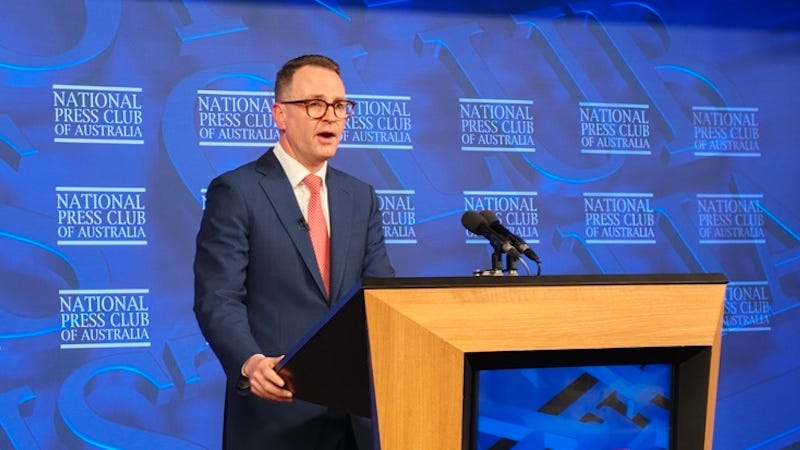
Yet shadow housing minister Andrew Bragg used a major National Press Club address to propose reducing the National Construction Code from more than 2,000 pages to an 80-page “Basic Australian Standard”, as the solution to the problem, and then going on to suggest that people on lower incomes will need to accept “substandard” housing.
This, of course, means that developers gain the up-front benefit, while the purchaser of the house – the low-income purchaser – then has to deal with the longer-term costs associated with an energy inefficient house, something that needs regular repairs as it ages, primarily because standards that would have improved its quality, have been removed. It’s a false economy, but it’s in tune with modern-day Liberal Party philosophy: deregulation that supports big business and slams the consumer, especially those on lower incomes.
It’s this type of ideology that has cost the Liberal Party electorally – as well as an ideology that’s being shunned by the public – but one that the party keeps returning to and insists that it’s the correct formula that will bring electoral success.
And it didn’t end there: Bragg then went on to say that compulsory superannuation is a “repressive system” based on “communism” and “neo-Marxist” Labor policies, a system that is under the “control of unions” – even though there are no superannuation funds legally owned or controlled by trade unions. But why spoil a good story with the facts…
Bragg is from the Liberal Party’s moderate and liberal wing, but it shows how far backwards the party has gone when he espouses this sort of nonsense, and imports Trumpian rhetoric and conspiracies from the US Republicans that most Australians would have no clue about.
The Liberal Party continues to be squeezed from several directions at once – One Nation is taking its support from its populist right; community independents have captured parts of its former metropolitan moderate base; its state divisions are consumed by factional battles; the relationship with the Nationals is unstable; and senior frontbenchers continue to behave like an undisciplined rabble, instead of presenting themselves as an alternative government.
The danger for the party isn’t just another election defeat – federally at least – but becoming incapable of assembling a broader coalition of voters that they need, first of all, to win elections, and then, gaining the skills that are required to govern Australia.
The state of Victoria is considered to offer the Liberal Party the next best chance of winning an election, with recent polling putting Coalition ahead of Labor in the lead up to the November election, on a 55–45 per cent two-party-preferred lead. But even there, there’s no guarantee of an election win – the party needs to win 17 seats, is led by an inexperienced leader in Jess Wilson, and is still strongly influenced by a cabal of religious extremists.
It seems that everyone knows the trouble the Liberal Party is in – except for the Liberal Party itself. If they feel that reducing regulations is the solution to housing and social issues, or every problem in society can be resolved by making accusations that everything is “communism” or “neo-Marxism”, then there is no hope for the party.
It really needs to decide who it intends to represent in the electorate, what practical problems it intends to solve, and whether it wants to be a broad party of government, or just a rabble of aggrieved and combative ideological factions, better suited to an isolated debating club that no-one really wants to attend.
Until it answers those questions, every scandal, inquiry, factional takeover and frontbench gaffe will reinforce the same public conclusion: the Liberal Party has learned remarkably little from its many defeats and is still not fit to govern.


Thanks Eddy and David.
I think David’s perspective as a historian has been invaluable in the last year relative to the Liberal’s devastating defeat. Like the UAP they’ve been discredited.
And even with their ‘star’ moderate in Andrew Bragg who said this week that Australians should accept ‘substandard’ housing, you get a sense of the contempt the Liberals have for the public. Not even a peep about mass produced prefabricated public housing or even supporting the tiny home movement for singles.
The Liberals offer nothing to young people like myself.
Well said , Eddy and David 👍🏻. As I see it , Albanese seems to be moving into John Howard’s former idea of being “the natural party
of government “. Relaxed and comfortable , and let’s “turn the temperature down “. His priority seems increasingly to be the interests of corporate mining and foreign donors, well above those of the nation he was elected to serve . How else can the absurd folly of
AUKUS be explained ? AUKUS is an attack upon our sovereignty and democracy itself . As to the remains of the Liberal Party , the next election will prove very interesting , remembering that John Howard lost his own seat …..