


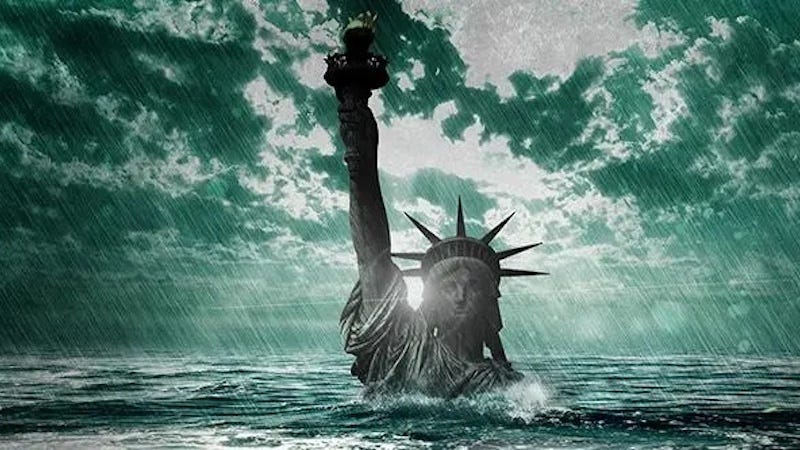
The conflict now expanding across Iran and Lebanon – and forced on by Israel and the United States – is no longer a short-term regional crisis; it’s placing a great deal of pressure on the global order that countries like Australia have depended on for many decades. What began as the regular cycle of violence by Israel in the Western Asia region had now evolved into something far more dangerous and unpredictable: a breakdown in the ability of the United States to influence the outcomes, control either the escalation or deescalation, or even to articulate a coherent objective that can hold up for longer than several days.
Sixty days into this conflict, and while it can be argued that at least the zone of the warfare has been restricted to a relatively smaller region, the instability has affected almost every country in the world – the economics version of coronavirus that threatens to collapse the many economies that are dependent on energy and resource supplies from the Persian Gulf.
Israel’s campaign of war and genocide against Gaza since October 2023 has drawn widespread international condemnation for the scale of the harm to civilians and the humanitarian disaster, and its extension into southern Lebanon with almost the same tactics has only deepened those concerns of a broader regional war.
Each new escalation by Israel at this stage creates opportunities for military miscalculations and tit-for-tat retaliations, and a new scope for bringing in other countries into the conflict. Initially, the United States stated that its main goals were “regime change” in Iran, feeding an internal revolution and containing the conflict, with the hidden agenda of asserting its influence and seizing the resource assets of Iran. Yet after months of confrontation with Iran and its regional allies, none of those objectives have been achieved. Other unwanted consequences have arrived, however: oil prices have surged internationally, American diplomacy has disappeared, allies are confused, and the adversaries – Iran and Hezbollah – have easily adapted with their long-developed style of asymmetric warfare that is showing up the limitations of America’s traditional military dominance.
The problem for the United States is that it assumed that all it had to do was project its power – as it had done on so many occasions throughout its history – but the lack of a clear plan or a strategy has exposed its limitations and weakened it in the eyes of many leaders around the world. Yes, the United States still commands immense military and economic resources, but all the power and economic resources in the world won’t guarantee success if the people who are guiding this strategy are incompetent and have no idea what they are doing. And this has created the paradox where the more aggressively the United States behaves in this situation – as well as sacking many of its experienced military generals – the less effective it appears to be.
It’s hard to separate this international decay of American authority from the political environment that’s been created under the presidency of Donald Trump. While previous administrations, for all of their flaws, at least attempted to frame interventions such as the invasion of Iraq in 2003 through a weak but persuasive narrative and went through the process of building up alliances, Trump’s approach has been defined by ad hoc improvisation, the lazy spectacle and inherent contradictions that appear on a daily basis. While US presidents in the past might have argued the case for war – Lyndon Johnson, George H. and W. Bush – Trump just goes to war, with the same nonchalance of ordering a pancake from one of his Trump Tower diners.
Trump is the prime example of someone who firmly believes in American exceptionalism, but the gap between his empty rhetoric and the reality on the ground is just becoming too difficult to ignore. The recent assassination attempt against Trump – if that’s what it actually was – illustrates how deeply this dysfunction has infiltrated domestic politics. In another era, an assassination attempt would have produced shock within the electorate and a unified national response. Instead, half of the world questions whether it was a staged or manipulated event, and it has generated division, suspicion and resulted in different versions of what actually occurred. It’s almost as though whatever actually did happen doesn’t matter anymore: once a political culture has its trust so significantly eroded, it’s hard to believe anything that occurs in the White House and, perhaps, that’s what the Trump regime would prefer.
For many years – during the four years of his first term and now into his second – Trump has attacked institutions, discredited the media and blurred the lines between truth and outright lies. It’s not just an incidental by-product of his political style; this is the strategy. The outcome is a public domain where no single account is credible but, friends and foes alike, pick the narrative that suits them the best. When the reality itself becomes the bigger contest rather than the contest over policy and ideas, every crisis becomes an opportunity for it to be exploited for political gain.
It’s not a new strategy – history is littered with examples of clown shows and idiocy within political leadership, such as Caligula, Benito Mussolini, and the more modern versions of Silvio Berlusconi, Boris Johnson, Javier Milei, Jair Bolsonaro – extravagant fools who wasted space and became the convenient idiots creating the pathways for more corruption and vested interests. Trump is no exception in this field.
But it’s a strategy that leads to a state of permanent instability, with no clear boundary between the normal state of politics and the emergency; every day creates a drama, and a created drama then needs to be resolved. Over time, this creates a high level of exhaustion and fatigue within the electorate: can’t we just have a normal government for a change? The risk for any government that relies on constant disruption – whether it’s Trump, Johnson, Milei or Scott Morrison – is that it eventually loses the capacity to distinguish between legitimate action and foolish improvisation, where they are just trying to wing it each and every day. Eventually, people just want governments to resolve the problems of society, not to create more of them.
The economic conditions – which Trump has actually caused – are now compounding this instability. The rising energy costs, increased living expenses and stagnant wages create an environment that is unlikely to favour incumbents who engage in this type of behaviour. Political messaging – in the style of flooding the zone with shit – can reshape perceptions, but it can’t indefinitely bend the rules of the lived experience. If the electorate begins to associate chaos with dysfunction – and the current polls suggest that this is currently the case – then everything in politics shifts dramatically. The midterm elections in the United States have historically acted as a corrective mechanism for weak or incompetent Presidents, and there are indications that a similar dynamic will emerge again.
The consequences of this behaviour, however, go far beyond the cycle of midterm elections, or even what might happen in the 2028 presidential election. There’s a great deal of uncertainty over the future of NATO. There’s also a great deal of uncertainty surrounding of the future of AUKUS, although, as we’ve argued many times before, cancelling this ill-thought-out deal would be beneficial to all parties, and save Australia at least $368 billion over the next 30 years or so.
The central issue here is not just that the chaos exists – governing is difficult and there’s always going to events that fall outside of the control of a leader – but that it has been embraced as a governing principle. We frequently complain about the Albanese government and its lack of ambition, but it’s not a government of chaos; the main job of government is to reduce chaos, not to create it, and the Prime Minister has largely avoided that.
Markets – and societies – also require a certain level of predictability to function efficiently. Money is the eternal coward, and will follow the path of least resistance and shy away from conflict and chaos. But if the crisis becomes permanent though, the conditions for economic recovery disappear.
The Trump presidency – Marks I and II – has highlighted this contradiction, but how can the system be rebuilt after the state of chaos has been normalised? Joe Biden managed to end Trump’s chaos in 2020, but was a weak president who didn’t know when his time in politics was up. Similarly, Albanese ended the chaos of the Morrison years, but is yet to work out how to use his massive mandate constructively, except for his goal of making Labor “the natural party of government”.
The answer to all of this is not so obvious: Trump was voted out in 2020, only to reappear in 2024. He might not be eligible for re-election in 2028 but, as history has frequently shown, there are always new clown-show leaders who can replace the old. Trump won’t be the last to appear in the exhibition hall of disgraceful political leaders who distract the electorate with their laugh-out-loud routines, and allow the corrupt to fester in the background. But their influence can be diminished.
The world has entered a period in which the consequences of American disorder can no longer be isolated, or tolerated. From the bombs being dropped on the villages of southern Lebanon and Iran, to the corridors of power within the White House, we can see the same pattern repeating itself: a loss of control is presented by Trump as a strength, there’s a reliance on the spectacle over substance, and a belief that the chaos can continue forever. But it can’t: eventually, the chaos stops being a useful tool when the public has had enough of it, and that time is approaching very quickly.
And when that time arrives, there won’t be any winners – only those left to pick up the pieces afterwards, trying to rebuild a sense of order from the ruins of a post-World War II system that once promised stability but, instead, delivered uncertainty on a grand scale. That is Trump’s legacy.


Particularly astute on buffoon-trademarked messaging, story-framing and perception-skewing, and consequent (reality-)fatigue plus media faking credulity for ratings.
Thank you Eddy and David.
So much in the US will depend on whether the mid term elections are free and fair. There seems to be a lot of shenanigans in the works from what I gather from independent media because the regime know they're under water. The so called Save act, and all the ways Republican states are trying to deny the votes of women and Black people....
(Are these "shared values" with Australia? ...)
We unfortunately seem to be living in the curse of 'interesting times'...