


This week’s briefing outlines the big issues to look out for: ANZAC Day hijacked by extremists… the continuing culture wars… gas profits… book censorship by the Zionists and the rise of extremist politics.
The ANZAC Day culture wars continue
The Welcome to Country ceremonies on Anzac Day continue to be hijacked by the extremist culture war warriors, led by actors such as the anti-immigration and nationalist group Fight For Australia and the conservative political lobbyist Advance Australia – and we provide our regular reminder that John Roth (the husband of Australia’s Special Envoy to Combat Antisemitism, Jillian Segal) donated $50,000 to Advance – so much for social cohesion.
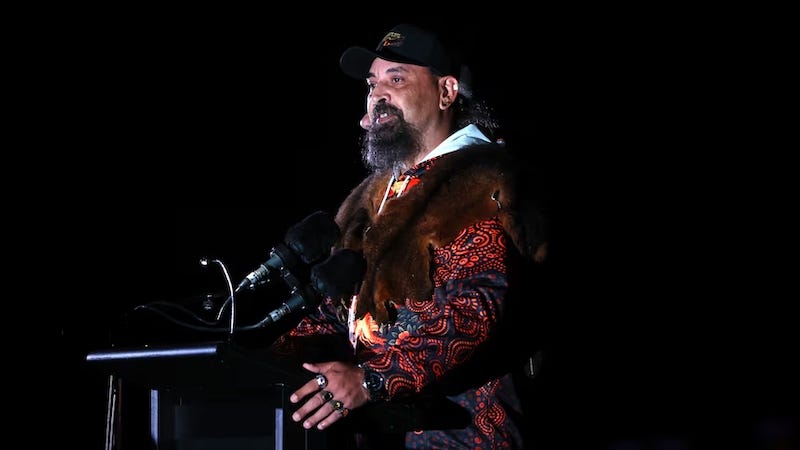
While there has been some outrage from political leaders, it’s a predictable outcome when these highly organised and well-funded groups based around grievance politics come across a political class that’s far too cautious to confront it directly. It’s also to be expected when people such as the unrepresentative billionaire Gina Rinehart delivers a scathing address on the steps of the Sydney Opera House on Anzac Day eve, offering her unhinged opinions of school children “being taught to hate Australia”, calling for a crackdown on immigration, attacking environmental laws and trans women in sport.
What place has this type of grievance politics when commemorating the deaths of over 8,700 Australian soldiers at Anzac Cove? What gives Rinehart the right to inappropriately provide her right-wing bile and whining at such an important event?
The right has carefully manufactured Anzac Day into a quasi-religious day over the past forty years or so, and now feel that they own the day so much that they can drown out an Indigenous offering to welcome people to a commemoration of fallen soldiers – which includes 1,300 Indigenous soldiers who served during World War I, with around 300 of them killed in action.
There are zero-tolerance policies within many elite sporting codes where spectators who exhibit racist behaviour can receive a life-time ban, with a clear message that their racism is not wanted here. It’s time to apply these policies to Anzac Day events, and perhaps apply even harsher policies for billionaires – especially one whose father wanted to poison Aboriginal water holes so they would breed out – who use these special national moments to platform their own racist views.
Australia’s $20 billion gas giveaway: Who really benefits?
A long-simmering problem in Australia’s economy is starting to break out into the open: the mismatch between the country’s vast gas exports and the small return flowing back to the public, and working towards a change which would make our lives substantially better off.
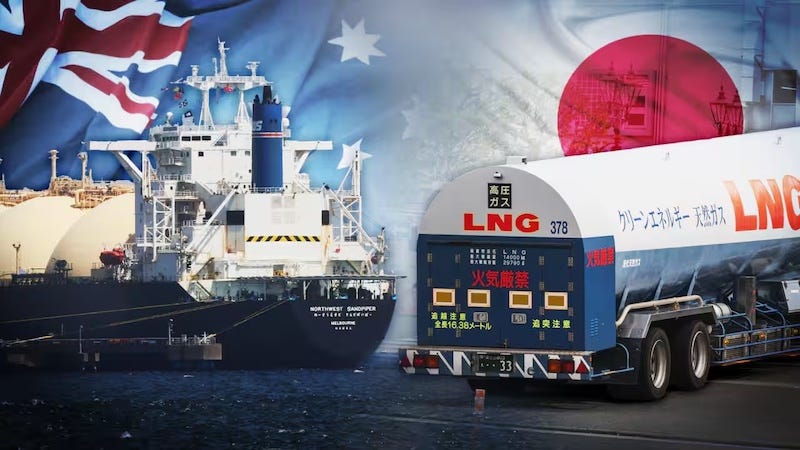
The idea of a 25 per cent export tax isn’t radical – similar schemes operate in many other resource-intense economies around the world – and it would correct a problem that’s been evident for many years, and so obvious to many people. For years, economists such as Ken Henry have argued that Australia is giving its natural resources to multinational corporations at bargain-basement prices, allowing gas giants to create enormous profits while tax revenues fall far behind.
There are many budget problems in Australia, and these have been developing for some time. With funding constraints in essential services such as the NDIS, this anomaly is becoming harder to ignore: a government that keeps talking about the need for budget restraint on one hand, while ignoring the billions that it could be reaping on the other, with some estimates suggesting that it’s at least $17 billion per year, but could end up being close to $20 billion. The resources industry keeps scaremongering about “sovereign risk” and the flight of investment, but this follows the familiar script that’s always brought out by these vested interests.
This is not so much a tax debate, but more of a test of political will by the Prime Minister, Anthony Albanese, and the Treasurer, Jim Chalmers. Will the government confront these entrenched corporate interests, or will it retreat back into Albanese’s infamous incrementalism that ends up achieving nothing? The stakes in this debate are very clear: it’s not just about gas policy – it’s about whether Australia manages its resources in the national interest, or continues to subsidise private profit at the public’s expense.
The Zionists cancel and attack yet again: the Bila children’s book

The withdrawal and pulping of Bila: A River Cycle has revealed the more sinister influences by Zionist groups and says a lot about how cultural power is exercised in Australia. Written by the Wiradjuri poet and artist Jazz Money and illustrated by Matt Chun, the book itself is not controversial – the controversy is the decision by University of Queensland Press to remove this book from circulation and destroy the 5,000 copies that have already been printed, due to external political pressures led by News Corporation, and supported by groups such as the Queensland Jewish Board of Deputies and the Australian Jewish Association.
Chun published an article in early January 2026, titled “Never mourn a fascist”, and it’s a clear and succinct analysis of the fascist tendencies that reside within the Zionist Jewish-supremacist group, Chabad, and outlines the hypocritical nature of the media narratives which solely focus on Jewish grief, while totally ignoring the sufferings of the Palestinian people. The views of Chun are totally unrelated to the illustrations contained within Bila, and there is no reference at all to Palestine or Israel in the book.
But this is never enough for Zionist and pro-Israel groups in Australia, and the issue isn’t about standards, it’s about controlling the narrative and punishing anyone who may hold a view that is contrary to theirs. University of Queensland Press should be admonished for its weak-kneed response on this matter, and the actions by these groups – as usual – were designed to inflict maximum damage. Bila cost around $25,000 to print, with lost revenues of over $130,000 – and this is in line with previous behaviour by Zionists, where events are cancelled way after tickets have been issued and the venues have been booked and paid for. It’s the ultimate act of nihilism: punish everyone, even if Zionists ultimately end up punishing themselves.
Preferencing One Nation: How low is too low for the Liberals?
Speculation is growing that the Victoria branch of the Liberal Party will preference One Nation at the upcoming election in November – it’s being framed as tactical and clever electoral pragmatism, but it’s likely to end up in tears, just as it did in the recent South Australia election.
Since the federal election in May 2025, minor parties have been fragmenting the conservative vote and while the temptation to pull together a winning campaign through preferencing is obvious, what this coalition is starting to represent is a real problem. One Nation represents a racist culture of complaint and grievance – our intention isn’t to hurl insults, but clear and obvious racism is the key brand for the party, so it should accept and take responsibility for that.
That a previously mainstream party such as the Liberal Party – remembering that the Menzian philosophy of liberalism and moderation originated in Melbourne – is prepared to preference One Nation, and possibly form a coalition or alliance with them if it comes to that at the Victoria election, shows how far this party has fallen.
Chasing votes on the fringe might deliver short-term electoral gains, but it risks hollowing out whatever remains of the party. And trying to replicate the behaviour of a fringe party means that the Liberal Party is also now a fringe party. There’s also a broader consequence where major parties that morph into more extreme actors in order to secure power, tend to develop a policy agenda that follows this level of extremism. The South Australia result suggests that it’s a strategy that won’t succeed – dragging down both the Liberal Party and One Nation into a cycle of doom, winning the votes but not enough seats – but even without a victory, it reshapes the political landscape in a way that’s very hard to reverse.


I couldn't agree more but especially your comments on anzac commemorations. It seems to be increasingly hijacked by a jingoistic nationalist agenda. Booing acknowledgement of country ceremonies is ugly racism which has unfortunately increased since the defeat of the voice referendum, sadly spurred on by right wing fringe groups.
The Liberals seem determined to hollow out their own party until it mimics the racist whingeing of One Nation.
What has One Nation ever done for Australia? About as much as the racist booers at the Anzac Day services?
Albanese has mo reason to fear a negative reaction from customer nations if a 25% export tax is applied to LNG.
It is all sold under 20 to 30 year contracts at prices which fluctuate based on the Singapore crude price, which is currently way up because of Trump playing silly buggars with Iran.
The tax will just come from the extra revenue from the inflated prices, while the contracts still require the same volumes to be delivered.
The Japanese still get their gas, the companies still get inflated revenues and the people of Australia get $17-20 billion extra tax collected.
It's a win = win.