


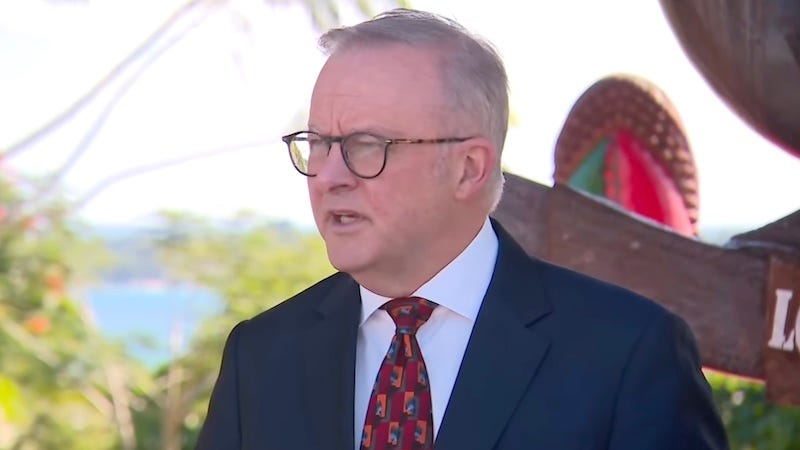
There is a growing concern about transparency in Australia, as some of the Albanese government’s actions are beginning to resemble the secrecy and lack of scrutiny associated with the Morrison era – and one of the clearest examples of this is the government’s approach to Freedom of Information legislation.
The Attorney–General Michelle Rowland is proposing significant amendments to FOI laws, and many journalists, researchers, advocates for transparency and some MPs, have raised significant concerns about these reforms, suggesting that they will make it more difficult and more expensive for the public to access information that should remain open to scrutiny. Even if the current system is rarely used by a majority of the public, it should remain intact as it is, even if the primary reason is to remind governments that decisions that they make, will ultimately be available for further examination by the public.
The government is arguing that the proposed changes are about modernising rules written in the pre-digital era and about curbing frivolous applications and vexatious litigants. However, open accessibility is the actual point of FOI – it’s supposed to be easy for any member of the public to request information from the government.
The independent MP Andrew Wilkie has suggested that introducing a cost for FOI requests and other barriers to limit their access will reduce transparency, at a time where vested interests can buy a disproportionate amount of access to government ministers and MPs. While Wilkie did acknowledge that there might be a need to exclude genuinely vexatious requests, who is to decide what is frivolous and what is not?
Knowing which individuals or committees have shaped a policy or an outcome, and whether they were qualified to make that outcome and acted with integrity, is a key feature of government accountability – democracy only works when transparency is managed and protected, and it’s a cost worth bearing.
By seeking to impose restrictions on this process, the Albanese government risks undermining the most basic checks on executive power. What should be a mechanism of strong democratic oversight could soon become an exclusive process, ensuring that only the well-resourced or the well-off can access information and decisions that affects everyone.
A secret deal with Nauru
The second issue that emerged during the week was the Labor government’s secretive asylum seeker arrangement with the Republic of Nauru. While we now know the rough details of the deal – all done behind closed doors – the $400 million deal to detain around 350 asylum seekers on the island is remarkable in scale and for its lack of transparency. The cost per person is also extraordinary, and if extended over three decades, the deal could amount to more than $2.5 billion (in today’s real value), money that will flow directly to the Nauruan government in exchange for hosting Australia’s offshore detention regime.
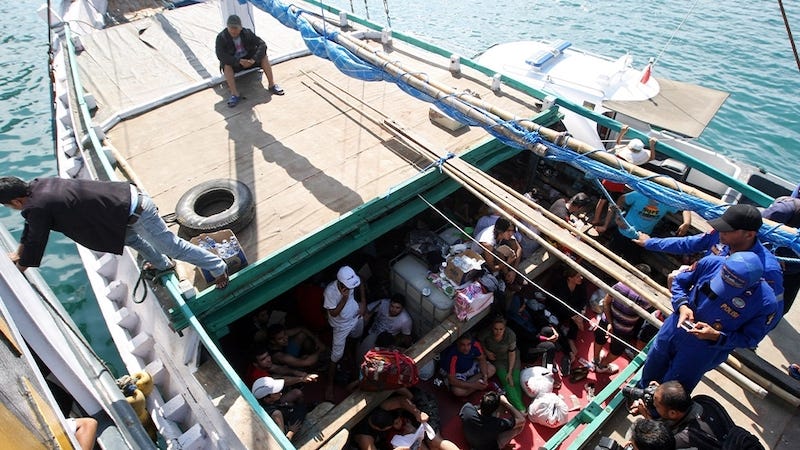
What makes this decision so troubling is not just the size of the deal but it’s the continuation of a deal that Labor previously condemned when they were in opposition: in 2019, Senator Penny Wong condemned the “secret deals in the shadows” the Morrison government was making with Nauru when repealing medical evacuation laws for asylum seekers and asked the question: “What sort of government is that?” Well, Penny, we could ask the same question of the current Labor government, because its actions are the same as its predecessors.
Human rights groups have long condemned the detention centres on Nauru and Manus Island as “hellholes”. Labor once promised to go down a different course, pledging more humane treatment for refugees. Yet this new agreement with Nauru suggests little has changed: the so-called “Pacific Solution” first introduced by John Howard in 2001, and later solidified by Scott Morrison as immigration minister, remains firmly in place.
This is a deal that was negotiated in total secrecy, without parliamentary scrutiny or public debate, a lack of accountability despite Labor’s repeated criticism of the Morrison government’s secrecy. Now, with its massive parliamentary majority, the government has adopted the same methods it once denounced, exporting Australia’s cruelty on asylum seekers to a tiny Pacific nation.
It’s not only a policy failure but a bipartisan failure. Despite enjoying a large majority and facing an opposition that is woefully divided and poses little political threat, Labor still governs as though it’s paralysed by the fear of being wedged on border security. The symbolism of needing to be tough on asylum seekers still remains, as far as the Labor Party is concerned, because it’s too politically dangerous to abandon. The cruelty continues not because it’s effective policy but because Labor just hasn’t got the political imagination to think through another pathway towards common decency.
This is in contrast to a not-too-distant past when governments showed far more compassion and generosity. Former Prime Minister Malcolm Fraser decided to welcome refugees from Vietnam in the late 1970s and this decision helped to build one of Australia’s most successful communities within a generation. The story of the Vietnamese community, along with the stories of many other refugee communities fleeing war-torn Europe after the Second World War, show that Australia is strengthened by those who arrive by boat or by other unofficial means.
This Nauru deal represents a stubborn refusal to learn from that history. It reflects a politics still rooted in fear, deterrence, and a narrow view of the national interest. For all its talk of change, the Albanese government has chosen to copy the same mistakes of its predecessors, demonstrating that even with its massive majority, it still governs as though it’s boxed into a corner and frightened of its own shadows.
The silence on Gaza
Perhaps the most morally confronting issue facing the Albanese government has been its unwillingness to condemn Israel’s actions in Gaza, despite mounting international evidence of atrocities. Since October 2023, the world has witnessed a humanitarian catastrophe: over 64,000 Palestinians have been killed in this genocide – and more than likely a lot more than this – entire neighbourhoods have been destroyed, hospitals bombed, and civilians displaced on a scale not seen in decades. Leading human rights organisations, UN experts, and even the International Court of Justice have raised serious concerns that Israel’s campaign amounts to genocide.
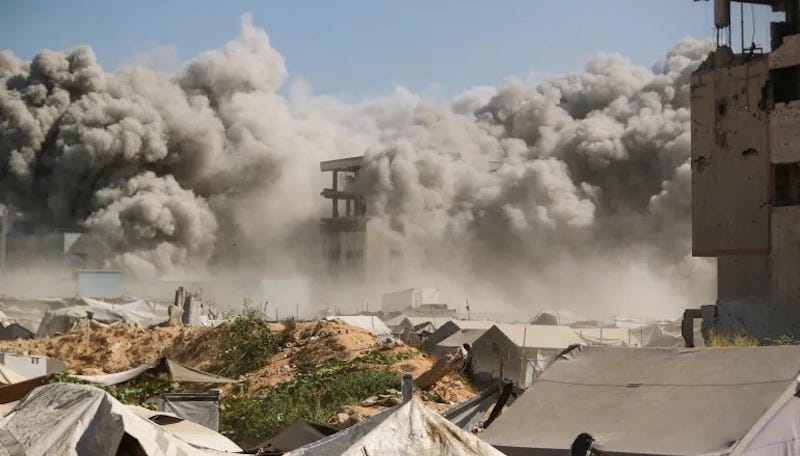
Yet, despite all of this, the Australian government has maintained a painful silence, offering weak and lukewarm statements of concern about “the humanitarian situation” while avoiding any serious criticism of Israel’s conduct, even after it has bombed eight neighbouring countries, including Qatar just yesterday. By avoiding the condemnation of Israel’s actions, the Australian government is complicit and is aligning itself with the global powers – mainly the United States – who are going out of their way to protect the state of Israel from any scrutiny at all.
This moral abdication stands in direct contrast to the public mood: across Australia, hundreds of thousands have marched for months demanding that their government speak out, demanding recognition of Palestinian suffering and demanding justice.
Labor’s fear of political attack outweighs any commitment to moral principle: very little condemnation about the recent neo-Nazi attacks as part of the March For Australia events; no words of condemnation over the vile Zionist attacks on the Jews Against the Occupation ’48 event held at Bondi Beach last weekend – the government’s calculation seems to be based on the belief that taking a strong stance on Palestine is just too risky – that the opposition would seize on it, that conservative media would weaponise it, that it might somehow fracture diplomatic links. It may as well prepare legislation to section off Bondi and provide it a territorial gift to the state of Israel, such is its acquiescence to the Zionist lobby in Australia.
The cost of this acquiescence and silence on this particular issue is more than just political: when a government refuses to condemn such obvious atrocities and a genocide, it’s effectively telling its citizens – and the world – that some lives are valued far less than many others.
The failure to protect whistleblowers
The case of Richard Boyle shows, perhaps more than most other issues, the gulf between what the Albanese government promised in opposition and what it has delivered in office. Boyle, a former employee of the Australian Taxation Office, exposed aggressive and potentially unlawful debt collection practices that disproportionately harmed vulnerable taxpayers. His disclosures were made in the public interest, yet for nearly seven years he has endured endless prosecution, immense financial strain, emotional trauma, and professional ruin.
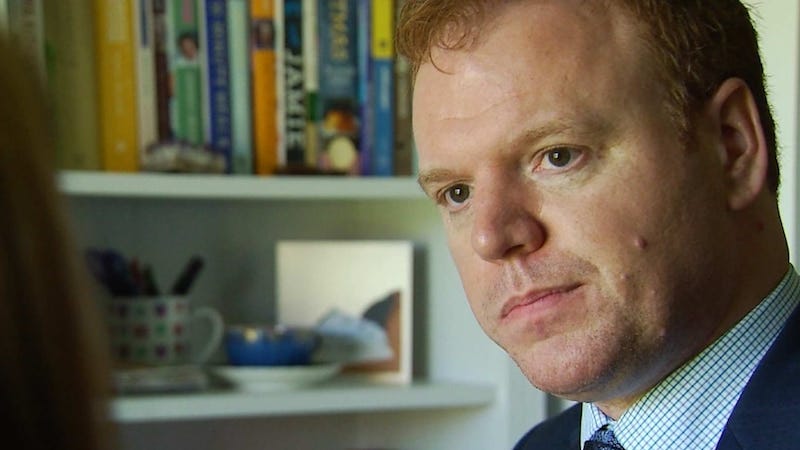
Last month, Boyle was spared a conviction, receiving a 12-month good behaviour bond after the judge acknowledged the extenuating circumstances of his case. Of course, this would have been a relief for Boyle, his family, and his supporters but the fact that the trial proceeded at all raises some basic questions about Australia’s treatment of truth-tellers. What was the point of it all? Why was someone who revealed systemic wrongdoing forced to spend years defending himself in court, when those responsible for the misconduct he exposed faced no accountability at all?
Successive governments have failed to build a system that protects those who reveal corruption or maladministration and Labor entered office in 2022 pledging to reform these laws, yet over three years later, no progress has been made at all. The creation of the National Anti-Corruption Commission was presented as a step forward – or so we were told – but has offered no substantive protections for whistleblowers.
It’s difficult to avoid the conclusion that Australia’s political class values the protection of institutions above the protection of those who hold them accountable. For the Liberal Party, this is unsurprising as they have always been like this: its record in government shows little interest in strengthening transparency or accountability. But Labor was supposed to be different: it campaigned on promises to defend integrity in government, to protect whistleblowers, and to break with the secrecy of the Morrison era. Instead, it has allowed prosecutions like the case against Richard Boyle to continue, has tightened the screws on Freedom of Information, and has avoided clear moral positions on international human rights abuses.
Collectively, these issues form a clear pattern. Labor came to office promising to restore trust, transparency, and integrity. While it seemed to run on these promises for a short while – the promise of a promise – in each of these areas, it has failed: secrecy over openness (FOI and Nauru), silence over courage (Gaza), and institutional protection over accountability (whistleblowers and integrity).
This ultimately is the fate of all governments with overwhelming majorities: they initially start off cautiously, mistake strength for impunity, and then govern with the very arrogance they once opposed. But for a government elected on the promise of decency, this Morrison-esque slide is difficult to accept.
Of course, the Albanese government still has time to change course, if it wishes to. It could abandon its FOI clampdown, pursue genuine whistleblower protection, end the cruel spectacle of offshore detention, and take a moral stand on Gaza. But we know that they’re unlikely to do any of this because that just takes a whole of extra work – and who’s got time for that when the trappings of office are there for the long-term, only if the government makes as few waves as possible and avoids offending the people who will probably never vote for them. These are the moments when we could have hoped for something much better after the damning years of the Morrison government but it all just seems to be slipping away, ever so quietly.
Thank you Eddy and David.
One wonders if the Triumvirate (Wong, Albanese and Marles) actually believe anything they say. They say one thing in Opposition and yet do another in Government because it’s inconvenient. The internet exists and we can see what they said in policy speeches. While they may be ‘preferable’ to the LNP, a conservative Government will one day take control and use this convenient change in FOI law to its own advantage.
Albanese’s behaviour especially: macho and hyper aggressive to the Greens and dismissive of the independent crossbench, indicates a man relishing the power given him by 34.6% of the primary vote. He doesn’t have to listen to anyone because two thirds of the electorate can vote against the ALP but it wins 60% of the seats. Only in the Senate is there a chance for debate but Wong seems to cut deals with the LNP there too to destroy the crossbench.
The ALP is now opaque to FoI, authoritarian to dissent, and too busy chasing fossil fuels, Zionist Genocide arms deals, and US imperialism to give a damn about human rights, participatory grassroots democracy, or ecological sustainability. Everyone keeps assuming that the ALP still cares about immigrants, workers, and other poor, despite all the evidence against this. Read what the experts in the NGOs are saying, rather than the 0%investigative press releases from the ABC or other pro-Lab/Lib media. Maybe then you'll learn (as I do) that support for Zionist Genocide and US Imperialism and fossil fuel corruption is most of what the ALP now prioritizes. The traditional Labor perspective of social democracy now aligns closest to The Greens, since Labor Parties in Britain and elsewhere abandoned social democracy for imperialist Neoliberalism.