


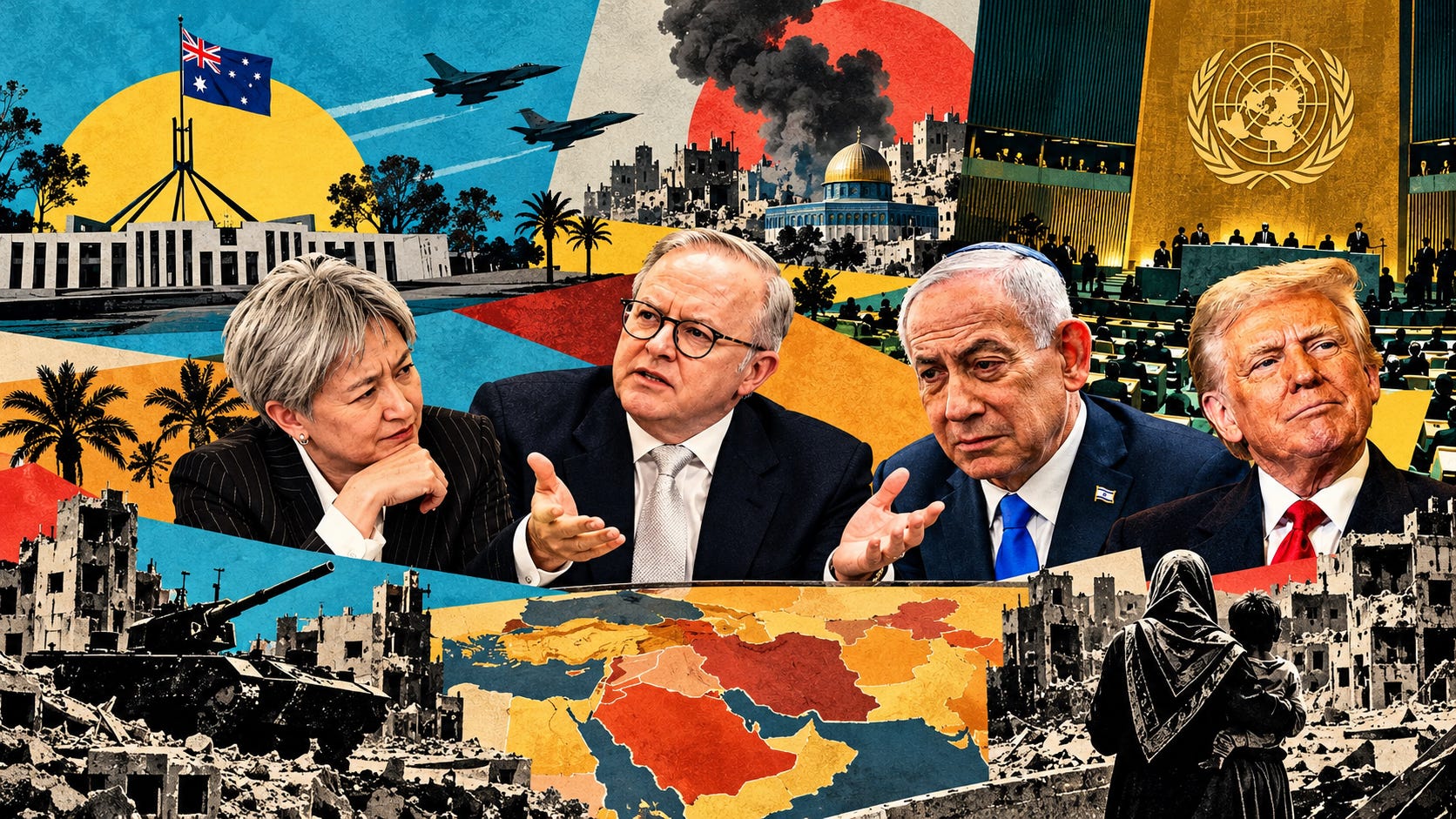
Australian governments have always wanted to have the prestige of moral leadership without the small troublesome matter of having to exercise it – it always provides lectures to others about international law, human rights and the need for a “rules-based order”, but then becomes quiet when applying those principles requires criticism of the United States or Israel. The Prime Minister Anthony Albanese can collect global citizen awards – as he did last month – but global citizenship needs to involve a lot more than accepting a small glass token at the Waldorf Astoria in New York: it means defending and applying the same standards, irrespective of which country violates them and, at the moment, we can see Albanese selectively picks and chooses.
The Nobel Peace Prize recently awarded to the international jurist Navi Pillay is an excellent example of this selective conscience. Pillay is a former South African High Court judge and UN High Commissioner for Human Rights, and has devoted her entire career to confronting abuses of power within the international community. Her work on the UN commission investigating the occupied Palestinian territory, including its findings that Israel has committed genocide in Gaza, has made her deeply unpopular to those governments who would prefer to have their poor human rights records swept away and totally forgotten about.
Predictably, pro-Israel commentators and organisations have attacked Pillay, making the endless accusations of “blood libel”, while denouncing the Nobel Foundation as “irreparably compromised”. Of course, there were no claims of compromise when Menachem Begin won the award in 1978, who was the leader of the Irgun terrorist group that bombed the King David Hotel and killed 91 people in 1946 – apparently, that’s totally acceptable and very deserving of a Nobel Peace Prize, but recognising an international lawyer who has called out Israel’s genocide is just a bridge too far.
Albanese and Foreign Minister Penny Wong haven’t offered any public congratulations to Pillay for receiving the 2026 Nobel Peace Prize. And that’s not where their silence ends: Britain, Canada, Japan and other governments have all condemned the latest US sanctions against the International Criminal Court. Australia’s name was absent from the list, so we can see that when the government proclaims its support for international justice, but is silent when either the US or Israel act against justice, all it’s doing is speaking from both sides of the diplomatic mouth, engaged in weasel words, and proves that it can’t be trusted on any of these issues.
The campaign against the ICC also exposes the limits of the US commitment to accountability, even though they don’t recognise this court. Justice is always welcome when it pursues one of its adversaries; but when it reaches the shores of the United States, or at the front door of Benjamin Netanyahu’s house, the investigators become the targets, which is exactly what happened with their attacks on Pillay this week.
The Albanese government should have recognised the dangers of the behaviours of the US and Israel a long time ago – a court whose independence depends on avoiding powerful governments and their vassal states will never be able deliver international justice. Instead, Wong has praised US President Donald Trump in the past for making “the biggest contribution to peace that we have seen in a very long time”. What an extraordinary statement from a government that is happy to display its weakness and reluctance to challenge the US, even when it’s so egregiously wrong.
And this is all in the context of Australia’s pursuit of a UN Security Council seat in 2028: what’s the value of winning a seat at this table if this government arrives already committed to avoiding the difficult conversations, and all it’s going to be do is providing another vote that the US and Israel can depend on when the issues become a bit too difficult to handle?
Wong’s suggestion that events in Gaza were difficult too “difficult to judge from afar” has become an emblem of her many failures as foreign minister, and long may it be posted on her political epitaph, when that time comes. This distance apparently affects her judgment when there needs to be scrutiny over the maniacal actions of Israeli, but no problems at all in castigating the Palestinian Authority over their decision to postpone their elections until September 2027. Obviously, distance is no problem at all, once those powerful countries ask a foreign minister to stop squinting, adjust the lenses, and look more closely in a way that favours their own interests.
Of course, there needs to be elections in Palestine, but has Wong asked about how it could be possible to hold elections in Gaza, which has suffered genocide, catastrophic destruction and displacement? The West Bank faces military incursions, movement restrictions, settlement expansion and an increasingly brutal occupation by Israel Defense Forces. Has Wong even considered how international observers would be able to get into the Gaza strip, let along distribute ballot papers? Once again, it’s a thoughtless and inane commentary coming from a foreign minister who should know better – but doesn’t – who never applies the same logic to Ukraine, even though Volodymyr Zelenskyy has deferred their national elections for almost three years.
The same inconsistencies and selective conscience operate within Parliament too. The Red Lines Package which was proposed by independent crossbenchers and the Australian Greens, seeks to restrict Australian weapons, the investment and trade that is contributing to a genocide, war crimes and illegal occupation. This should be a straightforward proposition: that Australia should not help finance, equip or profit from atrocities that are caused by any country in the world.
Although we all know which country is likely to be targeted, the package didn’t mention Israel at all, but it does look at a wide range of areas, and the transparency and enforceable requirements within the legislation would make it more difficult for governments to hide behind their own assurances that existing arrangements are adequate and there’s nothing to see here. This would also give substance to the belief that Australia takes international law seriously.
So what did the government do? Labor and the Coalition joined forces to oppose the legislation, a bipartisan agreement that demonstrates of how quickly political differences will disappear between government and opposition when any attempt is made to hold Israel to account.
Then there’s the proposed livestream of Nidal Hasan’s execution by firing squad in the US. Let’s be clear about this, Hasan is no saint: he murdered 13 people in 2009, and the horror of those killings cannot be disputed or qualified in any way. But the severity of a crime cannot justify turning a state killing into gratuitous entertainment for billions around the world to watch. What exactly is the purpose that this will serve?
This is the politics of the spectacle, in which cruelty becomes performance art and human degradation merged into the one event. Whatever the rules on capital punishment might be in the US, broadcasting an execution takes this to the grotesque extreme: the state doesn’t just kill people, but it’s recruiting an audience to witness its political power as well.
Of course, this is a matter for the US, but if it chooses to go down this path of extreme human degradation, it’s a problem the entire world community has to deal with. Australia officially opposes capital punishment quite stridently in all circumstances and for all people, and Amnesty International has urged Albanese to seek a commutation of Hasan’s sentence and push the US to abandon this macabre event.
This should be a fairly uncomplicated process of letting the US understand Australia’s position on the issue, a process which has been made a lot easier now that One Nation’s Barnaby Joyce has also condemned this proposed event.
Imagine the response if Iran, Saudi Arabia or the Taliban announced a similar livestream event – and while all have hosted public executions, none of them allow the broadcast or recording of these events – Australian ministers would have little difficulty publicly voicing their opinions about the state cruelty that’s being implemented.
So why is Anthony Albanese so quiet about this issue and seems to have lost his voice? His government should condemn the proposal, seek clemency and consider lawful measures to limit the footage in Australia. Diplomatic friendship – irrespective how flawed it might be – cannot involve the denial of basic human dignity.
Albanese occupies a powerful position, yet too often treats power as something to hang onto rather than use up and achieve something that’s in the public interest. As I’ve always said, he’s a weak prime minister in a powerful position, and does little to use that power effectively.
Domestically, the much-needed reforms have become a process of managing expectations and government public relations; internationally, long-established principles are applied inconsistently and thrown out the window as soon as the US and Israel are mentioned.
The Australian electorate wants to see a lot more than the empty rhetoric of “concern”, or ministers squibbing it by saying that it’s “too difficult to judge from afar” when the issues become too difficult. There is the expectation that they should use their authority to make the difficult decisions, even when doing that will carry a political cost, or cause them to use up their highly-banked political capital: that’s literally the job of political leadership and, at the moment, Australia’s political leaders are not doing their job.
Australia can’t dictate American policy or end the occupation of Palestine through a speech or media conference where they are either silent or declare that some things are just too far away. But it can voice what it supports, what values it holds, what it condemns and which international institutions it will defend. Those are real choices, and in most cases, they should be simple choices to make, as former Prime Minister Malcolm Fraser did in 1977, with his leadership on the Gleneagles Agreement, which started off the process to end apartheid in South Africa.
Anthony Albanese is not even a bootlace of a leader when compared to the leadership of the Fraser, and even less when it comes to comparisons with former Prime Minister Gough Whitlam who, admittedly stood up to the US and ultimately paid the price. But that’s what real leadership is.
A government that claims global citizenship should apply their values and principles openly and consistently. Otherwise, fancy awards at the Waldorf Astoria, ambitions of a seat at the UN Security Council and announcements about a “rules-based order” just have a decorative value and are nothing more than window dressing. And it’s that very familiar case of Australia speaking confidently about its values, until a powerful friend asks it to sit down and keep quiet.


