


Democracy behind a barb wire fence?
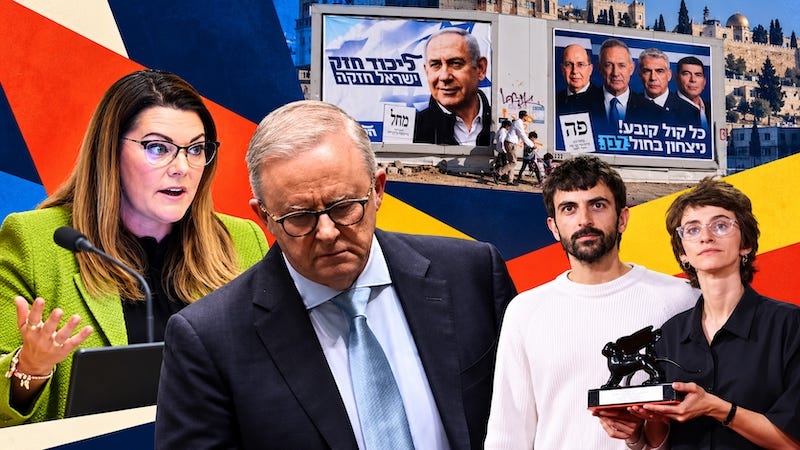
As parliament resumes following the alleged attack on Helen Haines, there needs to be more than just the sombre speeches and assurances that security will be reviewed, and that we need a “kinder” version of politics. The lack of effective security requests mentioned by Labor Senator Michelle Ananda-Rajah – who suggested that she gave up requesting security support because she rarely received the support she needed – raises some uncomfortable questions as to how many threats need to be raised before Parliament will take action.
While politicians are not held in high regard by the public – it’s still a fundamental right that MPs and their staff should have a safe place to work, whether it be at electorate offices, or public events, and women should not have to accept intimidation as part of going into politics. There should be adequate measures to ensure they feel safe with proper threat assessments and proper actions put in place to deal with any reported abuse.
However, given all of these issues, we can’t just lock democracy up and have it functioning behind security and barb wire fences. This would leave regular people behind, while giving lobbyists even more advantages and access to the political system.
Intimidation has long played a role in making an already unjust political system even less accountable. It’s also very convenient for leaders now to call for civility. Without looking at the motivations within politics and the media to gain rewards from outrage, embarrassment and constant creation of enemies, there’s little point in giving a respectful speech if there’s no follow up.
When Princess Diana was killed in 1997 following harassment from media paparazzi, the entire media industry said they needed to change their systems to ensure that people’s privacy was respected. After a short lull, they were back to their invasive and disturbed obsessions with famous people, led by the likes of News Corporation, who are unwilling to change, whatever the circumstances might be.
The same will apply to politics: they’ll be talk about kinder politics, but we know that it will soon return to that standard political and media business model of grievance. For sure, we still don’t know why the alleged attacker did what they did and it seems that there were many issues at play. But still, we can take the opportunity to clean up political behaviour: Parliament shouldn’t use that uncertainty to avoid what needs to be done.
ICYMI, the past week from New Politics:


Senate Estimates and government accountability
Senate Estimates are a great way for the government to be held accountable for their promises, especially for the ones that seem just too good to be true. With the supplementary estimates running this week, Senators such as Sarah Hanson-Young and David Pocock will have the opportunity to grill officials regarding how public funds are being used, administered and if the policies that have been announced are actually delivered. Or not.
It’s a standard process: who is receiving the funding, what are taxpayers receiving and who will take accountability when the service doesn’t appear? While it’s easy for ministers to make announcements, to deliver actual services, there needs to be people and resources in place. The Reserve Bank is due to appear on Wednesday, so it’s good to see them held accountable and find out who’s paying for their economic decisions, especially for those on the lowest incomes in the community. Independence of the bank shouldn’t be a reason to avoid the tough questions.
And in the light of what Parliament is expected to focus on during the week, Senate Estimates could also be the place where the government could be asked about the so-called “dirt file” they created on Helen Haines, after she publicly criticised the invite-only grant programs, especially the $6 million grant given to the Marrickville Golf Club in the Prime Minister’s own electorate. In Parliament, Anthony Albanese said that the attack on Haines was “like a stone in our hearts”: let’s see if his actions match his words.
Will Israel’s election change Australian foreign policy?

Israel’s election this week creates a dilemma for the Australian government. If Benjamin Netanyahu loses, will this mean a different policy for Australia on Israel and Palestine? The main opposition leader is former army chief Gadi Eisenkot from the Yashar! party – a liberal Zionist party, which seems to be a contradiction of terms – and both sides have used the blame game for the security failures that caused the Hamas attacks on October 7.
Neither side seem to have a clear route to obtaining a governing majority so it might end up be a long negotiation period. While there are differences between the two sides, removing Netanyahu’s far right allies could create problems with judicial independence, settler violence and diplomatic relations.
However, just because a new government led by Eisenkot would be marginally less inflammatory doesn’t mean that Palestinians will gain their freedom, or that the dire situation in Gaza will change any time soon. The opposition’s pledges to restore Israel’s image in the international community should also be questioned – would this be by actually changing policy or just creating a better image and pouring money into public relations and more propaganda?
Prime Minister Albanese and Foreign Minister Penny Wong might have a reason to look at new leadership as a chance for Australia to reset our relations after the demise of an extremist tyrant. We can then focus on real changes, including humanitarian access, scaling back the settlement expansions, stopping military actions and providing the autonomy that has been promised to Palestine through the state recognition that was granted last year.
However, if Netanyahu remains as a cancerous influence on Israeli society and another coalition is formed involving extremists, then there will need to be more calls for sanctions. Even if he doesn’t succeed, a new government should be held to the same standards.
We have to remember that just because a new Israeli Prime Minister might make Western diplomats feel more comfortable, but it doesn’t mean that Palestinians’ rights will be automatically upheld. If anything, a change of government might mean that even more pressure needs to be applied.
NAZA, the documentary that could force political change
The recently-released documentary NAZA brings together many of the issues that the critics of Israel have been talking about for years, and places them neatly into a 90-minute exposé of the deranged and inhumane policies implemented under the leadership of Netanyahu, that have been used against the people of Gaza.

Created by the Israelis Yuval Abraham and Rachel Szor, it takes a look at the cowardly and maniacal AI targeting practices and the amount of civilian deaths in the Gaza Strip based on testimonies from soldiers in the military and secret services. In conjunction with the Israeli election, this could raise questions in Australia around how much we are supporting these actions diplomatically, and through defence relations and technology transfers.
Of course, governments will rarely change their policies overnight because of one documentary but it will make it more difficult for them to avoid the uncomfortable truths. For others, it might have no effect at all, because despite what they can see with their own eyes and hear with their own ears, they are not for changing, and will always be in the service of the state of Israel.
The leader of the Liberal Party in Victoria, Jess Wilson, has pledged to ban the slogan ‘Globalise the Intifada’ if she wins the November state election, along with further scrutiny on protest permits and increased move on powers for the police.
However, renters waiting for affordable housing might be wondering when their emergency will become as politically exciting as Wilson pandering to Melbourne’s Zionist interests. Perhaps she’d be better off watching NAZA – which she’ll be able to watch for free in November – to find out what the true meaning of globalise the intifada actually is.