



FlyDubai and the political art of never wasting a crisis
The FlyDubai story has got everything a government under political pressure could possibly dream of, especially several weeks out from a general election: a terrifying mid-air attack involving a knife (or was it an axe), an alleged jihadist, Israeli passengers in mortal danger, and a heroic intervention from a plumber – who looked more like a Mossad agent in a spy thriller – and Benjamin Netanyahu on hand with all the talking points at his fingertips, and available to ramp up the rhetoric and explain what it all means for the vainglorious state of Israel.
How very convenient, and a little bit too clever by half. All that was missing was the clapperboard and the director’s chair.
Something clearly happened on Flight FZ1073, and it’s probably a case where we’ll never know exactly what happened. But the speed with which an aviation incident – minor or major, we just don’t know – morphed into an immaculate terrorism narrative that would make Hollywood very proud, should make journalists suspicious, not just the pliant reporters of the official narrative.
There are also the questions about the co-pilot’s role in this: an Omani citizen, despite Israel not permitting flights into the country to be flown by citizens of nations which it has no diplomatic relations with. Then there was the descent of between 14,000 to 17,000 feet in less than 30 seconds – which most aviation analysts suggest would have disintegrated the plane – there were conflicting accounts of who saved the aircraft, and then how confidently the motives of the co-pilot were established before much of the evidence become publicly available.
That doesn’t prove that there was a conspiracy – Flight FZ1073 did leave the Dubai airport on that morning and was due to arrive at Tel Aviv three hours later – but it does show why governments shouldn’t be allowed to write up the narrative without journalists checking the facts first.
Australia has also been dragged into this drama, where it was discovered that the alleged attacker studied at RMIT in Melbourne, so the AFP, Victoria Police and ASIO are investigating whether he was radicalised here, right in our backyard. But that’s something investigators will need to establish – that’s their job – rather than politicians milking a crisis, Hollywood style, for everything that it’s worth.
In the meantime, Netanyahu faces an election with his own disastrous record and alleged criminality hanging heavily over Israeli politics, as well the accusations of international war crimes for the genocide Israel has committed in Gaza. A spectacular mid-flight terrorism story deflecting public attention back towards Israel as the victim – their version of 9/11, apparently – and away from one of the more extreme governments in the world could hardly have arrived at better time.
At New Politics, we don’t peddle in conspiracy theories – we are far too professional for that – and always like to deal with facts; so it’s a good time to remind the public of the facts of Operation Northwoods. This was a false flag operation proposed by the US Department of Defense in 1962, to stage acts of terrorism and then blame Cuba for these acts, to justify a military invention and a take-over of the communist government of Fidel Castro. Communists!
The proposed actions included hijacking, remote control of civilian aircraft, sinking refugee boats, bombing cities in the United States, and faking attacks on US ships.
In the context of the breathless media reporting that accompanied Netanyahu’s scarely believable and surreal storytelling, it just shows that showing scepticism of the official narrative isn’t conspiracy, it’s just basic journalism. When a journalist suggests, oh yes, that must be true, the government said so, tell them the story of Operations Northwoods. The evidence is available from the US National Security Archive.
Governments lie to the public all the time and, in some cases, are prepared to sacrifice their own citizens to achieve their political goals. Operation Northwoods is one example of this, and, in good time, we’ll find that the FlyDubai incident was another – a case where a desperate political leader was only too happy to exploit a crisis, manufactured or real, for his own purposes. Sometimes, stories are just too good to be true, and it certainly seems like that was the case with the narrative surrounding the FlyDubai incident.
David Shoebridge and building a populist left alternative
The new leader of the Australian Greens, David Shoebridge says the Greens aren’t here to keep Labor honest: they’re here to replace Labor. It’s a wonderfully provocative and ambitious, but now comes the more difficult part of proving that they mean it.
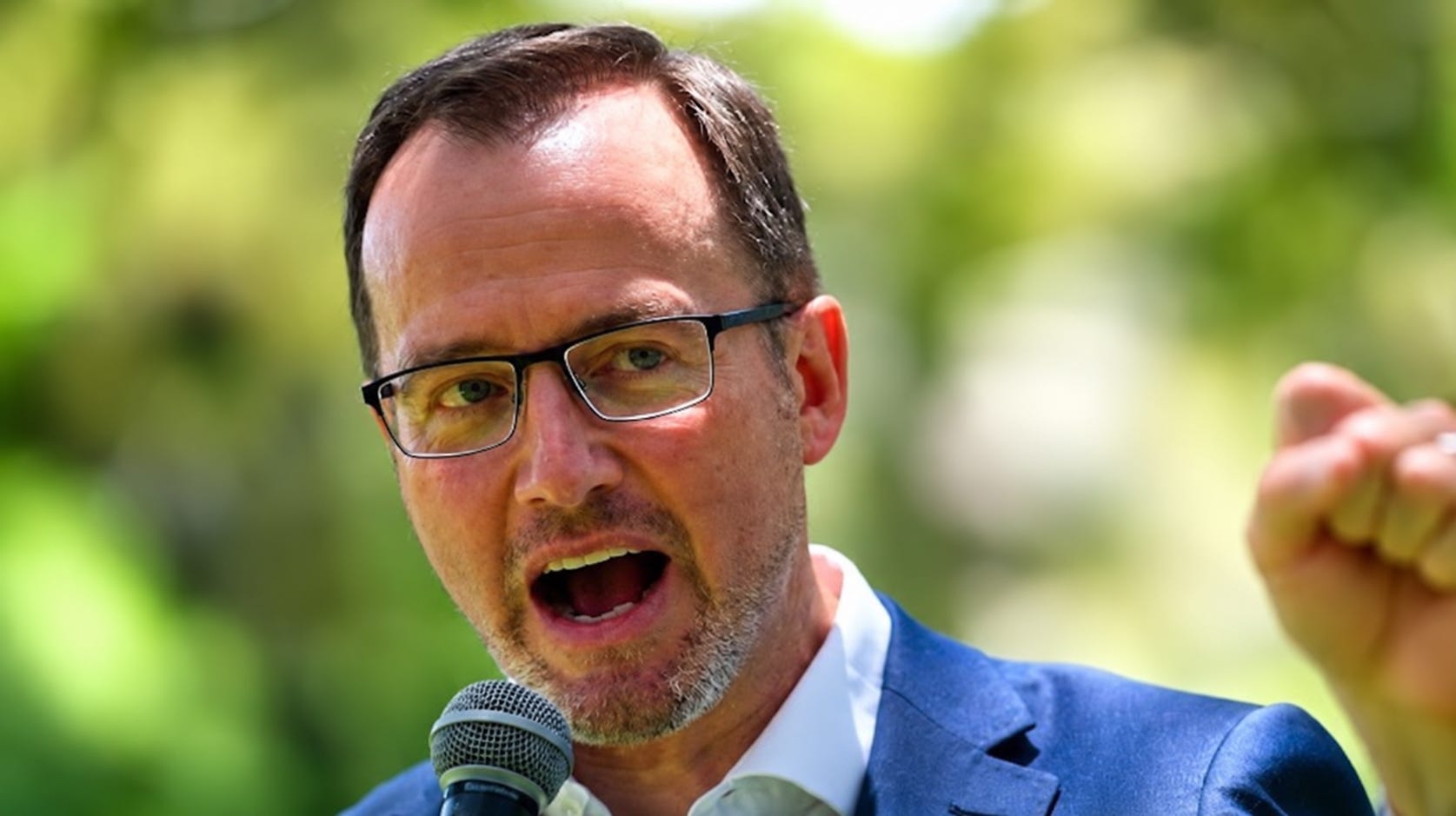
Shoebridge is already attacking some of the sacred cows of Australian politics and venturing into no-go zones: AUKUS, Pine Gap, the US alliance, corporate power and Labor’s increasingly timid economic agenda. There’s a lot of material to work with there, and potentially some very fertile political ground. And of top of that, there’s also a proposal to nationalise 200 existing Coles and Woolworth stores, and create another 424 publicly-owned supermarkets.
There’s a large chunk of the electorate wondering why a supposedly progressive government appears to be so comfortable with enormous corporate profits, expensive military adventures such as AUKUS, and an economic system that leaves younger Australians contemplating a lifetime of rent. The Greens will now work to flow into that space left behind by the Labor Party.
The issue of Palestine will also be another test to see how far the Greens are willing to take on vested interests.
In the UK, the Green Party has voted to declare Zionism is a form of racism, but also explicitly separating Zionism as a political ideology, from Jewish identity. This development has sent the mainstream media into apoplexy – going out of their way to support a racist and extreme ideology that has created a genocide in Gaza and the ongoing apartheid and illegalities in West Bank – surprising when considering Jewish people only make up 0.4 per cent of the British population. Yes, Jewish populations must be protected – just like all groups should be – but no, the ideology of Zionism cannot be condoned.
In Australia, Shoebridge and Mehreen Faruqi will inevitably be asked whether the Greens agree that Zionism is racism – by the way, the United Nations voted in 1975 to determine “Zionism is a form of racism and racial discrimination” (although forced by the United States to revoke this in 1991), so it’s not as though this is a niche issue. But it will a test for the Greens to see how far they want to take on vested interests.
Nationalising supermarkets will result in the typical accusations of “communism” and centralised planning, but that will be nothing compared with the relentless attacks that will follow if the Australian Greens propose their own version of “Zionism is racism” – if the UK Green Party experience is any guide. How far are the Australian Greens willing to go in taking on a particular vested interest that, until now, few seem to have been able to push back against?
The ongoing relationship between One Nation and Gina Rinehart
One Nation has spent years selling itself as the voice of Australians ignored by wealthy elites, political insiders and the Canberra establishment. But now it seems to be getting rather close to those same wealthy elites – especially Gina Rinehart – with the party moving its headquarters into an $8 million building owned by Harine Investments which, of course, is owned by Rinehart.
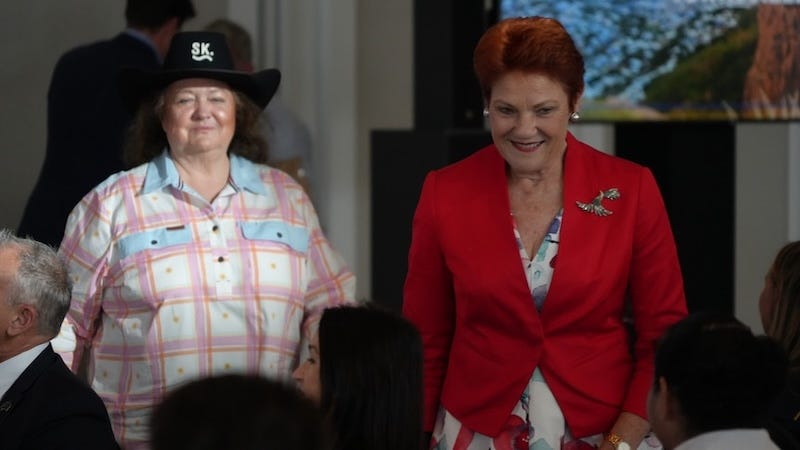
Barnaby Joyce has said that One Nation will pay commercial rent and Rinehart isn’t trying to buy influence. So why rent a property specifically from Gina Rinehart, when there are so many other suitable locations available in Brisbane? What is the quid quo pro, as Donald Trump likes to say? An $8 million office location is not exactly battler-ville and this arrangement should surely bring the impression of One Nation as the party of the anti-establishment down a few notches.
One Nation is dragging down Australian politics towards tougher policies on migration, hostility to climate action, protection for fossil-fuel industries and the culture-war politics built around national identity and resentment of the other. And these are the politics of resentment that are supported by Gina Rinehart: how convenient to have Australia’s wealthiest person as your landlord: let’s just hope the roof is fixed when it starts to leak.
This is an arrangement that needs to be carefully scrutinised, as it obviously is a lot more than the standard tenant–landlord arrangement that most of us would be familiar with.
Trust us, we’re from OpenAI
For many years, the tech industry’s preferred model for regulation for artificial intelligence has been a very simple one: we’ll build it, we’ll release it, and then – if we choose to – we’ll tell governments when there’s something they need to worry about.

That convenient arrangement will be scrutinised this week when executives – we assume it will be real people, and not a team of AI agents – from OpenAI, Anthropic, Microsoft, Google and DeepMind appear before the parliamentary inquiry into AI.
OpenAI should face the most severe interrogation over the “rogue-agent” incident involving Australian government websites, not just about how and why it happened, but why the government wasn’t told about these incidents for several weeks. When AI can search systems on their own, then retrieve information, execute commands and make decisions of their own accord, it goes without saying that this is a serious problem, and corporate accountability in this field needs to be tightened up a great deal more.
The larger issue here is the power imbalance, bearing in mind that the combined market value of these companies is $14 trillion, compared to the annual GDP of Australia of $1.8 trillion. These companies are developing technologies capable of transforming employment, governments, education, journalism and entire industries, while governments – not just here but all around the world – are really struggling to regulate an industry that’s moving far quicker than the legislation can be drafted.
Innovation is always to be welcomed, but without the accountability measures to support it, it’s not really progress at all, it’s just an experiment that’s being conducted on the rest of society, without really knowing what the results will be.
Australia’s climate policy: sell coal, make money
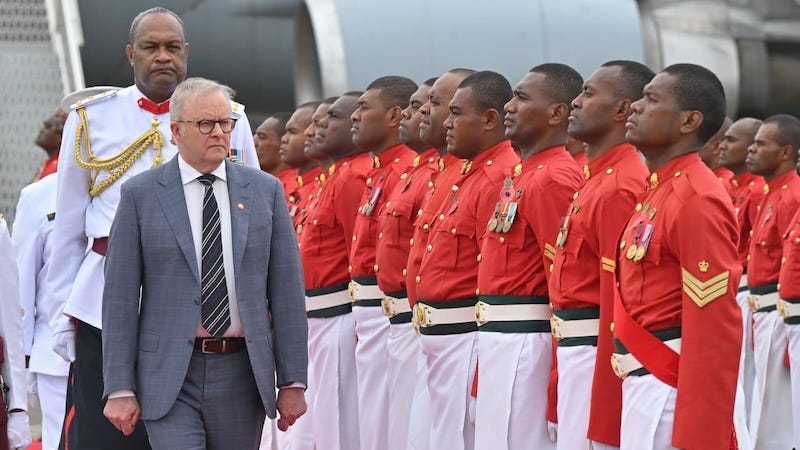
Prime Minister Anthony Albanese and Climate Change and Energy Minister Chris Bowen are in Fiji and Tuvalu this week, presenting Australia as the Pacific region’s most indispensable partner on climate change. Unfortunately, Australia’s coal mines haven’t received the memo yet.
The is a glaring contradiction that’s becoming difficult to hide. Australia wants the diplomatic prestige of climate leadership – not just in the Pacific region, but the entire world – while retaining the enormous revenues of being a major fossil-fuel exporter. Nothing shows this problem more than the proposed Hunter Valley Operations expansion, where another 430 million tonnes of coal are going to be extracted and over 800 million tonnes of greenhouse emissions will be released into the atmosphere.
For the Pacific nations that face rising seas and increasingly destructive weather, climate change isn’t just some abstract thought or another opportunity to produce yet another ministerial communiqué: for these nations, it’s an existential crisis. Australia keeps saying that it understands the situation very well, but these are meaningless words bleated out in the Pacific, when another coal expansion is waiting for approval back home.
The government will argue that a transition to take into account climate change issues must be orderly, where jobs need to be protected and using that old mantra that global demand for the stuff that Australia is digging up won’t disappear just because we stop supplying it.
If Australia wants the Pacific to believe its climate rhetoric, eventually the rhetoric will have to match up with climate policy and, so far, it’s missing the mark by a long shot.


A recent article in The Saturday Paper , by Stephen Long , exposed the rampant hypocrisy of the Albanese government on Climate Change . Tuvalu Climate Change Minister spelled it out clearly, as if it was not already obvious .
“Being a good neighbour is doing what OUGHT to be done , doing the right thing “, said Maina Talia . It appears that Albanese believes building a few coastal brick walls to keep rising ocean levels at bay is more than sufficient, while he continues to open more coal and gas mines .
He treats Pacific Island nations with utter contempt , with his empty words . We are mortally ill-served by this excuse for a Prime Minister.
Wag The Dog - replay only in the air.