


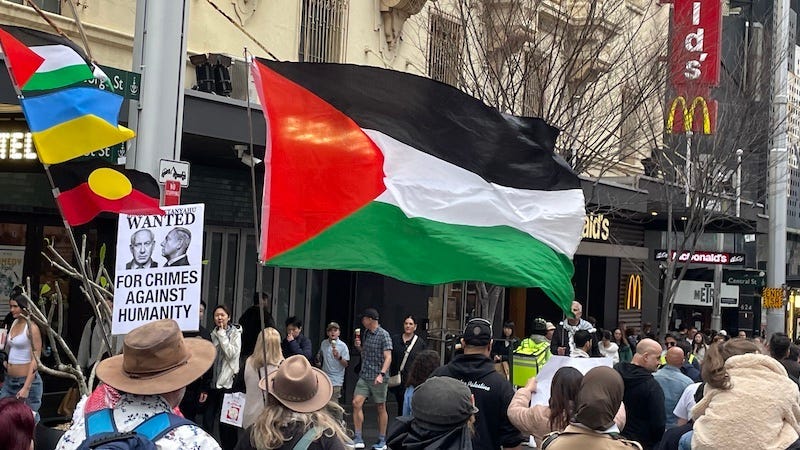
During the year, Israel continued to maintain its grip over Gaza, severely restricting food aid, medicines and humanitarian assistance, breaking every ceasefire agreement and ignoring international law in its aggressive quest to erase Palestine. Israel also promoted their version of aid – the Gaza Humanitarian Foundation – widely condemned by humanitarian organisations as totally inadequate and, according to many reports, almost 3,000 Palestinians were killed, shot at or crushed in stampedes as the desperate crowds surged in their attempts to access food supplies. What Israel wanted the world to belief as a humanitarian solution was, in fact, its own version of the final solution: dangerous, demonic, insufficient and inhumane.
Yet during the federal election campaign, Gaza and Palestine barely registered as issues of interest: the government showed little appetite to engage publicly with the disaster unfolding in Gaza, while the Liberal Party consistently pushed the discussions toward claims of rising anti-Semitism in Australia and allegations that the government was failing the Jewish community. The result was a political environment in which any discussion at all about Palestinian casualties, or the collapse of ceasefire negotiations and Israel’s repeated violations of international law, was either mixed up in the noise of the campaign or avoided altogether. As the death toll continued to rise in Palestine, with women and children still making up a large proportion of those killed, Australia’s election campaign proceeded with the politics of avoidance: just don’t mention the war.
Throughout this period – not just the campaign, but since October 2023 – the Albanese government’s response has been marked by a lack of courage. The Prime Minister and Foreign Minister Penny Wong spoke regularly of “concern” or “deep concern”, urging restraint and expressing sympathy for the casualties, statements that were never matched by any meaningful pressure on the state of Israel. Australia continued to supply components for F-35 fighter jets to Israel, avoided imposing sanctions and resisted stronger diplomatic measures beyond some meaningless financial sanctions on the right-wing Zionist politicians, Itamar Ben-Gvir and Bezalel Smotrich – which obviously haven’t worked, because these two extremists are continuing with their violence actions and rhetoric in Gaza and the West Bank.
When Australia finally moved to recognise the State of Palestine, the decision came without any form of clarity – there was no clear explanation about what recognition would mean in practical terms, nor any indication that it would be used to force Israel to comply with international law or protect Palestinian lives. As usual, recognition became symbolic of impotence, rather than any form of actions of consequence.
This pattern of careful language matched up with inaction defined Australia’s position over Palestine across the year. While governments elsewhere explored legal avenues, trade restrictions or sanctions upon Israel, Australia’s response remained narrow and designed to avoid confrontation and not offend local Zionist groups. At any point where strong diplomacy could have – and should have been applied, it was held back and, as a result Australia positioned itself on the wrong side of history, ignoring its moral responsibilities as a member of the international community, and overlooking the many legal obligations that should be used to sanction the state of Israel.
This responsibility doesn’t just lie with the Labor Party alone: there was also an absence of organised resistance from Australia’s labour movement. Historically, Australian unions played a prominent role in opposing South African apartheid with actions such as boycotts and refusing to load ships. On the issue of Palestine, aside from a few low key media releases; silence. The secretary of the ACTU, Sally McManus, who has previously spoken forcefully on matters of justice and principle, said very little publicly.
While workers in countries such as Italy and Ireland refused to handle military goods destined for Israel, Australian unions continued operating as per usual, as though sending off military parts that will be used to kill the workers just like them in Gaza is quite a normal thing to do. There were no widespread blockades, no co-ordinated refusals, no boycotts declaring that Australia’s role in this supply chain of death and destruction was unacceptable.
A bubbling fracture below the surface
Compromise is an unavoidable feature of government, particularly when it comes to foreign affairs. But there are moments in politics when compromise stops being a pragmatic step to achieve the greater good, and becomes morally untenable. While Caucus maintained a strong discipline on Gaza and continued to offer its unflappable support for Israel, for many within Labor’s broader movement, the issue become a turning critical point.
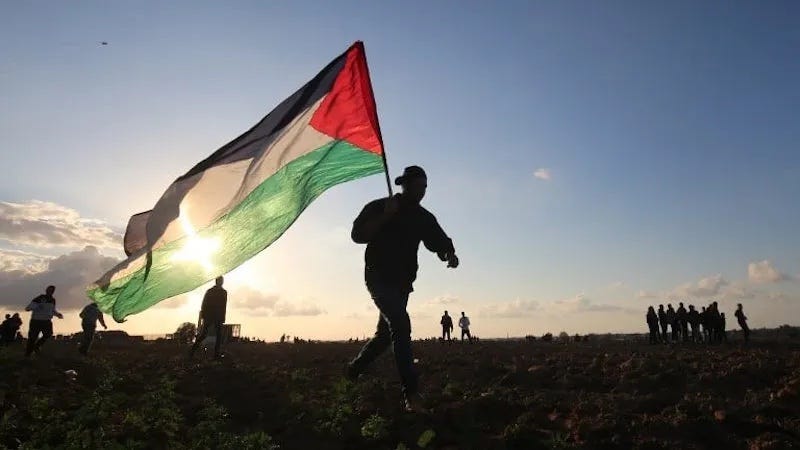
The government’s paralysis was through political fear – fear of offending powerful pro-Israel and Zionist lobby groups in Australia, and a fear of turning Gaza into a powerful electoral issue in the lead-up to the federal campaign. This fear is in contrast to Australia’s willingness to issue forceful diplomatic statements on other matters: China is routinely condemned when it suits domestic politics – that’s a given – Russia is sanctioned in a complex war; Iran is denounced on spurious grounds. But when it comes to Israel, even when it implements a devastating genocide in Gaza, it remains beyond public reproach and its many international crimes are ignored.
Even if we can understand – if not accept – that the government simply did not want to engage on an issue that would problems and distractions during an election campaign, that justification has now gone: the campaign ended months ago, yet there hasn’t been any meaningful change.
While Senator Wong’s language might have become hardened ever so slightly – or less soft – it remains far short of what the scale of the crisis demands, and expressions of “concern” continue to be a substitute for the concrete action that’s needed. There has been no move towards a comprehensive boycott of exports to Israel, no suspension of imports, no serious attempt to use Australia’s economic or diplomatic leverage to force Israel to cease and desist. For those who identify with the left in Australian politics, this represents a massive step away from the principles of the Labor Party and, for many, it’s a bridge too far to step back from.
Governments will always argue that international relationships are not governed by the simple moral questions of what’s right and what’s wrong, but by balancing competing interests, alliances and geopolitical constraints. Of course, there is an element of truth to that, but when the actions of a state are so evident, Australia’s actions need to be clear and have coherent explanation behind them.
Why was Russia sanctioned over its invasion of Ukraine – almost immediately – while Israel was not, even though its behaviour are more extreme? Why was international law and protocol applied against Moscow, but not against Tel Aviv? Why is Hamas condemned, even though it essentially exists because no one else is coming to stop Israel’s genocide? The Israel Defence Forces have killed over 70,000 civilians in Gaza: why are they never condemned? Israel’s society of extreme racism and bigotry against the people of Palestine – why is this never condemned?
Aside from these unanswered questions, what remains is a growing sense of betrayal within Labor’s own ranks, within the union movement, and among those who once believed that the left in Australia had the courage to act when humanitarian principles are at stake. And we found out that there is no courage: it’s this silence that has come to define Australia’s response and it’s an absolutely pox on our political establishment.
Silencing the debate
One of the more disturbing trends to emerge over the past year – one of many – has not been the political silence in itself, but a concerted effort by a wide range of anonymous and secretive players to narrow, soften or remove debate about Gaza and Palestine altogether. While within the political establishment, there were some notable exceptions – particularly the Australian Greens and a few independents – the dominant pattern across Australia’s media landscape was one of exclusion and denial.
Discussion about Palestine was often suppressed, and even when the events were too egregious for the media to ignore, reporting was often framed through pro-Israel perspectives that delegitimised Palestinian voices in the process.
This pattern was most evident in the verdict in case of Lattouf v ABC – at the cost of $2.8 million to the ABC – which found that the journalist Antoinette Lattouf was unlawfully dismissed after reposting a factual statement from Human Rights Watch that Israel was using starvation as a weapon of war which, as it turned out, was correct according to international humanitarian law and the evidence that became available.
The ruling showed the extent to which external pressure – from pro-Israel and Zionist lobby groups – had influenced editorial decision-making and employment at the national broadcaster. And this isn’t a one-off case: it was just the one example of an environment where truthful reporting on Palestine has professional consequences for journalists – and where the goal of the Zionists isn’t just to win every battle, but to silence the debate altogether.
During his speech at the recent Walkley Awards, veteran journalist Kerry O’Brien made references to Palestine and the many journalists who have been killed by Israel. When that speech was later published by the Sydney Morning Herald, all of those references were removed. No explanation was provided – and probably no need to provide the explanation; we all know why – but it showed how normalised this practice is within the mainstream media.
This isn’t just about journalists such as Lattouf or O’Brien being unlawfully sacked or suppressed, or even about media outlets such as the ABC or Nine/Fairfax: it goes to the heart of whether Australia’s mainstream media can still fulfil it’s role within Australia’s democracy and providing accurate, contextual and honest reporting on issues of deep moral and political consequence.
If the mainstream media feels that its role is to censure the events in Gaza and Palestine at the behest of Israel and Zionist groups, then its role serves no purpose at all: if they provide a style of media reporting that’s constrained by their deference to powerful interests, aversion to risk and an unwillingness to confront the pressure from these interests, then it has failed miserably and it’s probably best to vacate the field and leave it to others to do the job.
Censorship beyond politics and the media
What emerged throughout the year is that the silencing of Palestine has not been confined just to parliament or the mainstream media. Over the past year, it has flowed into universities, arts organisations, cultural festivals, galleries and even through to hospitals. Across these institutions, there’s been a consistent pattern: Palestinian voices suppressed, events cancelled, exhibitions removed or censured, funding and grants withdrawn – often abruptly and without consultation. In many cases, the trigger was a single complaint from a member of a pro-Israel or Zionist lobby group. Once the complaint was made, decisions followed very quickly. There was no debate; no correspondence; no due process; not even any attempt to assess the principles, policies or legal obligations to see if the action was lawful or not – as we found out in the case of Lattouf v ABC. Action by gormless bureaucrats was taken immediately, and always in the one direction: pro-Israel; anti-Palestine.
What makes this even more bizarre is that every action backfired, or at the least the ones that we know about: once a cancellation was made, the public outrage followed. If one pro-Palestinian speaker was barred from speaking – which did occur at the Bendigo Writers Festival – other participants withdrew in solidarity, destroying the event in the process. Audiences boycotted art galleries, academics signed open letters of protest, sometimes in the thousands.
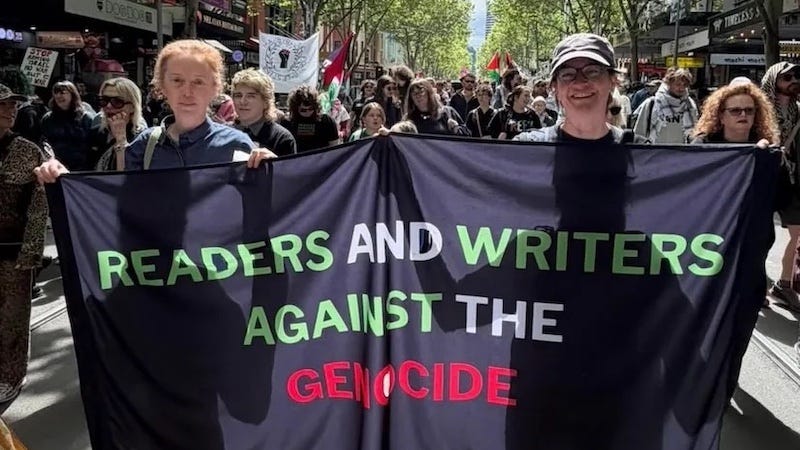
In many cases, organisations reversed their decisions under intense pressure – usually several months later – and all of them suffered reputational damage in their quest to suppress Palestinian voices, or anyone who would speak up against the state of Israel, yet they continued to publicly expose themselves and abandon their own values at the first sign of political discomfort. Despite the public relations disasters, the same decisions are made again and again by these people. And again, even when they damage themselves in the process.
Why can’t any of these people stand up to say: our activities and offering this platform aligns with our ethics, abides by human rights standards, and is defensible on legal grounds. No one had the courage to provide the same rights to Palestinians that they would offer to any other group in Australia. No one. Instead, acquiescence became the knee-jerk response, even when it caused obvious harm – to artists, to staff, to communities and to the credibility of the organisations themselves.
Much of this power from the Zionist lobby appears to be more perceived than real and, on a human psychological fight-versus-flight basis, it makes no sense at all. The individuals running many of these organisations are not shadowy figures under existential threat; they are generally capable, well-meaning people operating within conservative institutional cultures. The pressure they face is often pre-emptive – anxiety about controversy, fear of reputational damage, and the desire to avoid internal disruption – even though the damage they are trying to avoid, ends up arriving due to their acquiescence.
Perhaps it’s a behaviour is based around the fear of being labelled anti-Semitic which, based on all the evidence we have in Australia and much of the Western world, is a far greater accusation than being accused of supporting a genocide. Few institutions are prepared to spot the differences between criticism of Israel, support for Palestinian human rights, or the point that not all Jewish people are supportive of either Israel or the Zionist movement, essentially because they fear being falsely accused of anti-Semitism themselves.
But when everything is anti-Semitic, then nothing is anti-Semitic: to criticise Israel for committing genocide and destroying Gaza is not anti-Semitic. It’s an understanding that governments need to be punished for their actions, and not seek immunity from prosecution just because of their religion backgrounds.
What has made the past year so difficult to accept is the way that many of the core principles and values that we thought we might hold in the West, have just dissipated: if domestic and international law and protocols can be discarded so easily and quickly when it comes to an obvious genocide, which other issues can the political establishment feel they also ignore? If a genocide that we can see so clearly through social and independent media every single day of the week is not enough for the international community to stand up against, what are the principles that they will actually defend?
The public institutions that are supposed to be protecting culture and knowledge, chose silence over courage. Political leaders made the choice to look the other way, instead of choosing accountability for Israel. News outlets had an even easier choice to make between reporting the truth – that’s literally their job – and bending over to vested interests, and they chose cowardice. Collectively, these choices have created an environment where censorship has become normalised, any form of dissent has become suspicious, and genocide caused by Israel is not an issue to be called out, but managed, denied or erased.
This is not a failure through laziness or neglect: people in positions of power – and their feckless lackies – have gone out of their way to ensure that Palestinian voices are suppressed and not heard. And until this issue is confronted honestly – across politics, media and civil society – it will continue to erode the very democratic values Australia claims to uphold.
There are only about 100,000 Jewish people in Australia, but their influence is great and is focussed in strategic forums, particularly in Sydney and Melbourne. Some are also wealthy and powerful.
There are only about 20,000 Palestinians in Australia, but the exact number is difficult to pinpoint as they came from multiple countries and are dispersed.
For comparison, there are about 400,000 Filipinos in Australia, but their voices are unheard, just like those of Palestinians.
How can one Jewish voter be more important than 4 Filipinos?
Shouldn't everyone get equal consideration, no matter their background?
Australian society claims to offer 'a fair go for all', but it is clear that some influential people are getting a fairer go than are others.