


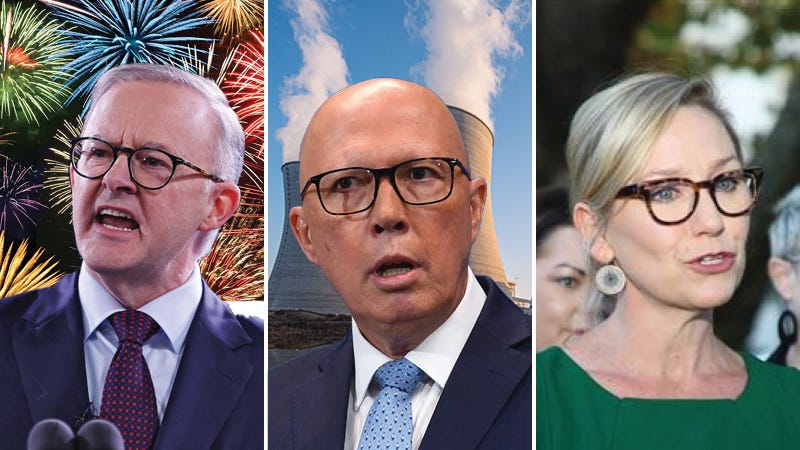
The big political event of 2025 was the federal election in May, a result that provided stability at a time of global instability and Anthony Albanese ended up becoming the first prime minister in 21 years to win a second consecutive term – not only returning Labor to office but also consigning the Liberal Party to its worst electoral defeat in its 81-year history.
The first half of the year was consumed by the long, tedious pre-campaign stage, dominated by endless speculation over when the election would be called, even though the Prime Minister has said many times that the election would be held in May, a point that many commentators repeatedly refused to believe. By the time the campaign formally began in April, voter fatigue had already set in – not so much with the politics itself, but the constant chatter about an election date that in Albanese’s mind, had already been determined.
The campaign itself was uninspiring: voters were presented with the choice between a competent but overly-cautious first-term Labor government and an opposition led by Peter Dutton, one of the most deeply unpopular leaders the Liberal Party had ever put forward. Yet campaigns don’t exist in a vacuum, and a government can only engage with what’s put in front of them, and in strategic terms, Labor implemented an almost flawless campaign against a Liberal Party that appeared to be clueless, directionless and structurally falling apart.
The result was a clear reflection of this: Labor secured 94 seats – while the win itself was never really in doubt, the size of the victory was the shock result of the night. In hindsight, however, it shouldn’t have really been such a shock: Dutton was electorally toxic, ran a campaign that failed to connect at almost every level, and the scale of the Coalition’s defeat was the logical conclusion of years of political drift and wasting their time in opposition.
Central to the loss was Dutton himself. His unpopularity had long defied explanation – not so much the unpopularity itself – but how he rose to the Liberal leadership in the first place and how he managed to survive for so long. Many observers had predicted that he would never make it to election day, yet he did – becoming the first opposition leader in Australian history to lose his seat at a federal election, and by a decisive margin.
Dutton’s hard-right position on almost everything alienated voters and failed to resonate with a broadly pragmatic electorate already uneasy about global instability. By contrast, Labor’s flexibility – variously described as soft left, soft right, or just centrist – proved to be the stability that the electorate seemed to be after.
All of these factors explain why the election unfolded as it did. Labor didn’t overwhelm the electorate with ambition – although this is a time when it’s most needed – but it did put forward a convincing argument that stability was more important than change for the sake of it. In contrast, the Liberal Party entered the campaign weakened by years of ideological confusion and internal decay, with an opposition leader unable to persuade voters that he represented anything else except for risk.
A campaign that fell apart long before the election
Modern Australian elections are ultimately leader-centric contests. Of course, the quality of candidates does matter, policies matter and discipline matters – but increasingly, elections are decided on whether voters can imagine the leader of the Labor or Liberal parties as the prime minister. By that measure, the signs of a decisive Liberal defeat were evident well before the formal campaign began.
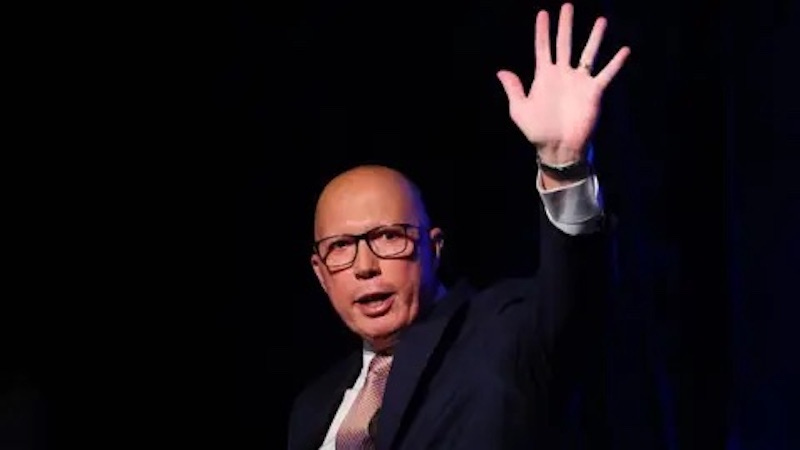
However, as early as October and November 2024, there was open speculation about Dutton as Australia’s next prime minister: internal confidence within Coalition circles was high, favourable polling was widely disseminated and discussed within the media, and the assumption was that the succession had already commenced. In hindsight, this is more like collective self-delusion within both the Liberal Party and the media, than any sensible assessment: they’d simply read too much into the debacle of the Voice To Parliament campaign in 2023, and assumed that a replay of that referendum was going to be enough to install Dutton as Australia’s 32nd prime minister.
This was just a passing fad: from January onwards, opinion polls suggested that a second term for Albanese was the more likely outcome, an outcome also supported by history. First-term governments are notoriously difficult to defeat, and the last time this occurred was during the Great Depression, in 1931.
And it wasn’t really a contest between two equal campaigns: competence and caution from Labor; chaos and fear from the Coalition. Voters were told by Dutton to fear everything: cultural decay, social division, anti-Semitism, wokeness, yet there was rarely any evidence provided of these bad things, or a positive message about how life would be better under a Coalition government.
Even the Coalition’s big flagship policy failed to cut through. Nuclear energy was a half-baked and hastily assembled plan which was poorly defended, convinced almost no one except for the nuclear zealots and captains of industry who were already on board. It lacked credibility and the electorate gave it the short shrift that it thoroughly deserved. Rather than appearing bold, it reinforced the sense that the opposition had a scatter-gun approach to policy, and would send out anything to try and make itself relevant.
Labor, by contrast, was disciplined and focused on stability, a “safe pair of hands” in uncertain times – in political terms, it wasn’t inspiring, but it was effective. And effectiveness is what wins elections, not some weird off-tangent portrayal of a dystopian world.
Perhaps the seeds for the Coalition’s failure were planted by a misplaced confidence gained from recent successes. In 2013, 2016 and 2019, the Liberal Party had won elections despite running poor campaigns – although it has to be said that a winning campaign is a good campaign. Those victories appear, in hindsight, to have entrenched complacency within the party.
While Dutton didn’t enjoy the same level of overt media indulgence that Tony Abbott once did – who can forget the front-page poster from the Daily Telegraph emblazoned with Australia Needs Tony – the media environment remained noticeably softer than what Labor faced. Yet even that advantage wasn’t enough: there’s only so much polishing of the façade that media can do before even they decide that it’s all too much and their efforts are to no avail.
The night of the defeat, and the question of survival
Dutton’s concession speech on election night was gracious enough, where he accepted responsibility, congratulated Albanese and spoke about the honour of leadership. Yet the civility in that moment – which was against the grain of Dutton’s public persona – could not gloss over what had just happened: a total and complete electoral obliteration.
By any objective measure, the entire campaign was a catastrophe: according to post-election research from the Australian National University, Dutton finished the campaign with the lowest approval ratings ever for a major-party leader, and the electoral outcome reflected this brutality very clearly. The Coalition was reduced to 43 seats, its worst result on record – and the sole entity of the Liberal Party itself was reduced to just 18 seats nationwide.
Since then, the Liberal Party has shown little evidence that it understands why it lost, let alone how to recover its electoral standing and, by the end of the year, according to final opinion polls, it stood to lose even more seats if an election was held now. The tone, language, and priorities of its post-election messaging are unchanged, with most of it still sounding as though it was written for a narrow, late-night partisan audience on “Sky After Dark”: relentless “anti-woke” rhetoric, fixation on culture war grievances, hostility toward universities, moral panics around gender and identity, and the outrage directed at the ABC. Sure, a different leader in Sussan Ley, but the same tired rhetoric: these positions energise a shrinking conservative base, but they have failed to persuade the broader electorate.
Nowhere is this more obvious than on climate and energy policy. Having tied itself in knots over net zero by 2050 and doubling down on nuclear power – an approach widely rejected by voters at the last election and the one before – the Coalition has forced itself into a right-wing corner and seems quite happy to stay there. Rather than reinvent itself, it’s going back to the same arguments that contributed so heavily to its defeat. And with this doubling down – and dumbing down – it continues to lose more support from younger and urban voters, the groups they need to win back if they want to become electorally viable again.
The Liberal Party ended the year not just in opposition, but the long-term wilderness: devoid of effective leadership; it’s irrelevant and it has no strategic direction. Of course, history suggests that we should never write off any political movement, and events can change the direction of politics when we least expect it, but a return for the Liberal Party requires deep thought, renewal and, above all, development of good policy that’s relevant to the electorate – none of which have been on display since the May catastrophe.
The Greens: Backward steps when they were expected to go forward
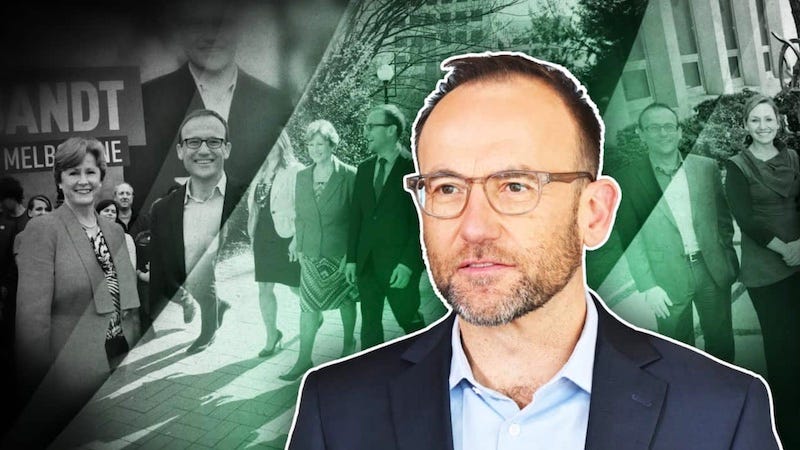
The Australian Greens also emerged from the 2025 federal election bruised and searching for answers as to what happened. On the surface, their result is an odd paradox: their national primary vote was relatively steady – more votes than 2022, although a small drop in percentage – yet they lost three of their four House of Representatives seats, including the seat of their leader, Adam Bandt.
The four seats were supposed to be a platform for the expansion of the Greens – perhaps to six, seven or even more – allowing the party to hold more leverage in the lower house. Instead of consolidating and growing, the Greens were pushed back to where they were between 2010–22 – holding just the one seat – and their parliamentary influence is now once again concentrated in the Senate.
Perhaps those expectations were unrealistic: Greens projections suggested that such gains were likely, and there was genuine belief that issues of the day – housing affordability, climate change, frustration with the overly cautious Albanese government – would result in a surge in new seats for the Greens in inner city areas. But it just didn’t happen.
Some of this came down to the dynamics and personalities of the candidates. Max Chandler-Mather became a polarising figure: highly admired by his supporters but just as strongly rejected by his critics. In a tight vote in the seat of Griffith, that polarisation made a difference. Bad luck also played its part, but politics has no time for luck, as both Chandler-Mather and Bandt found out.
Under the new leader, Senator Larissa Waters, the Greens face an even deeper challenge. Their support base ranges from affluent inner city conservative voters concerned with local amenity and environmental concerns, to radical anti-capitalists who want to dismantle the economic system entirely. It is an extraordinarily broad group of voters – even more so than the Labor and Liberal parties – and managing that diversity while presenting a coherent, electorally palatable program is a task that is difficult for any political organisation.
But unlike the Liberal Party, the Australian Greens are not decaying into an unviable political entity. Yes, they did lose lower house seats, but they have their strength in the Senate, and their primary vote is stable. However, 2025 was a reminder that this doesn’t automatically translate into seats, and it will get down to a stronger focus and discipline in the future – and choosing the right candidates – in inner city areas. This was a major setback, but not a terminal one: compared to the Liberal Party, which faces an existential crisis, the Greens remain alive politically.
Ultimately, the story of the year in politics wasn’t about transformation – that was made very clear – but more of a consolidation of what was already there. And this seems to be the Labor government’s modus operandi: consolidate that which exists, but change nothing at all. In a year dominated by global uncertainty, the electorate preferred stability over risk, rewarding a cautious Labor government in spades, but offering an even greater rebuke to the Liberal Party, to ensure that Peter Dutton never became prime minister.
The election created a different kind of political landscape: voters made clear that in troubled times – as they always do – competence and credibility matters more than mindless outrage, and that the parties that are unwilling to change will be left behind.
"Polishing the Facade"
Did you mean 'Polishing a Turd'?
I fear for our country because I don’t know who can rescue our public education system from preschool to PhD, nor how such erasure of the Arts and Humanities, and mutation of the Sciences , can be corrected. The destruction of public education in NSW is vile.