


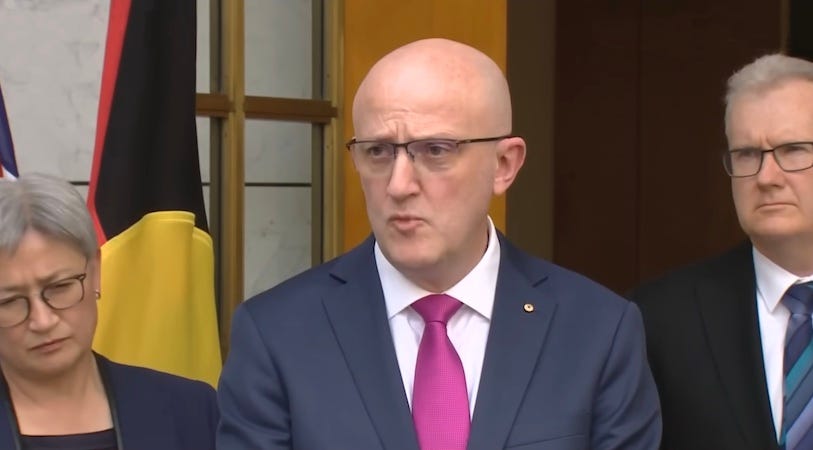
Australia’s decision to expel Iran’s ambassador is the most dramatic diplomatic incident in over 80 years, with Prime Minister Anthony Albanese using ASIO assessments – announced by the Director–General of Security, Mike Burgess – to make a link that Iran was behind the arson attacks on the Jewish community in Sydney and Melbourne in late 2024. In Albanese’s words, these were “extraordinary and dangerous acts of aggression orchestrated by a foreign nation on Australian soil,” claiming that Tehran sought to undermine social cohesion and spread fear among Australian Jews.
On the surface, these allegations are serious, of course they are. The attacks – one at the Adass Israel Synagogue in Melbourne, the other at the Lewis Continental Kitchen in Bondi – were described as part of a broader pattern of hostility directed by Iran. Yet beyond the Prime Minister’s carefully chosen words about “credible intelligence”, there’s many areas that need to be resolved, and much material that just doesn’t make any sense. No evidence has been publicly presented to substantiate the broad claims from ASIO and, unlike the usual diplomatic processes, the ambassador was not summoned for consultation or given an opportunity to respond. Instead, Albanese moved directly to remove the ambassador, a rare and provocative action.
There are so many obvious contradictions: Albanese has consistently downplayed Australia’s role in Middle Eastern affairs – as recently as last week – often defending his muted response to mass pro-Palestine marches and Israel’s genocide in Gaza by insisting that “Australia is not a major player in the region”, or in the case of Foreign Minister Penny Wong, her comments that it’s difficult to “judge from afar” the grotesque actions of Israel. If that’s the case, why suddenly elevate Australia’s position by making it the first Western government in decades to expel an Iranian ambassador? And on such flimsy material presented to the public?
There is also the question of just how plausible it would be for Iran to be involved, which would gain nothing at all except for international opprobrium. Of course, Iran, like many authoritarian states, runs surveillance operations on its diaspora communities, including on the 85,000 Iranian Australians, many being dissidents who are hostile to the government of Tehran. But orchestrating crude arson attacks on local synagogues in Australia doesn’t have any strategic relevance or importance.
Not only is there no precedent for Iran directing such attacks in Australia, but the incidents themselves were amateurish and clownish – fires that caused limited damage, allegedly carried out by hired bikies whose own text messages reveal incompetence rather than professional co-ordination. As notorious as Iran’s Revolutionary Guard is, it’s established methods involve large-scale, high-impact operations abroad – lighting fires at minor community sites is not its modus operandi, and would probably be insulted at being accused of such an incompetent act.
This narrative coming from ASIO is even more questionable when considering the nature of the targets – at least one synagogue affected was known for its anti-Zionist stance, making it an unlikely target for a regime that is vehemently opposed to Israel, rather than the Jewish religion itself.
The attack on the Lewis Continental Kitchen, a small kosher restaurant in Bondi, also raised further doubts – why choose a modest food business when larger, more symbolic Jewish institutions are nearby? The inconsistencies feed a belief that the Australian government is either overreacting, or – more likely – that there are other motives are at play.
Complicating these issues is the credibility of ASIO itself. This is the same intelligence agency that supported the false claims of weapons of mass destruction in Iraq in 2003, a “credible assessment” that justified an invasion and a war which killed over 200,000 people. Over 20 years later, Australians are being asked to “just trust the intelligence” once again, and it’s understandable that they might be sceptical, especially when it involves an escalation with Iran, and possible another invasion and a war. Without transparency, ASIO’s role looks less like a credible and analytical assessment and more like political theatre, where intelligence is being politicised to fit in with the policy objectives, either of Australia, or other international players.
Against this background, the timing of this expulsion also needs to be taken into account, coming just a week after Israeli Prime Minister Benjamin Netanyahu publicly berated Albanese for his intention to recognise Palestine at the upcoming meeting of the General Assembly at the United Nations. These events suggest the expulsion might be more about appeasing international relationships and managing domestic political pressure that any genuine national security threats.
Intelligence and the Palestine connection
While governments occasionally expel lower-ranking diplomats and declare them persona non grata, forcing an ambassador to leave is an extreme measure. Iran has already indicated that it will expel Australia’s ambassador from Tehran in retaliation – perhaps a moot point, considering Australia already evacuated the diplomats before the announcement was made – and it has firmly rejected the allegations levelled by Australia.
The timing of this move also opens up more speculation. Albanese’s decision to recognise Palestine at the United Nations drew condemnations from Israel and the United States but, in contrast, Iran strongly welcomed the move, as did its ambassador in Canberra. Was his expulsion a convenient way to silence his voice? Or could the situation provide Prime Minister Anthony Albanese with an excuse to backtrack from his promise to recognise Palestine? Albanese had already hedged his position by insisting recognition should proceed only in co-ordination with other states in the region and the acceptance of Israel’s right to exist. Iran, of course, refuses to recognise Israel at all, making it an easy scapegoat if Albanese decides to delay or dilute his commitment, providing the Prime Minister with the political cover where he could argue that Iranian “aggression” makes it impossible to advance Palestinian statehood while maintaining Australia’s credibility on security matters, however weak that might be.
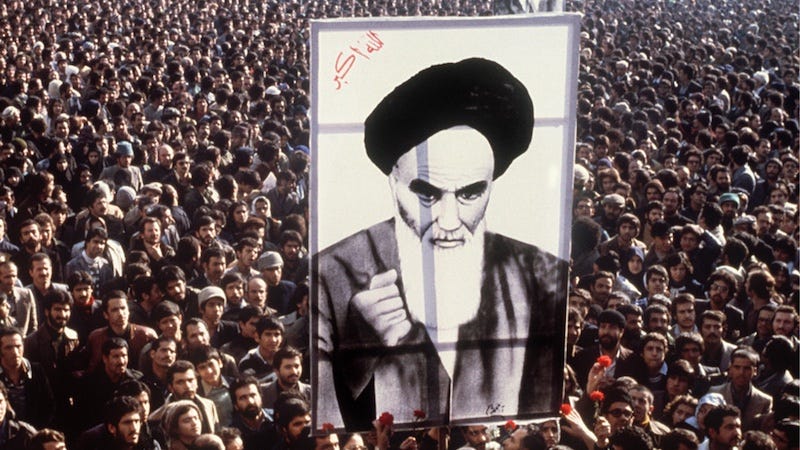
There’s also other inherent contradictions within Iran. Iran has the largest Jewish population in the Middle East outside of Israel, a population of around 10,000 people. While Jewish life within Iran is not free of restrictions, it is worth remembering that after the 1979 Revolution, Ayatollah Khomeini issued a fatwa to protect the Jewish communities who live inside Iran. Tehran’s hostility has always been directed at Zionism as a political ideology and the Israeli state, not at Judaism as a religion, and this situation makes the claim that Iran would target a non-Zionist synagogue in Melbourne even more illogical.
The deeper concern is the way intelligence is being used here. Professional intelligence work requires solid sourcing, verifiable evidence, and rigorous analysis. But intelligence agencies also exist in a clouded political space – funded through secretive channels, operating through cut-outs and plausibly deniability, sometimes venturing into activities that governments always seem to deny. The record of agencies such as MI6 and the CIA shows how often intelligence has been politicised, manipulated, or simply wrong. But it hasn’t stopped that intelligence from being used to justify nefarious ends, as shown through the “weapons of mass destruction” debacle in Iraq.
If this is the basis for expelling the ambassador, then Australia has moved once again into dangerous territory – using intelligence as a political weapon. Whether the target is Iran and a war that Israel and the United States have longed for over many years, or obstructing Palestinian statehood – or both – the consequences will be profound.
The double standards and the politics of belief
There is also a severe diplomatic imbalance at play that many people in Australia have called out. Iran, accused without clear evidence of sponsoring two arson attacks that caused minimal damage – certainly no damage to human life – has faced the most serious diplomatic sanction Australia can impose, short of severing these relationships altogether. Meanwhile, Israel – accused of war crimes by the International Criminal Court, practicing a brutal form of apartheid, and accused of genocide by many reputable international bodies – faces nothing at all, never faces any condemnation or red lines that cannot be crossed and, if anything, is encouraged to continue its crimes against humanity, supported through yet another shipment of arms from Germany and United States, and F-35 parts provided by Australia.

Israel’s bombing campaigns have killed more than 64,000 Palestinians – at the very least – including civilians, doctors, and journalists. The Australian aid worker, Zomi Frankcom, was killed by a deliberately targeted Israeli drone strike in Gaza in 2024, yet the Israeli ambassador is still there in Canberra, rescued by Albanese’s infamous political caution, diplomatic inertia and a few words of “concern” from Foreign Minister Wong. In this context, the expulsion of Iran’s ambassador is selective, and breathtakingly cynical.
The mainstream media, too, has largely fallen into line, amplifying ASIO’s claims with hardly any scrutiny at all. Hard questions about the credibility of the evidence have been rare, and what little scepticism exists has been drowned out by the government’s framing of events. This blind acceptance has a familiar ring to it and Australians have been here before: the Hilton Hotel bombing in 1978, where bungled intelligence led to wrongful arrests; the 2003 Iraq war, where false intelligence about weapons of mass destruction paved the way for invasion and mass slaughter; the debacle of Man Haron Monis, the terrorist behind the Lindt Café siege in 2014, who was also an ASIO operative.
Security services, like all human institutions, are imperfect, and there’s no question that they will make mistakes. But when their judgments carry consequences as profound as unjustified wars, mass casualties, a siege in the heart of Sydney, or the unprecedented expulsion of an ambassador, there can’t be any margin for error.
In practical terms, the fallout from this affair within itself, will be limited. Australia has doesn’t have a significant trade with Iran, and the embassy’s primary functions concern air travel, tourism, and consular assistance for dual citizens. The closing of the embassy might complicate the lives of the few Australians visiting family or touring Iran, and Iranian Australians dealing with paperwork or cultural exchanges. But strategically, the expulsion achieves little. It doesn’t weaken Iran’s regional position, nor does it advance Australian security in any meaningful way. What it does achieve though is symbolic theatre: a show of resolve directed not so much at Tehran, but at domestic audiences and international allies.
The Australian government will claim that it has acted out of security necessity, but in reality it has exposed itself to accusations of hypocrisy, politicisation, and subservience to allies. Expelling an ambassador on the flimsiest of grounds, while excusing far graver offences by Israel, undermines the credibility of both the government and its intelligence services. This is a decision that won’t be remembered as a principled defence of Australia’s sovereignty, but as another moment when intelligence was used as a political weapon, and the truth was left far behind.
The benchmark for ASIO is rooted in their spying on East Timor. Nothing, NOTHING, has improved since then. ASIO is a shame.
Thanks Eddy.
ASIO and the security agencies is openly playing a much greater role in shaping foreign and public policy. This is concerning as Burgess is unelected and unaccountable to the people. He and Albanese relish the secrecy of their ‘intelligence’ but won’t ever share it to have it tested. They can destroy people’s lives with their secret courts like Witness K, while not allowing you to see the evidence brought against you.
Albanese, Marles and Wong (the Triumvirate) will have you believe that ASIO was able to expose this incident and tie it to Iran, but not the Dural Caravan hoax until after the laws were conveniently changed.