


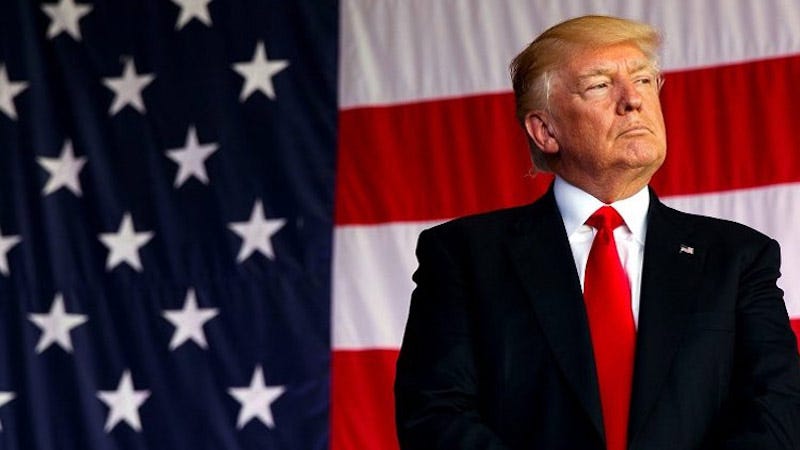
It says it all really. US President Donald Trump took out his frustrations with the United Nations by mocking a broken escalator and a faulty teleprompter, a performance that encapsulates much of his approach to international diplomacy: reducing serious global forums to personal grievances, insults and theatrical soundbites. From that podium at the UN, he spoke in apocalyptic tones about Europe being “devastated by energy and immigration,” urging nations to clamp down on what he called “the unmitigated immigration disaster” and a “fake energy catastrophe”. It’s rhetoric designed to appeal to nationalist and MAGA sentiment within the US, but it did little to reassure allies or uphold America’s reputation as a steady global leader.
Trump’s second term has been marked by an accelerated erosion of democratic norms, where institutions are being hollowed out and experienced officials are being replaced by loyalists chosen for political obedience rather than their competence. Conspiracy theories are elevated to fact, while expert advice is routinely ignored and dismissed. The result is a US government that functions more like a personal fiefdom and continuing whingefest, rather than a professional administration, and it’s starting to groan under the weight of its own ineptitude.
On the international stage – or any stage – Trump’s speeches are littered with lies and mistruths. He boasts of having “ended seven wars,” halting immigration and talks about climate change as a hoax, the big con. None of these claims are true, of course, but they resonate with the far right MAGA base, and feed into a culture of complaint and paranoia. Trump relentlessly attacks immigrants, independent media and any critic who refuses to bow to his wishes. The result is a deeper polarisation in the United States, and a rapidly declining international credibility.
America’s decline, however, can’t just be pinned solely on Trump: this would give him too much credit. He’s less the cause than a catalyst – a symptom of deeper structural weaknesses within US society. For decades, the country has neglected the infrastructure and social foundations that once underpinned its global leadership. With an estimated $3.7 trillion backlog in essential repairs, according to the Information Technology and Innovation Foundation – roads, hospitals, schools and public services – the US has consistently chosen to funnel resources into foreign wars and alliances with corrupt regimes, rather than investing in its own people. Even under leaders widely seen as competent, such as Barack Obama, foreign policy often prioritised military action over domestic renewal.
Trump’s actions have simply brought these flaws into the open, so the world community can more readily see them. His chaotic leadership has exposed what happens when an advanced society elects a figure who thrives on spectacle, grievance and division. The fact that his election was even possible – whether narrowly won outright or nudged over the line by interference and manipulation – it reveals a country willing to gamble its democratic tradition for the promise of far-right disruption. Trump’s 2024 presidential election was not a landslide victory, but it was enough to reshape the trajectory of the United States. Since Ronald Reagan and the onset of neoliberalism in the 1980s, America has been drifting toward this cliff; and Trump is the accelerant on this path.
But the rest of the world isn’t waiting: as the United States retreats towards its new phase of isolationism, other nations are stepping into the vacuum. The choice remains America’s to make: to embrace isolation and authoritarianism, or to adapt and renew its place in the world. Countries will always have the right to choose their own national direction but one thing is very clear – no nation can withdraw from global responsibility and still expect to be a leader.
The self-inflicted wound of isolationism
The suggestions of American decline are not new, and nor did they begin with Donald Trump’s second presidency, or even his first in 2017. The roots stretch back decades, through Reagan’s almost maniacal embrace of neoliberal economics across all aspects of American society. The dismantling of regulatory safeguards, the neglect of public infrastructure, and the elevation of markets over social cohesion have all chipped away at the foundations of American power. Under Trump, the hollowing-out of institutions has continued: it’s no longer unusual to find government departments led by conspiracy theorists or opportunists whose qualifications are measured only by how low their genuflection to the President stoops.
Nowhere is this more dangerous than in health and science policy. With figures such as Robert Kennedy Jr. – an anti-vax crusader inexplicably elevated to Secretary of Health – policy has been shaped not by science but by paranoia, where spurious claims, such as links between paracetamol and autism, have made it into official pronouncements. This weaponisation of mindless conspiracy theories not only undermines trust in medicine but it endangers public health. They’re not harmless theatrics; they corrode America’s standing and hasten its retreat from global leadership.
And while Trump is feeding his own paranoias and those of the far right, other powers – China, Russia, India, Brazil – are creating new alliances, experimenting with trading currencies and financial networks outside of the US dollar, and deepening their regional influence. Far from weakening China – Trump’s biggest agenda – his policies are bolstering its role as a counterweight to American hegemony. An isolationist United States is not a stronger one: it’s a wounded power inflicting damage upon itself while others prepare to occupy the space it vacates. For allies such as Australia, the message should be obvious: the blind attachment to the United States carry many risks, and diversification of partnerships is becoming essential in a world that is being reorganised.
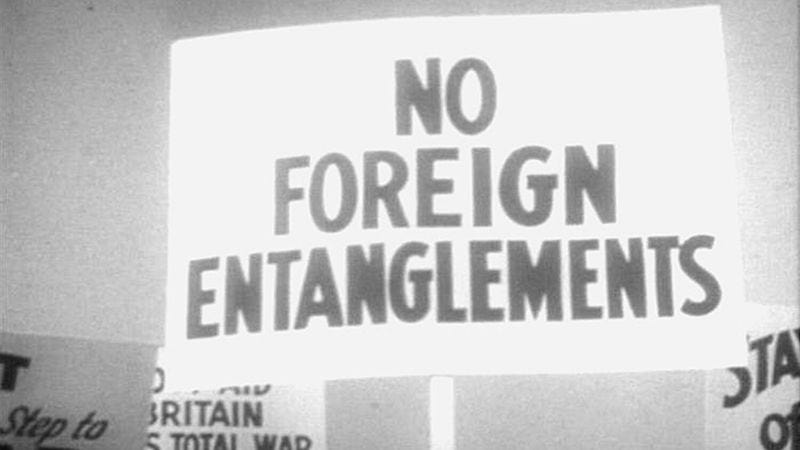
American isolationism isn’t a new phenomenon: for much of the 20th century, the United States flirted with disengagement, cushioned by its abundant resources and the capacity for self-sufficiency. But globalisation, especially this third wave, has removed the possibility of true isolation. In a connected world, withdrawal means irrelevance. Nations will not follow the lead of a power that turns inward and rubbishes and ignores international agreements. The perception of the United States as a stabilising force – whether that was warranted or not – created the foundation of its global role. But this perception is disappearing very quickly.
