


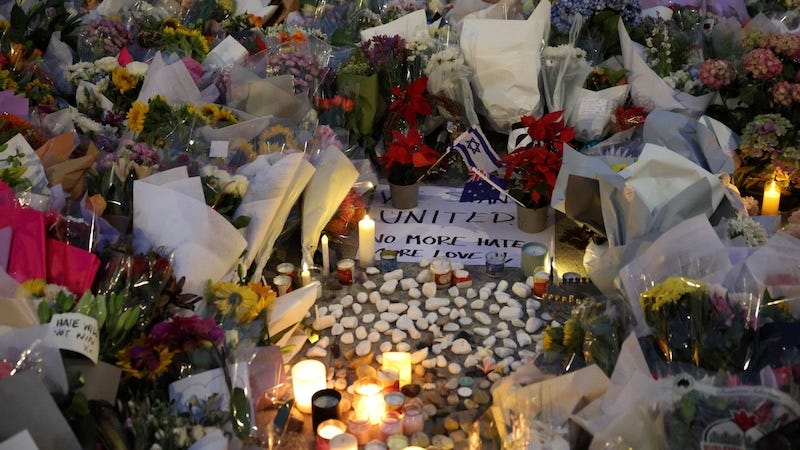
Tragic events are always a test of humanity’s ability to respond to crisis, irrespective of how severe they may be. As shocking as many of these incidents throughout our history have been, they are always the moments when we put our differences aside, work to help one another, and collectively try to console and understand what has just occurred. Why did this happen? Why did it happen to us? Why did it happen now?
These are the moments that shock communities out of complacency. Yet history also shows that we can learn from such experiences and bind communities back together again, irrespective of the severity of these shocks. This is what occurred during the Port Arthur massacre back in 1996, where 35 people were killed by a lone gunman – political differences were put aside and national leaders worked collaboratively to enact strong gun laws that have offered the community a stronger level of protection over the past 30 years than otherwise would have been the case.
Another incident was the Lindt Café attack in 2014, when another lone gunman took 18 hostages and killed two people in the heart of Sydney and had devastating long-term consequences for the city. Once again, the community – including political leaders – worked together to condemn the violence and resisted the temptation to score political points. As the Governor-General at the time, Peter Cosgrove said, Australia needed to “unite in our resolve to protect what we value most – our way of life, our care and respect for each other”.
While the Christchurch mosque shootings in 2019 occurred in another country – 51 murders perpetrated by an Australian citizen – the scale and brutality of the attack resonated strongly in Australia and the actions were unequivocally condemned across the political spectrum.
The weekend terrorist attack at Archer Park, Bondi Beach, during the Chabad of Bondi’s Hanukkah celebration was another one of these profound and shattering tragedies. Bondi Beach, like most of Sydney’s eastern-suburbs beaches, is an open, communal space – a place of leisure, community and public life – yet it was transformed into a scene of terror by two shooters, a father–son combination, both reportedly known to ASIO, killing 15 people and seriously injuring 42 others.
There’s no question that this was a shocking event and, when these events do occur, the first responsibility of political leaders and media commentators is to show restraint and, more importantly, provide and allow the space for the community to grieve, to support those people who have been affected, and avoid turning this intense suffering into an act of political point-scoring or a media-driven spectacle. Unfortunately, it was too much to expect from some of these incorrigible actors, and it’s something that didn’t occur.
Almost immediately, it was seized upon by the familiar political opportunists. From halfway around the world, Israeli Prime Minister Benjamin Netanyahu issued a statement blaming the Albanese government for an alleged rise in antisemitism in Australia. The Special Envoy to Combat Antisemitism, Jillian Segal, followed suit, demanding the full implementation of recommendations from her recent report, while at the same time, asserting that unrelated events – none of which have been proven to have any link to the attack, such as weekly pro-Palestine protests in cities across the country, the Sydney Harbour Bridge walk in August, or Australia’s recognition of the state of Palestine – were directly connected to the violence at Bondi.
Amid the flood of information and disinformation circulating in the days following the attack, and with little regard for grieving families or a city still in shock, these claims were highly incendiary and deeply irresponsible.
Right-wing commentators also joined in on the act, repeatedly asserting that Prime Minister Anthony Albanese had “not done enough”, without ever articulating what concrete actions were supposedly not taken up. Since October 2023 – aside from unrealistic and unworkable demands to criminalise criticism of Israel and Zionism, or to grant police expanded powers to suppress pro-Palestine protests – the Jewish community has been provided with everything it has formally requested from the federal government.
There can’t be any doubt about what occurred: this terrorist attack on the Jewish community at Bondi Beach was a total outrage. These terrorists should be condemned and the Jewish community deserves full support: there’s no question about this. However, we shouldn’t discard our values for other peoples and remove the ability to hold on to multiple truths at the same time. Yes, we can condemn these shooters and stand with the Jewish community. We can feel numb about these attacks and mourn the innocent lives lost, while still condemning Israel’s actions in Palestine – events like Bondi have occurred every single day in many parts of Gaza for the past two years – and we should still be able to denounce the supremacist ideology of Zionism.
This isn’t a sign of moral confusion; it’s a sign of moral consistency. And the empathy that picks and chooses where it’s to be directed towards – towards one, and not the other – is not really an empathy at all. The world is far more complex than these conservative agitators want us to believe – particularly those who couldn’t even wait for the mourning to begin before exploiting tragedy for political gain.
No time for mourning when the political opportunity arrives
The reaction following the Bondi attack suggests something very troubling about contemporary political culture, both here and abroad. Within hours, the tragedy was framed through the tired old Islamophobic narratives and tropes, almost forgetting about the victims and attempting to rework the attack as a political opportunity. While many world leaders sent condolences to the Jewish community and the Australian people, Netanyahu was busy focusing the blame on the Albanese government and deflecting attention from his own domestic political crises – conduct that was unbecoming of the leader of a country that’s supposed to be an ally of Australia. For Netanyahu, Jewish communities anywhere in the world seem to be expendable: what seems to matter more to him is whether a crisis can be milked to protect his own political future.
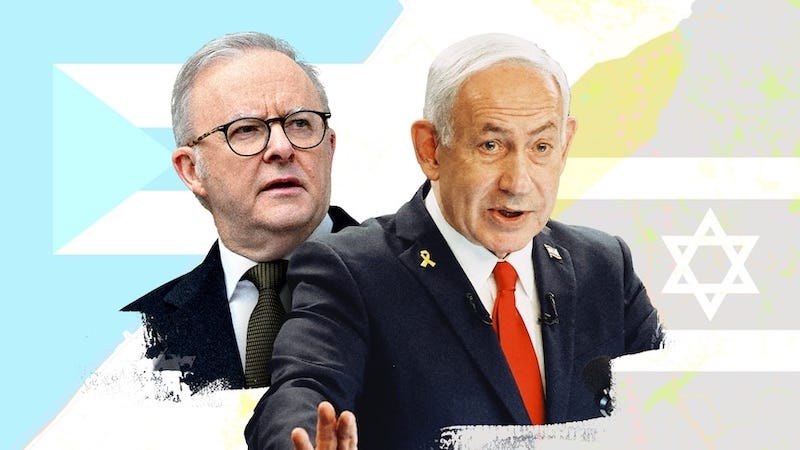
Almost as quickly, the narrative then shifted again. Israel then began pointing fingers at Iran and Hezbollah, despite there being no evidence linking these groups to the Bondi attackers. The suggestion of a broader regional conflict – and the reframing of an atrocity in Sydney to serve that narrative – is a clear attempt to push forward Israel’s strategic interests: reshaping Western public opinion, shoring up international support after its reputational damage over the genocide in Gaza, encouraging deeper US military involvement, and exacerbating global divisions just at a time when these divisions need to be de-escalated.
This isn’t just empty rhetoric from Netanyahu; it’s about political power and opportunity. The state of Israel would be aware that its global standing has eroded significantly over the past two years, particularly among younger audiences and across large sections of Western society, especially in the United States. Support coming from high-profile people such as Hillary Clinton, and amplified by wealthy pro-Israel donors and sympathetic media platforms, now function as the soft-power mechanisms that are being used to rehabilitate Israel’s image. Tragedies like Bondi become opportunities to redirect attention – shifting the moral spotlight away from Gaza and back onto that narrative of an existential threat for Israel.
Locally, there are also disturbing links with the past. One of the shooters, Sajid Akram, for reasons which are yet to be explained, legally possessed six firearms and was on ASIO’s radar. This is similar to the case of Man Monis and the Lindt Café siege in 2014, where Monis was known to authorities as a security “asset”, and went on to commit his violence in the heart of Sydney. To this day, no comprehensive, independent inquiry has fully satisfied public concerns. Each time these events do occur, it’s the same old pattern: the shock of the event, condemnation, political exploitation, some kind of report is produced, and then the silence. Nothing ever changes.
None of this diminishes the horror of what occurred at Bondi – it never can – nor does it excuse the perpetrators for their actions. The point is that grief is being leveraged with manipulation in a way that it never should, and that fear is being warped into political advantage before all of the facts have been revealed.
The false dichotomy of political intimidation
Whatever is said or done will never be enough to satisfy conservative opportunists who see the world in strict and unchangeable binaries: we are told that condemning Islamist violence needs to be accompanied by silencing criticism of Israel. We are told that supporting Jewish Australians – which we are and will continue to do – means abandoning support for Palestinian lives, as if we, as humans, are not allowed to spread our humanity to a wide range of peoples in the world.
We can condemn the ideology that motivated the attackers, while also honouring the courage of Ahmed Ahmed, the man who disarmed Sajid Akram and saved many lives while risking his own. We can reject antisemitism absolutely, while also condemning the actions of the state of Israel that’s engaged in wanton mass violence and a genocide.
It’s really regrettable that political figures from across the spectrum – from Sussan Ley and Pauline Hanson locally, to Netanyahu and various US leaders and commentators – chose to exploit this moment. Even former Prime Minister John Howard – who received full bipartisan support in 1996 for his gun reform legislation from the leader of the opposition at the time, Kim Beazley – has joined the fray with his dog-whistling racism, saying that Albanese’s “greatest failure is not to provide the moral leadership that a prime minister can in denouncing antisemitism,” even though this is clearly what Albanese has provided since the events on the weekend, and has done so since October 2023.
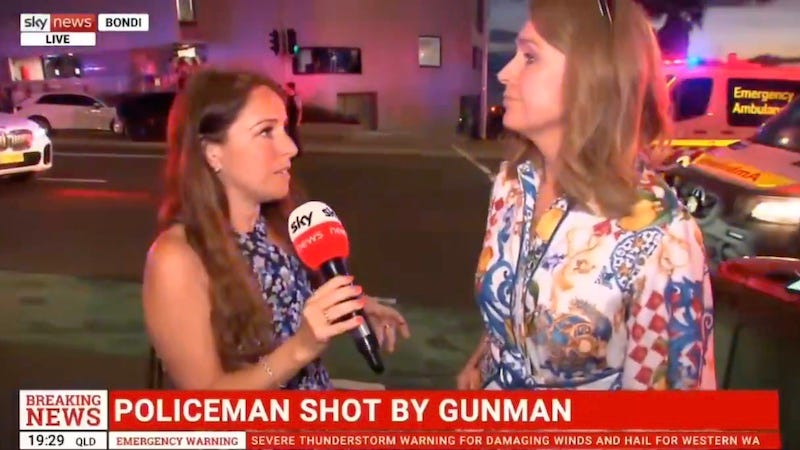
In time, their conduct will be exposed for what it is: cheap shots which are just trying to gain votes and exploiting someone else’s misery. A more responsible response did come from the NSW Liberal leader and local member representing the people of Bondi, Kellie Sloane, who, when pressed by Sky News commentator Sharri Markson to attack the federal government, simply said she did not “want to blame anyone tonight other than the people who perpetrated this horror”, although even she has changed her tune since, and started attacking the responses and actions from the NSW Police.
There are, of course, legitimate questions that need to be asked. The Jewish community has been provided with everything materially it has asked for by the federal government: in this case, why do these conservative politicians and extremist Zionists keep attacking the Prime Minister? Why do they never outline which level of support will be adequate and what is actually missing? Among all the criticisms, was the NSW Police response sufficient and timely? Why do individuals known to ASIO continue to fall through institutional cracks that only become visible after the violence occurs?
These are questions of accountability, not opportunism, and do need to be asked. And yes, if we are going to ask those questions, we should also ask how criminalising criticism of Israel and Zionism will somehow stop these incidents from happening in the future, or how withdrawing funding from those universities that allow pro-Palestine activities on campus will deactivate someone like the 24-year-old Naveed Akram, the other shooter at Bondi, even though he’s never set foot on a campus in his life.
What does needs to be shown from our current and former political leaders at this time is restraint, as was shown at Port Arthur in 1996, and in Sydney during the Lindt Café siege in 2014, and not the self-serving opportunism. A Jewish community is grieving and families have been destroyed. A city is struggling to process this grotesque violence in a place that symbolises openness and safety. To exploit that pain – to whip up the fear, apportion blame and make the accusations without evidence, or attempt to leverage shock for domestic or geopolitical advantage – that’s not leadership; it’s a profound failure of responsibility from people who should know better but, unfortunately, don’t.
Australia deserves honesty and clear answers, not a circus performed by people acting in their own interests and those interests of a malevolent leader half a world away. And the victims from Bondi’s Jewish community deserved far better than to become props in a political theatre that didn’t seem capable having a break from it all, even in the face of tragedy and heartbreak.
Spot on, Eddy. All the points i have been making.
My compassion for Zionists (who organised the event) expired somewhere around the 20,000 Gazans dead mark, but i still have some reserved for humankind. What happened to the victims and the bystanders was incredibly traumatising, horrific. I feel for everyone that lived through it, and for the families of those who didnt. Outlawing anti zionist speech will just push more people to extreme action imho.
This politicisation of such a shocking, tragic event by the liberals and others is just hardening my heart, i cant deny that im so cynical of netanyahu and zionism i considered whether it could be a false flag operation. After oct 7's hannibal directive nothing would surprise me.
But no, its just netanyahu using the deaths (rather than causing) of his people for politicial points. Im so sick of it all. Every day the gazans face these tragic losses as well as their homes, livelihoods, their futures.
They are fish in a barrel, waiting their turn while half a world away people complain about "needing" security at school and at places of worship, and make petty and racist demands, in some kind of retaliation for the terrible actions of just 2 people.
This vicious hypocrisy makes my head hurt and my heart ache.
The politicisation of this traumatic event has been atrocious. The compliant media has obediently amplified the illogical, emotive, knee-jerk, racist, discriminatory, draconian messages being thrown about by politicians. We are at risk of imposing laws that limit civil liberties for all, and by the time anyone notices, it will be too late.
Instead of questioning how 2 people could roam public streets with firearms and explosives, the debate in this country is about the curse of anti-semitism. This reductionist approach to a major failure of law enforcement and security is downright dangerous.
The lack of maturity from public figures in leading important conversations makes me think that Paul Keating was right - this is the arse-end of the world. The TV news is unbearable in its banality and sentimentality. Thank goodness their are still some sane minds watching this disaster unfold.
Meanwhile, the Palestinians are still being oppressed by a powerful occupying force, and the world has forgotten its humanity.