


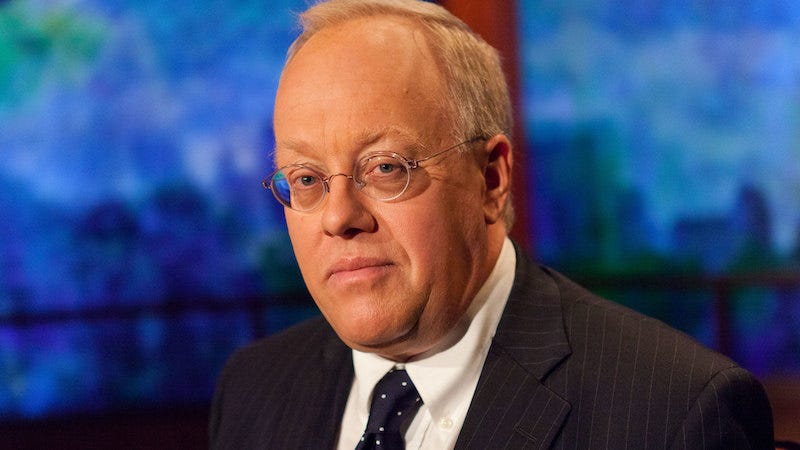
The National Press Club has cancelled an upcoming address by Pulitzer Prize-winning journalist Chris Hedges, who had been tentatively scheduled to speak in Canberra on October 20. “The Betrayal of Palestinian Journalists” was to examine how the mainstream media has failed in the ethical duty to report truth and ignored solidarity with colleagues working and dying in Gaza.
Hedges’ lecture was to highlight how Western media outlets, including many in Australia, have repeated Israeli disinformation despite clear evidence of atrocities, censorship and the routine targeting of Palestinian journalists, with over 278 killed since the start of Israel’s assault on Gaza in 2023. The proposed lecture was removed from the schedule, and CEO Maurice Reilly relayed to Hedges that “in the interest of balancing out our program, we will withdraw our offer,” despite the Club’s public commitment to being a “vigorous champion of media freedom”.
Of course, Reilly’s explanation has provoked widespread criticism from journalists, academics and supporters of free speech in Australia, who have accused the Club of hypocrisy and political cowardice. Reilly later justified the cancellation by noting that the Club was hosting several speakers on the issue Palestine, including Chris Sidoti, Ben Saul, UNICEF spokesperson James Elder, and Judge Navi Pillay, who had served on the UN inquiry that found Israel is committing genocide, arguing that the Club needs to “balance” its speaker lineup.
But this is disingenuous: Hedges’ address concerned journalistic ethics and accountability, not geopolitics, and cancelling such a figure undermined the very principles the Club claims to uphold. And surely, a club that purports to be an organisation representing the intellectual interests of journalists should be presenting the type of address Hedges was going to provide.
Reilly has denied any external pressure, insisting that the decision was made solely by the Press Club’s board. Yet, there’s many questions about the relationships between some Australian journalists and pro-Israel advocacy groups, many of whom have attended “Journalists’ Mission to Israel” – a media “study tour” sponsored by the NSW Jewish Board of Deputies. The program, according to its organisers, is designed to “demonstrate the complexity of the situation in the Middle East,” but such trips often serve to frame narratives in Israel’s favour and shape sympathetic media coverage back home.
The cancellation of Hedges is a direct affront to press freedoms in Australia – and shows that one of the nation’s elite media institutions has become more concerned with political optics and donor sensitivities when it comes to Gaza – like so many other institutions – rather than with defending the right to speak truth to power.
A moral witness
Chris Hedges is an acclaimed war correspondent who built his reputation by reporting from the world’s most brutal conflicts for well over 30 years, including from Central America, the Balkans and the Middle East/Western Asia. He was the Middle East and Balkans bureau chief for the New York Times, and was a member of the team that received the Pulitzer Price in 2002.
Hedges’ approach to journalism is based on what he refers to as the “moral witness” – the belief that a reporter’s duty is not just to relay information but to confront power and expose injustice, even at personal risk, and suggests a clear delineation between two types of war correspondents: the few who risk their lives to document the realities of war – such as the ones in Gaza – and the many who “play at war,” relying on official briefings and producing narratives shaped by military and political handlers.
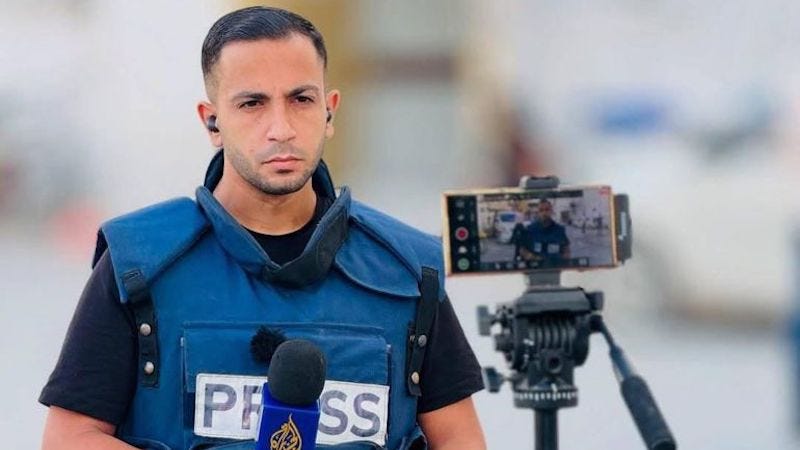
It’s a distinction that has never been more important than in the coverage of Gaza, where “official” accounts from Israel are routinely presented as fact while the testimony of Palestinian journalists and civilians is marginalised or dismissed. By their actions, it’s clear which side of this ledger the National Press Club stands on.
During his years reporting from Gaza, Hedges witnessed first-hand the destruction and terror inflicted on its population. He’s seen children shot by Israeli soldiers, families buried under bombed homes and entire neighbourhoods reduced to rubble under what Israel claimed were “surgical strikes”. For Hedges, the language of state-sanctioned reporting – “collateral damage,” “security operations,” or “being caught in crossfire” – is an example of the moral blind spot within modern journalism.
Since the Israeli assault on Gaza in late 2023, Hedges has turned his attention to the “betrayal of journalism” itself, suggesting that Israel’s military campaign amounts to genocide and ethnic cleansing – now confirmed by many reputable human rights organisations – carried out with the backing of the United States and Europe and justified through a compliant global media that reproduces official lies. According to Hedges, this is not just a political failure but an ethical one – a symptom of a profession that has surrendered its moral authority to the interests of power, profit and propaganda. The action of the National Press Club is symptomatic of that.
The highest obligation for a journalist in the field of war should be to veer towards truth, not neutrality, and Hedges said that we “cannot stand by while one people is exterminated and call it balance”. His address at the National Press Club was expected to explore this collapse of journalistic integrity – how the media’s complicity in Gaza reflects a broader decay in Western journalism, driven by corporate consolidation, political fear, the loss of moral courage, and a failure to hold power to account.
The silencing of Hedges isn’t just about the one event – it’s about the crisis he has spent his career warning about: a media culture so compromised by power that it no longer tolerates those who insist on telling the inconvenient truth.
The hypocrisy at the heart of this decision
This decision by the National Press Club has tarnished its credibility, as well as raising many questions about its commitment to media freedom, as it’s now engaging in the kind of censorship that it has frequently challenged in the past.
In 2019, the Club hosted “Press Freedom: On the Line,” a forum that was held after a spate of police raids on journalists’ homes, unions and news organisations during the time of Morrison government. That event became a key part of the #YourRightToKnow campaign – a co-ordinated effort by Australian media to push back against government secrecy and defend the public’s right to information. The Club’s own publicity at the time offered a direct question: When government keeps the truth from you, what are they covering up? While the Club wasn’t officially a part of that campaign, it was a strong supporter of the notion that journalism’s core duty is to confront the powerful, not to appease them.
Six years later, it’s apparent that for the Club, there are certain issues that can indeed be swept away. By cancelling Hedges – a lecture that was to be dedicated to the betrayal of journalists in Gaza – the Club has answered its own question about your right to know. The Club has aligned itself with the same forces of suppression it claims to oppose, trading moral conviction for comfort and conformity, and engaging in its own betrayal of the principles of journalism.
The Club was a signatory to the International Association of Press Clubs statement in September 2024 that condemned Israel’s killing of journalists in Gaza, and called for independent investigations into the deaths of reporters, denounced attacks on hospitals and medical staff, and reaffirmed the protection of journalists as an essential part of international law. But that was just lip service: when the opportunity arose for a journalist of the calibre of Hedges to discuss these crimes from first-hand experience, the National Press Club chose silence.
Reilly has also claimed that “when the details of the address were made available, we made a decision to pursue other speakers on the matter”. What exactly were those details? It’s not as though Chris Hedges is an unknown journalist who just appeared out of nowhere: the National Press Club would have known exactly who they were working with. Who were the details of the address made available to? What were these deliberations? Who made the decision?
The claims of “no external pressure” – as far as we can tell – might be plausible, but what about pressure from within the National Press Club or from the other 86 journalists who have been on the Israel-sponsored “study missions” designed to shape media narratives that are favourable to the policies of Israel? How many of these are also members of the National Press Club? Of course, a claim of “no external pressure” can always be made when compromised club members know exactly what needs to be done internally, when the moment arises.
These connections explain why an event that exposed media complicity in Gaza and those sailing too close to the government of Israel was deemed to be too uncomfortable to host. And, of course, who would want to be reminded of their complicity and failures to act or listening to Hedges’ talk about a blood-soaked Gaza while enjoying Merimbula rock oysters, Daintree barramundi, Chantilly crème or the many other fine dining choices available for members during these addresses? It’s hard to enjoy the Four Pillars gin or Drambuie – or Hawke’s Legend Ale – in the after-lunch bar when reminded of the many journalists in Gaza who died in their choice to tell the truth, when the main choice Club members need to make is whether they can fork out the $165 for their annual membership, and whether it will be a valid tax deduction or not.
This incident has shown the National Press Club – supposedly a forum for fearless journalism – is just another weak symbol of timidity, a gatekeeper of acceptable speech rather than a defender of free expression. The institution that once championed the public’s “right to know” now appears to be deciding what Australians are allowed to hear.
The question that now confronts Australia’s media community is much bigger than one cancelled talk: if the National Press Club can’t find the courage to host a veteran Pulitzer-prize winning war correspondent speaking about the killing of journalists, what remains of press freedom in a country that once prided itself on it?
NB: A previous version of this article referred to Andrew Tillett as vice president of the National Press Club. Although his name is still listed on the National Press Club website, he resigned from this position in August 2025 and had no involvement in the Club’s decision on Chris Hedges.
The Bendigo Writers' Festival walk-out showed that principles matter. Maybe members of the NPC should find the courage to do the same, and bring integrity back into what used to be one of the pillars of democracy. I want to hear Hedges and be better informed. Let's find another forum.
The actions of the NPC simply serve to reinforce the talk that Hedges was going to give. It also serves to remind us of the growing authoritarianism in the West and the increased intolerance of 'inconvenient' voices. It also tells us that the opposition to such authoritarian impulses are not to be found in parliament, or indeed parliament itself, but in the voices of those who seek freedom of speech and with it, the freedom to oppose. People like Hedges and indeed our own redoubtable ‘friendlyjordies' ARE the opposition. They need our support. We lost parliament and the political system years ago. We ought to realise this by now.