


US President Donald Trump’s proclamation that this Gaza ceasefire marks “a great day for the Muslim and Arab world” is typical of his bombastic style of diplomacy: a grand announcement made to create a headline – and a last-gasp effort to gain the Nobel Peace Prize (which turned out to be unsuccessful) – rather than a genuine attempt at ending the conflict and holding Israel to account for its war crimes and acts of genocide.
Trump’s plan is a one-sided act where Hamas has been handed a 20-point ultimatum, and a choice between compliance or annihilation. The agreement is based on short-term issues – the exchange of captives and hostages, limited Israeli withdrawal and the delivery of humanitarian aid – while leaving the many questions of reconstruction, future governance and sovereignty mainly unresolved.
Certainly, any agreement that results in a ceasefire has to be welcomed, but what’s the cost to a just and lasting peace in the region? The deal seems to be more about the spectacle of negotiation and political convenience: the fact that Israel Prime Minister Benjamin Netanyahu so readily accepted the plan and gained approval in Knesset within days, suggests that it’s not really a framework for peace – which effectively would signing his own political death warrant – but more a strategy for him to buy some time and prepare for the upcoming Israeli general elections, due before the end of October 2026.
Looking at Trump, his instincts are based around the “transaction”, ego and self-promotion, and his record over two terms shows a pattern of timed announcements that maximise media exposure or opportunities for personal gain and self-promotion. His approach to the Middle East/Western Asia is more about foreign policy stunts engineered for the media, rather than serious reform – from the Abraham Accords to the impromptu recognition of Jerusalem as Israel’s capital in 2017 – and implementing simple solutions in a region built on historical and political complexity that requires difficult negotiations and clever diplomacy, none of which Trump has the stamina for.
This Gaza deal – and, of course, we’ll have to let this latest action play out to see what the exact outcome is – might end up being another act in a long-running political performance played out by Israel and the United States over the past eight decades. Trump’s preference for the spectacle, combined with Netanyahu’s endless habit of scuppering agreements at whim whenever it suits him politically, suggests this ceasefire is built on self-interest rather than sincerity – a mirage that might collapse and end up continuing the occupation, just like all the other ones that have preceded it.
Another Netanyahu gambit for power and control
For Netanyahu, the Gaza ceasefire isn’t a peace accord but a new strategy – a quickly-agreed-to plan that allows him to recalibrate his campaign for political survival. His leadership over the decades has never been guided by goodwill or the pursuit of reconciliation, but by a relentless focus on his authority and perpetual conflict, irrespective of the cost to Israeli society – Netanyahu would sell out Israel in a heartbeat, if it could be used to save his political skin – and it’s becoming more apparent that the electorate is not going to provide him another opportunity to sell them out, irrespective of when the next election is held.
Throughout this war, humanitarian aid was obstructed, ceasefires agreements were broken, and hostage negotiations delayed until the constant public demonstrations made them politically unavoidable. Every decision that Netanyahu has made over the past two years – in fact, during his entire career – has been shaped by his instinct for preservation rather than principle.
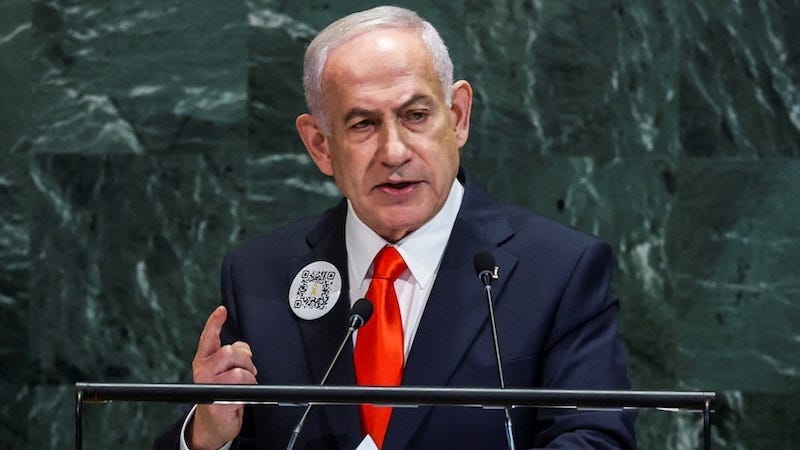
In reality, war is Netanyahu’s only remaining instrument of governing and a leader in this situation doesn’t have too much time remaining in their political career. Each escalation in Gaza and the blaming of Hamas reinforces his narrative of Israel’s perpetual victimhood – a state surrounded by enemies and in constant need of his leadership. This is not sustainable. The siege mentality he cultivates legitimises repression at home and aggression abroad but the political costs of this latest war have mounted: international condemnation has intensified, the International Criminal Court is closing in on him, and Israel’s once-supportive allies have had enough and their support is falling apart at the edges.
In the aftermath of this ceasefire, Netanyahu is now trying to position himself as the diplomat who ended the war and brought the hostages home, even though he did everything possible to prolong the war and soiled every offer from Hamas to return the hostages. This is the standard process for Netanyahu – continue with the circus act, use every catastrophe as a political opportunity, and somehow claim a victory, even though it’s obvious that his strategies over the past two years have failed.
But Netanyahu is shallow and predictable: this is all a calculated move toward the next election – rebranding himself as a pragmatic peacemaker, while quietly maintaining the occupation of Palestine – and this could allow him to distance himself enough from the extremists in his coalition like Itamar Ben-Gvir and Bezalel Smotrich, whose maniacal and barbaric rhetoric is offensive to many foreign governments, and is increasingly alienating the Israeli public.
While we always should remain hopeful, none of this suggests a genuine move toward peace. Netanyahu’s ceasefires in the past have always been tactical or non-existent: a pause to deflect criticism, absorb international and domestic pressure, and consolidate control before resuming his approach of business as usual. The ambiguity surrounding Gaza’s postwar governance in this plan is deliberate: as long as Gaza remains broken, aid-starved, and politically fragmented, Israel can continue to exercise de facto control without the burdens of occupation. The reconstruction of Gaza will be delayed or undefined, Palestinian leadership will be divided, and the dependency of Palestine on their erstwhile oppressors will be entrenched, which gives Netanyahu exactly what he wants.
This is at the heart of Netanyahu’s “two-option” strategy, where he gets the best of both worlds: either resume military action under the guise of security or tie up the Palestinian leadership in another endless cycle of negotiations – a modern-day extension of the Oslo “agreements”, designed to keep onside with international opinion while ensuring nothing changes at all in Palestine. And in either case, Netanyahu wins: Israel retains dominance as an occupying colonialist–settler, settlements in the West Bank continue to expand, and Israel’s brand of apartheid becomes further entrenched.
A dissonant world but are there any grounds for hope?
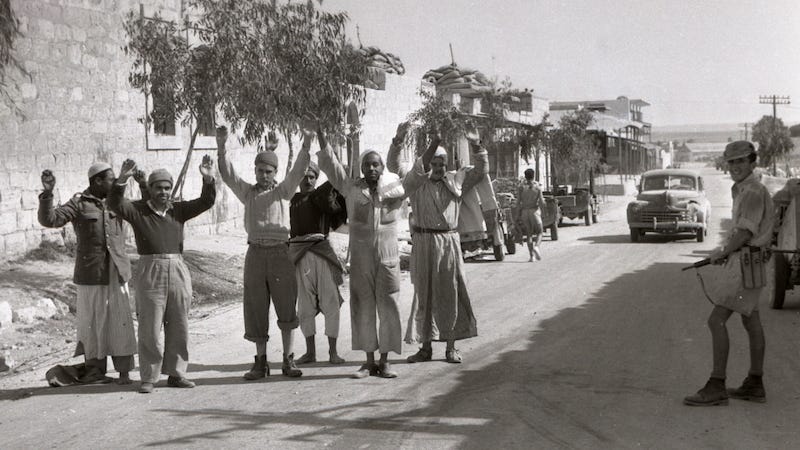
While this might seem like an overly pessimistic outlook – and why shouldn’t there be a high level of pessimism after the litany of broken promises over the past eight decades – are there any grounds on which this Gaza plan could work? Absolutely nothing has changed since 1948 when Israel was created on the stolen lands of Palestine – a land without a people for a people without a land – mainly due to the intransigence led by the United States. Could this plan succeed after all the previous failures? Why would this one be any different?
The key issue at this point of time is that the geopolitical world is reacting in a different way in 2025, primarily because of Israel’s genocidal overreach. The moral, diplomatic and strategic force shield that protected it for decades – a combination of American immunity, European indulgence and Arab disunity – is no longer as strong as it used to be. A global change seems to be underway and, for the first time in generations, Israel’s dominant narrative and hasbara is collapsing under the weight of its own contradictions and sheer inhumane brutality. Put simply, Israel has gone too far.
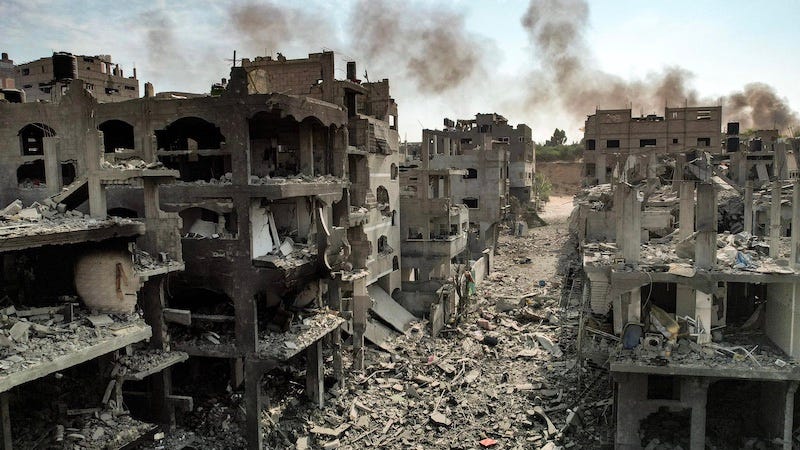
The devastation in Gaza – almost 70,000 civilian deaths (although according to UN Special Rapporteur on the Occupied Palestinian Territories, Francesca Albanese, the figure might be closer to 680,000), razed neighbourhoods and systematic targeting of hospitals and infrastructure – has triggered an unprecedented collapse in Israel’s international credibility. The imagery of human suffering, transmitted across the world, has pierced through Israel’s simplistic propaganda that no-one believes any more, and forced a moral awakening across the world, similar to how the United States war in Vietnam piqued international consciences during the 1960s.
The legal pursuit of Israel at the International Court of Justice and the ICC has stripped away the old rhetoric of “acting in self-defence,” reframing Israel’s actions as one of deliberate cruelty and oppression. The recognition of Palestine by France, the United Kingdom, Canada and Australia – long seen as Israel’s most dependable Western allies – has marked a symbolic but profound shift within the world community, where over 150 countries now formally acknowledge Palestinian statehood, a clear sign that the era of Israeli impunity might be finally coming to an end.
This transformation isn’t just confined to international institutions; it is also reshaping the domestic politics of Israel’s allies. In the United States, what was once a bipartisan act of faith for Republicans and Democrats is now beginning to fracture – and we can look at the commentary of Marjorie Taylor Greene in the US Congress as an example of this – while these are only small fissures at this stage, the fractures are certainly starting to get bigger.
Even within Trump’s populist base, elements of the MAGA movement now view Israel as a liability, its actions morally indefensible and politically toxic – it’s hard to be pro-life when Israel is killing a classroom of babies and children every single day of the week – and younger generations of Americans, exposed to unfiltered realities through social media, are rejecting the old Cold War binaries of democracy versus terrorism, or to use the words of George W. Bush, “ you are with us, or you are with the terrorists”. Across Europe, governments are having to deal with the growing public opinion that’s opposed to the genocide and the ongoing sale of military equipment to Israel.
In the Arab world, the political deliberations are shifting just as dramatically. States that sought regional stability through quiet normalisation – Saudi Arabia, Egypt, Jordan, Qatar and the UAE – can’t ignore the outrage that’s appearing on their own streets, where they see the Gaza war not as a regional dispute but as an existential affront to their dignity. Even rival such as Turkey and Saudi Arabia are finding a common cause in the need to contain Israel’s extremism and create a different regional balance to deter this expansionist behaviour. What had once been a fragmented bloc of Arab states is now forming partnerships based around the shared goal of ending the war, even if this is more about their own respective political survival than any form of altruism.
Coming into this shifting political dynamic is President Trump, not as a visionary peacemaker but as a manager of a decline, whether he likes it or not. His intervention reflects the reality that even Washington’s most transactional leaders now view Israel as a burden. The Gaza war has also exposed the limits of American credibility: a superpower preaching human rights while enabling atrocities and the moral cost of complicity has begun to outweigh the strategic benefits of alliance. For the first time in decades, exhaustion – diplomatic, economic and psychological – has achieved what diplomacy couldn’t: a fragile consensus that the war must end, and that some form of Palestinian sovereignty must take shape.
After the fire: Gaza’s struggle for justice
The early stages of the ceasefire – deals for prisoner exchanges, the influx of humanitarian aid and Israel’s limited troop withdrawal – appears to be holding but beneath the surface, there’s a long list of unanswered questions. Who will govern Gaza? Certainly not Tony Blair, that is totally unacceptable. What happens to Hamas – will it disarm, dissolve or reconstitute itself under another a new name? How can reconstruction proceed under the blockade that has defined Gaza’s as an open-air prison for nearly two decades? Will Israel finally release its iron-gripped control over Palestinian borders and resources or just rework the occupation under a new legal entity?
The proposed roadmap – a four-phase plan resulting in a new authority, Hamas’s disarmament and a theoretical pathway towards a two-state solution – all sounds familiar because we’ve heard it so many times before: variations of this theme have been announced, celebrated and then discarded for well over thirty years. And each variation has failed because of the same reason: Israel seeks to continue the subjugation of Palestinians rather than end it. The architecture of these plans have always been based on a denial – a denial of sovereignty, denial of justice and the denial of the right for Palestinians to resist an occupation.
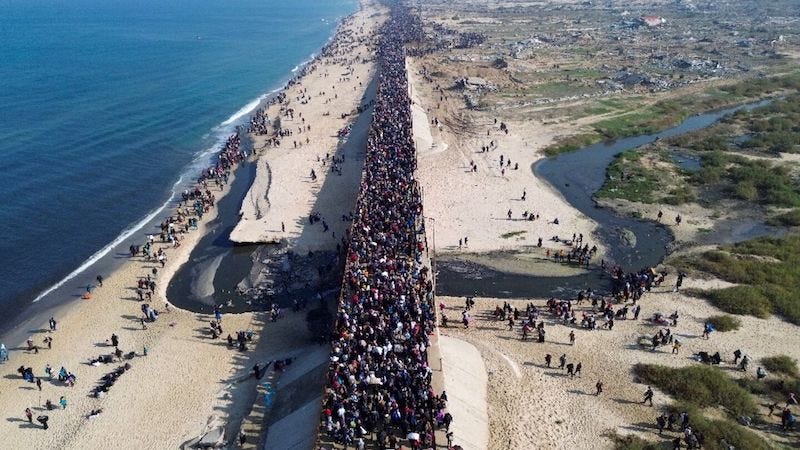
Meanwhile, the displaced people of Gaza are currently walking north through the scorched remains of their cities, and this, despite all the devastation and despair, represents an act of profound defiance. It mirrors the cyclical tragedy of Palestinian history – from the Nakba of 1948 through the displacements of every subsequent war – and highlights the truth about Palestine: despite the attempts to erase them, Palestinians continue to return, and will continue to return. Their movement back to their homes – even if they are just rubble – is a moral declaration that Palestine exists, and will continue to exist, despite the genocidal intentions of Israel.
This resilience continues despite the cynicism of international diplomacy. For decades, “peace” has been a performative lip-service act, rather than something that has been genuinely pursued – conferences, accords and commitments have recycled the same hollow words of reconciliation without meaning, insisting on more negotiations instead of the pursuit of justice and support for Palestinian rights.
Genuine peace cannot emerge from this endless cycle of violence, especially if the perpetrators of the genocide – the state of Israel and Benjamin Netanyahu – escape punishment for their crimes. It will also require the dismantling of Israel’s systems of apartheid, and the recognition of Palestinian nationhood as an inalienable right – not some concession to be negotiated away that wasn’t even mentioned in the Trump–Netanyahu 20-point plan.
This ceasefire does present the world with a big opportunity – not to impose another formulaic “peace process,” but to choose accountability over their collective amnesia. If the international community enforces real consequences – sanctions, legal action and political isolation for Israel – it might end up being the beginning of transformation for the region. If it doesn’t, the ceasefire will just become a brief stop-gap measure in Netanyahu’s forevers wars which, in themselves, have been one long continuum of war against Palestine which commenced in 1948, if not before.
The fate of Gaza, and of Palestine itself, doesn’t depend just on American diplomacy or the restraint of Israel but depends on the global conscience forcing political leaders to listen and act, just as they did in the 1960s on Vietnam; just as they did in the 1980s to force an end to apartheid in South Africa. For the first time in decades, the illusion of Israel as the “good-guy” in the region has cracked: peace without justice for Palestine is not peace at all. The world needs to act: otherwise, it will just b a brief silence in between the dropping of the bombs, before history repeats itself again.
The fire was lit in 1917 by the UK’s issue of the Balfour Declaration when the UK enticed West European Jews to join the Allies through the promise of a Jewish homeland. It was all downhill after that. Oh, and pitting the Jews and Palestinians against each other after WW2. Leading to guerrilla warfare and terrorist attacks undertaken by both sides up to the UN declaration of a Jewish and Palestinian state. Which satisfied neither group and has led to 80 years of Internecine conflict. Neither side is innocent. Since both sides believe they are in the right and neither side believes the other is acting in good faith I see no end in the conflict. Sorry I’m very pessimistic
Trump's 20-point plan has shrunk to a ceasefire, hostage exchanges and some aid.
Hamas has not agreed to disarm.
Israel has not withdrawn its troops from Gaza.
Prominent Israeli politicians say after the hostages are returned they will resume their attacks on Hamas.
This is just a temporary pause in the crusade to create Greater Israel.
Israel is waiting for Trump to lose interest, maybe in a week or two, before it resumes it's attacks.