


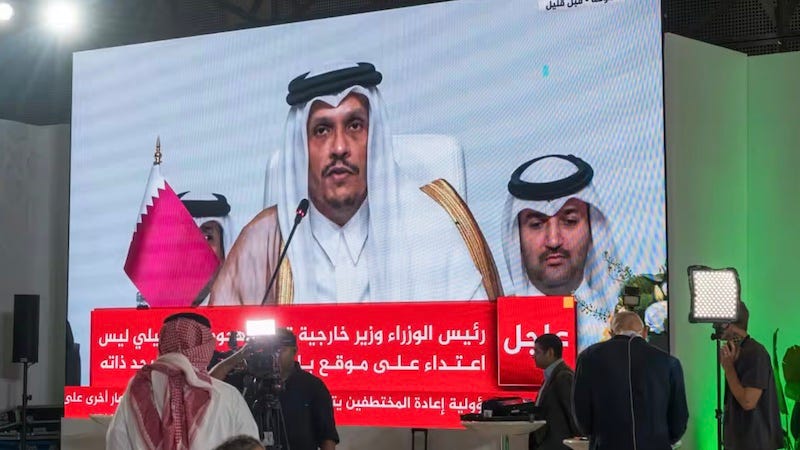
It was interesting to see the responses and reactions to Israel’s recent strikes on Qatar, when dozens of Arab and Islamic leaders arrived in Doha for an emergency meeting in a rare show of unity – their meeting intended as an act of solidarity with the Palestinians and to develop a strategy of curtailing the aggressive actions of Israel in the region. This was more than a routine diplomatic summit – there was anger, frustration and a show of defiance, aimed not only at the state of Israel but also at the United States, Europe and the broader international community that has long shielded Israel from any form of meaningful consequence.
Ultimately, this might end up being Benjamin Netanyahu’s greatest success story (unintended, of course): uniting a diverse and disparate pan-Islamic world into a strong voice that is starting to work collectively against Israel’s belligerence, overreach and destructive hegemonic ambitions.
For decades, major powers – with the United States leading the pack – have enabled Israel’s policies: the genocidal devastation of Gaza; the steady expansion of illegal settlements in the West Bank; and military operations and incursions across the Middle East/Western Asia. Israel’s strikes in recent months in seven neighbouring states and capital cities, have reinforced the perception that it acts with impunity and encouragement from the West, despite the weasel words of denial that usually come out of the mouths of international leaders and foreign ministers. According to the leaders in Doha, that impunity has crossed a threshold. The message from this meeting is clear: enough is enough.
Western governments, especially in Washington, Paris, London, and Berlin, continue to release statements of “concern” from one side of the mouth, while the other side more quietly agrees to supply weapons and intelligence, and provides diplomatic immunity for the Israeli leadership. The language is always carefully measured, but the effect is the same – whatever Israel does, it faces no consequence or cost. This duplicity has become intolerable for those leaders in Doha, who argue that such an indulgence has only emboldened Israel to further escalate its campaign of violence and to make a Palestinian state all but unattainable.
And there’s a massive contrast between rhetoric and action from the West: France, Germany and Britain have all issued condemnations, but then go on to resume military co-operation and trade the following week, not even caring if anyone notices this brazen duplicity. The United States remains Israel’s strongest backer, and its veto power at the United Nations serves as the ultimate protector.
For the leaders in Qatar, this hypocrisy is no longer sustainable. If Western governments truly believe in the principles of international law, then the same tools applied to other aggressor states – sanctions, arms embargoes, travel bans, suspensions of intelligence and military co-operation – needs to apply to Israel as well. Yet Israel remains an exception, protected by a force field created in Washington and reinforced in European capitals.
The tarnished global image of Israel
For Israel, keeping up appearances is all that seems to matter. Prime Minister Netanyahu and his government might thrive on domestic belligerence and the rhetoric of defiance, but internationally they are acutely aware of the costs of being seen as a pariah state. Israel’s self-image is built on its claim to be a supposed “advanced” nation – despite its dark-ages barbarism, psychopathy and acts of genocide in Gaza – and wants to be seen indispensable partner in technology, trade, and security. Measures such as restrictions on travel, the suspension of research and technology agreements or the imposition of targeted sanctions threaten not only the economy of Israel but also its carefully cultivated reputation as a modern and globally integrated state, even if it behaves differently and contravenes international law. If it wasn’t obvious before, this appearance is on the verge of collapsing: this is what tends to happen to pariah states.
The leaders at the meeting were unanimous: these vulnerabilities of Israel need to be exploited. If Israel is to be confronted – and it will be – it must be done through sustained pressure that forces it to reassess the costs of its actions in Gaza and beyond.
There are precedents for this: in 1997, Israel’s plans to assassinate a leader of Hamas – Netanyahu’s preferred modus operandi ever since he become Prime Minister – provoked a furious response from Jordan’s King Hussein, who threatened to suspend the peace treaty with Israel. The United States, aware of the potential collapse of one of its most valuable regional accords, placed intense pressure on Netanyahu and within days, Israel was forced to back down. The lesson was in this case was clear: Israel might ignore words from the entire world community, but it can’t ignore clear consequences, especially when they are specifically directed from the United States.
The collective power of the Arab and Islamic bloc is immense. Fifty-seven nations, representing a quarter of the world’s population, hold leverage across many key sectors – technology markets, financial networks, energy resources, security and regional co-operation. If co-ordinated more effectively than they have been in the past – given their many regional and political differences – these states could disrupt Israel’s access to capital, restrict its economic lifelines, and undermine its diplomatic privileges. Such measures would go beyond the symbolic, making it clear that there can’t be any business as usual while Israel continues its campaign of genocide in Gaza and its persistent violation of international law.
The cracks appearing in Western support
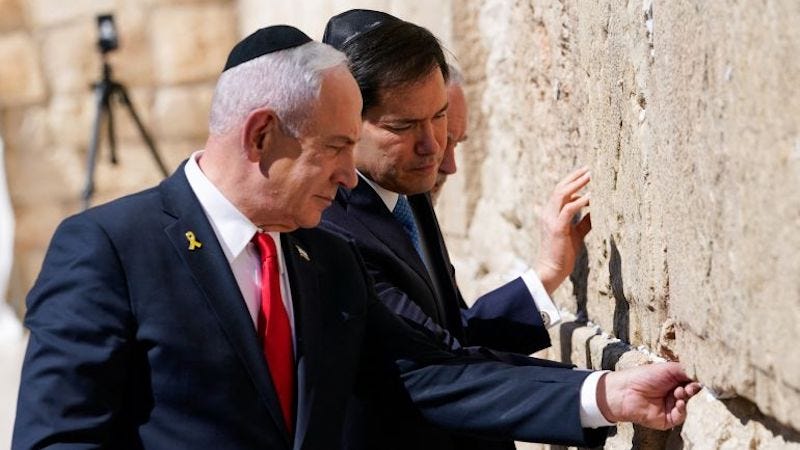
The United States remains Israel’s ultimate guarantor – as it always has been – yet even this relationship is showing the signs of strain. President Donald Trump might continue to present himself as Israel’s most reliable ally, loudly proclaiming his unconditional support – Secretary of State Marco Rubio is currently in Jerusalem partaking in that bizarre ritual of US leaders inserting their fingers into the Western Wall in the presence of Netanyahu – but beneath the surface, there’s a growing frustration.
Netanyahu’s intransigence and freelancing belligerence is undermining Trump’s own ambitions to implement the art of the deal in the region, sabotaged any chance of renewed engagement with Iran, and engaging the United States in even more reputational damage across the region than it already has. Even within the MAGA movement – Trump’s biggest supporter base – many voices are beginning to question the logic of sending billions of dollars in aid to a government that openly disregards American interests, even to the point of humiliation.
Republican hardliners such as Rubio and Lindsey Graham maintain their ritualistic loyalty – both in the United States and in Israel – but there are different conversations taking place behind the scenes. Trump is a politician driven more by ego than ideology, and is being angered by appearing weak, and Netanyahu’s maniacal defiance and intransigence increasingly makes him look exactly like that. For all the rhetoric of “unshakable bonds” and allegiance that almost every U.S. politician has to provide, the reality is that Israel is quickly becoming an unpredictable and strategic liability for Washington.
The questions raised in Doha are no longer confined to the Arab and Islamic world. Western countries now need to confront their own inherent contradictions: do they genuinely want stability in the region – and within their own countries, as the recent riots in Spain have shown – or will they continue to support Israel’s descent into a pariah and its rogue-state behaviour? Do they seek peace and security or are they happy to see a perpetual conflict? Every shipment of arms, every veto at the United Nations, every muted statement of “concern” just exposes the widening gap between Western rhetoric and reality. And that’s going to cause many problems for political leaders, whether it’s in Britain, the United States, Spain or in Australia.
The gathering in Doha was more than symbolic – it was a warning aimed directly at Washington, London, Paris, and Berlin: platitudes and empty condemnations will no longer be enough. If Islamic and Arab states can maintain unity, their co-ordinated action – through sanctions, suspensions of co-operation and economic pressure – there will be consequences for Israel of the like that it has never seen before. Israel won’t end its campaign of destruction out of conscience; it will do so only when the costs become unbearable and it’s in a position where it’s forced to act.
The genocide in Gaza also won’t end by its own volition. And nor will Israel stop its territorial ambitions, even if it kills every remaining Palestinian man, woman, child and baby in Gaza and the West Bank. This will end only when those who enable it – Israel and the West through silence, weapons, or diplomatic diffusion and indifference – are forced to confront their complicity, and when Israel is made to understand that its brutality and genocide carries consequences that it won’t be able to escape for too much longer.
And that other pressure point: money.
Norway has pulled its sovereign wealth fund from investments in iZraeli companies. No fuss, just pulled. A signal of 'lack of faith' in the financial state of iZraeli industry... and other things.
I really hope that they can unite, despite differences, and stand firm against Israel and any threats that emanate ftom the US. As you say, they represent a sizable proportion of the world's population, and they still have resources the west wants. They can easily find markets for these, and they have the money to invest in developing their economies. They don't need to be vassal states if they work together.
If it costs us, so be it. Our governments have made the choice to support a genocidal state, and there should be avarice to pay.