


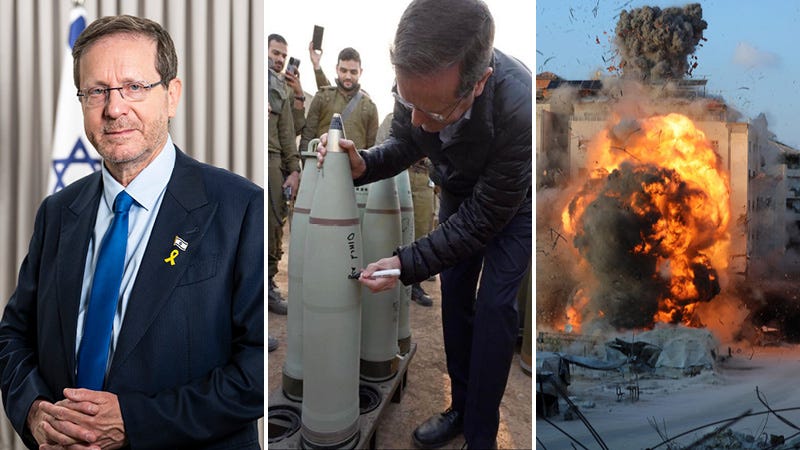
Australia is set to host a visit by Israeli President Isaac Herzog, a move that has already created intense public opposition and raised more questions about civil rights, accountability and the boundaries of lawful political dissent. Activists and advocacy groups argue that the invitation itself is a massive moral political failure on the part of the Albanese government, given the allegations surrounding Israel’s conduct of war and crimes against humanity in Gaza and statements attributed to its head of state, advocating for a genocide. As preparations for demonstrations in Sydney and Melbourne pick up speed, the visit itself has become a focus for the broader issues about freedom of speech, police actions, and the criminalisation of criticism of foreign governments.
Opponents of the visit have clearly articulated their objections, pointing to public remarks made by Herzog when he said that the civilian population in Gaza is collectively responsible for the actions of Hamas in October 2023, and using language which incites genocide according to definitions contained within international law. On top of this, there’s other performative acts, such as the signing of Israel Defense Forces bombs just before they were dropped on the populations of Gaza, which is clear evidence of the responsibility that exists at the highest level of the state of Israel.
On this basis, several Australian and international legal organisations have called for authorities such as the Australian Federal Police to investigate whether Herzog’s statements meet the threshold for incitement to genocide, an offence recognised under both the Genocide Convention and Australia’s own criminal code.
Within activist networks, this visit has become an opportunity at making clear that Herzog is not welcome in Australia, arguing that welcoming him legitimises alleged crimes rather than scrutinising them. International law places special weight on the speeches of presidents and heads of state, and that incitement of this type of violence is not protected political expression but a prosecutable act. From this perspective, Australia’s decision to extend an invitation isn’t a hands-off position of neutrality, but a deliberate political choice that ignores accountability, in favour of managing the alliances with Israel and the United States.
Aside from the visit itself, there are also concerns about how dissent against Herzog’s visit will be treated by authorities. Could any protests against Herzog result in arrests or sanctions under recently expanded public order and hate speech laws? There’s a growing sense that those who object to the arrival of this foreign leader accused of serious war crimes may end up being the ones punished for expressing these concerns publicly, and that protestors could be deemed to be causing “psychological harm” and antisemitism through their slogans or chants – according to new federal laws – while the subject of their protest faces will face no scrutiny at all.
This now seems to be following the developments occurring overseas, where in Britain and Germany, pro-Palestinian protests have faced bans, heavy policing and criminal charges for simple acts such as supporting Palestine Action or displaying placards of watermelon shaped cartoons and illustrations. It’s a clear example of how quickly dissent can be curtailed once certain political narratives are placed beyond challenge.
That these dynamics are now emerging in Australia is a fundamental threat to our democracy. As if it isn’t obvious, calling out alleged war crimes or genocide needs to remain within the bounds of lawful political speech, irrespective of where it comes from – suppressing such criticism won’t eliminate dissent but will drive it into different forms and, who knows, it might even be more effective than the actions that this new legislation is trying to curtail.
This issue isn’t about just the one diplomatic visit, or Herzog himself: he’s the irrelevant part of this equation. The question is about whose voices are protected, whose “psychological harms” are recognised on a legal basis, and whether Australia is willing to tolerate sustained public opposition to powerful allies. And for those preparing to take to the streets, the visit isn’t just about a foreign president, but about defending the right to protest itself in an increasingly constrained and oppressive political climate.
Repression always fails: The lessons from history
History offers a clear lesson about the limits of government repression used as a tool for maintaining political order. The brutal regimes that silenced dissent during the Cold War using surveillance, censorship and physical force, ultimately collapsed under the weight of injustice and the inherent contradictions of systems that essentially operated like large prison cells.
The Solidarity movement in Poland emerged in the 1980s, despite the severe and sustained crackdowns. In Czechoslovakia, a wide range of dissidents showed that persecuted ideas can outlast the power of the authoritarians. The Soviet Union, East Germany, Romania, Yugoslavia and elsewhere within the Eastern Bloc followed the same routine: dissidents were harassed, imprisoned or executed, but this level of repression didn’t defeat the opposition; all it did was delay the inevitable, which eventually arrived with the onset of the Velvet Revolution in 1989, and the collapse of the Soviet Union in 1991.
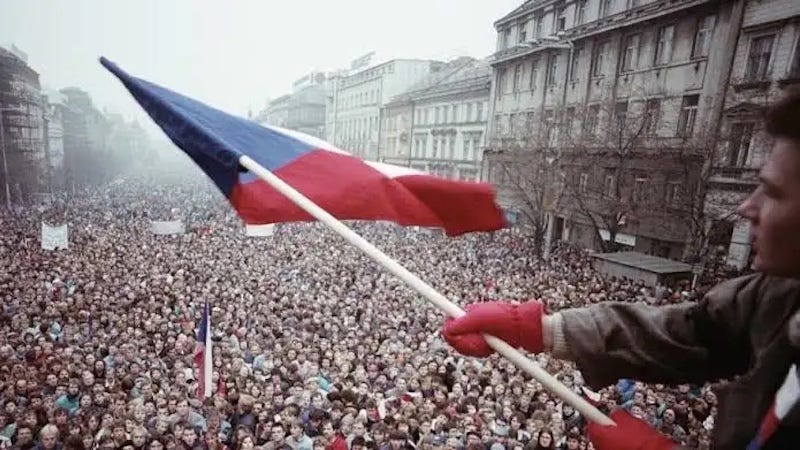
The lesson here is simple – and it might be a long bow to draw in conflating the events of Eastern Europe under communism and Australia in 2026 – but it’s a lesson that’s often ignored: an unjust system can’t last forever and eventually reaches a breaking point.
Political stability doesn’t come from silencing dissent, but from allowing the space for a contest of ideas and for social and political change to arrive at its own pace. This includes the uncomfortable reality that people should be free to protest and speak out, even when their views might be deemed to be unpopular to those who hold power. Democratic societies have long tolerated this risk on the understanding that ideas are best contested in the open forum, through argument and exposure, rather than driven underground where they can fester and radicalise.
Historically, Australia has held a healthy level of political pluralism. Few people probably welcome the sight of groups protesting through public streets, but the prevailing logic has been that as long as protests remain non-violent – as many, if not all of the pro-Palestine rallies have been – they should be permitted. This principle should apply across the ideological spectrum, and it’s unacceptable that pro-Palestine action is being legally pushed to the margins, whereas extremist March for Australia rallies – including neo-Nazis – have little to no restrictions placed upon them.
And this is the final result of this recent batch of legislation, where vague and far-reaching concepts such as “psychological harm” are being applied without a clear definition or what the limitations are, and this is now becoming a tool for arbitrary suppression. If the concept of harm is reduced to a subjective interpretation of discomfort or offence – in other words, the I-don’t-like-it-therefore-it-should-be-banned test of tolerance – then almost anything can be considered to be harmful, and the result is that public debate of specific issues becomes impossible.
Once this point is reached, then we descend into the theatre of the absurd – disliking an idea, a particular fruit, or even the colour combination of red, white, green and black, can be used to justify banning something from the public space. And there’s no prizes for guessing which groups will be listened to the most in this situation. This might seem absurd, but a lot of this is already happening on a de facto basis, if we consider the many cancellations of cultural and political events that have promoted the rights of Palestinian people.
There is also a political cost to this approach. The invitation to Herzog is one issue for the Albanese government to deal with, but attempts to control public debate rather than allow the space for a free flow of ideas can often backfire, as it’s a process that erodes public support and leads to a more polarised community.
A strong country doesn’t need to behave in this way, and this kind of heavy-handed suppression and overreach is the sign of a weak and insecure government. Australia is not the kind of society that lends itself to this type forced conformity of ideological views, and such tactics are likely to generate more resistance rather than compliance. Most people want to express their views, even if they don’t express them in public frequently, but once these opportunities are reduced or removed altogether, that’s when the problems arise.
If this current timeline continues, the long-term consequence won’t be social cohesion, but a more fractured and resentful political landscape, with dissent re-emerging in forms that are harder to engage, regulate or resolve.
Any move at all by the NSW or Federal government to attack or prosecute peaceful protesters against the visit of the Zionist Israeli President is an attack upon Democracy and human civil rights . Shame on the Albanese government and the NSW Minns government for their eagerness to suppress the RIGHT of peaceful protest against the visit of a man who has been photographed happily signing bombs to be dropped upon Palestine and its citizens . To welcome this person here while the genocide in Palestine continues apace is shameful grovelling to a foreign government . Many Jewish people are also
protesting against both this visit and the genocide of which Herzog is in favour . This agenda is a perfect way to increase
social division , rather than reduce it , in this multicultural nation .
The key point is correct. The determined efforts of the political Zionists are already showing how powerful their politics has become with censorship of universities, the failure to use the lucid Jerusalem declaration.org definition is the clinching of the political power of this very small population in Australia’s efforts to whitewash Israeli governments actions by trying to merge incredibly well founded political criticism of many of these actions to be in some way “antisemitic” a position rejected out of hand by many Jews themselves.
The political rhetoric and opportunistic behaviours of the well organised and funded political Zionist group is already damaging political speech in australia