


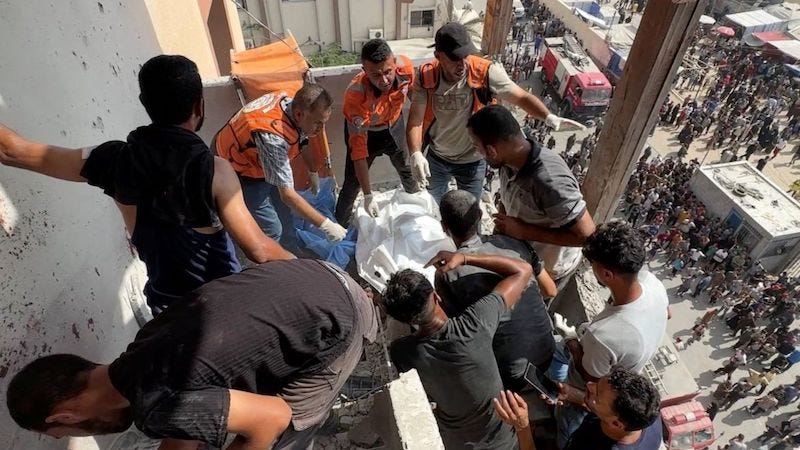
At least 20 people were killed in southern Gaza after Israel bombed the Nasser Hospital twice within the space of fifteen minutes, in a deliberate “double tap” strike, and this number includes five journalists and several rescue workers who rushed to help those wounded in the initial blast. This attack on yet another hospital and yet more journalists – broadcast on live television – has shocked audiences worldwide and has set off another wave of international condemnation against Israel.
The first missile struck the top floor of the hospital, killing Reuters journalist Hussam al-Masri, and as civil defence workers – clearly shown in bright orange vests – and fellow journalists scrambled to the site, a second strike hit at the same location. Footage broadcast by AlGhad TV shows rescuers and reporters shielding themselves from debris only seconds before the second explosion, which left their bodies piled together in the rubble, covered in blood and dust.
The journalists killed – who never seem to be mentioned by name in the Western media – were al-Masri; Mariam Abu Dagga from Associated Press; Al Jazeera journalist Mohammed Salam; photojournalist Moaz Abu Taha; and Ahmad Abu Aziz from Quds Feed. And the number of reporters killed by Israel since its military operations and genocide in Gaza began is now over 240, making it the deadliest conflicts for the media in modern history.
Of course, there has been international outrage – not yet from Australia, which still seems be too far away for Foreign Minister Penny Wong to understand what’s really going on – but the real actions that can be taken are still missing. UK Foreign Secretary David Lammy said that he was “horrified by Israel’s attack on Nasser Hospital,” emphasising that civilians, health workers, and journalists must be protected under international law and calling (yet again) for an immediate ceasefire. French President Emmanuel Macron called the attack “intolerable,” while the U.S. President Donald Trump would only say that he was “not happy about it”.
Despite this outrage, the Israeli government just shrugged its shoulders and said the event as a “tragic mishap”, with Prime Minister Benjamin Netanyahu expressing “deep regret” and promised a “thorough investigation” – investigations that either never occur or whitewash the evidence – while using the opportunity to claim hospitals in Gaza are used by Hamas for military purposes – a claim regularly made by Netanyahu but never substantiated with any verifiable evidence. Journalistic associations and human rights monitors have dismissed Israel’s justifications and have said that the targeting of hospitals and the press points to a deliberate pattern, rather than isolated mistakes.
Legal experts have also suggested that the attack on Nasser Hospital constitutes multiple war crimes, with each element – the bombing of a functioning hospital, the killing of medical workers, the targeting of journalists, and the deliberate repetition of the strike on rescuers – representing a violation of international humanitarian law.
Too many journalists – and civilians – have been killed by Israel without any justification and the broadcast of these crimes should remove any lingering doubts about Israel’s criminal intent. For many, the question now is not whether Israel has crossed the line of legality – that line was crossed some time ago and on so many occasions – but how long the international community will allow this genocide to continue without consequences for the rogue and pariah state of Israel.
Is Australia’s linked to these massacres?
As these images from Gaza continue to shock people all around the world – endless footage showing the deaths of many children and innocent civilians tends to do this – the uncomfortable questions need to be continued to be asked: has Australia, directly or indirectly, supplied the weapons used in these atrocities? Prime Minister Anthony Albanese has repeatedly insisted that Australia does not export arms to Israel but mounting evidence contradicts Albanese’s denials and raises serious concerns about Australian complicity.
In July, shipments of Australian-manufactured components for F-35 fighter jets were sent directly from Sydney to Tel Aviv, forming part of the global F-35 supply chain in which Australian defence companies play a significant role. The F-35 is central to Israel’s air bombing campaign in Gaza, with precision-guided bombs and missiles launched from these squadrons repeatedly striking civilian infrastructure, including schools and hospitals. The Albanese government maintains that such parts are not weapons themselves but, as described by Minister Wong, “non-lethal components,” a weak argument when those components directly enable warplanes responsible for mass civilian casualties.
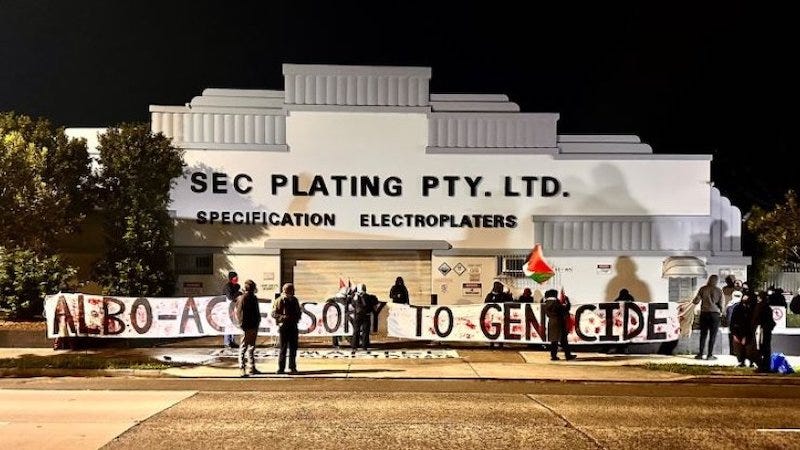
Beyond the F-35 components, the Canberra-based defence contractor Electro Optic Systems has confirmed that it has sold its R400 remote weapon stations to Israel. Initially provided on loan for demonstration, the systems were later upgrade to “full sales”, contradicting official claims that they were only under trial. A media release from Israel’s Ministry of Defence located one of these demonstrations in the Negev desert, verifying the presence and testing of the Australian system on Israeli soil. By EOS’s own admission, multiple R400 units were delivered before the current genocide commenced, creating a direct commercial link between Australian manufacturers and the Israeli Defence Forces.
Despite this, Albanese continues to deny that any weapons sales exist. Speaking on ABC Radio just yesterday, he downplayed Australia’s role and reiterated: “Australia, of course, is not a major power in the Middle East. And in spite of some of the rhetoric which is out there, Australia, for example, does not provide arms to Israel.” Yet, official government records reveal that as of August, at least 35 active military export permits to Israel remain in force. Senator Wong has confirmed these exports are being made to Israel, albeit under the guise of “non-lethal components”. These permits cover a range of “defence and dual-use goods,” and while the precise items remain undisclosed, but this information undermines the government’s repeated public reassurances. Why does Albanese keep denying the undeniable facts?
This dissonance between rhetoric and reality has led to accusations that Australia is attempting to conceal the complicity of its defence involvement with Israel and the genocide in Gaza, and that’s why it pays lip service to anything to do Palestine and drags its feet along the ground, until it’s forced to do something. The refusal to acknowledge these exports not only misleads the public but shields Australian companies from future legal action regarding their role in alleged war crimes committed by Israel – Israel has repeatedly targeted hospitals, journalists, and humanitarian workers, and any foreign-supplied equipment enabling those attacks could fall under international legal responsibility.
Of course, there are many aspects of international relationships that need to be taken, including the fact that Australia, like Israel, is a colonial–settler project that performed its own acts of genocide and may find it difficult to condemn the actions of another state, when it was responsible for the same actions against Indigenous people from 1788 onwards.
These might be factors, but they are not excuses. The persistence of military exports in the face of overwhelming evidence of civilian slaughter raises the blunt question: how much more proof is required before Australia stops arming a regime accused of systemic violations of international law? How much of the filthy lucre will Australia accept from Israel? How much more proof does Australia need to force stronger action against Israel? When will Australia finally condemn Israel?
From recognition to real action
Recognition of Palestine at the United Nations in September – if it actually does occur – will be a historic step, but it won’t in itself, stop the killing and massacres in Gaza. Israel has a long list of actions that have openly ignored international law and equally ignores any international condemnation that is made against it. But what will make Israel stop and take notice is a binding ceasefire, backed with accountability for everyone who has been responsible for this genocide, economic sanctions and decisive action to cut off the supply of arms and weapons to Israel Defense Forces.
The international community already has the legal tools available to it. The International Court of Justice has issued binding orders requiring Israel to facilitate humanitarian relief and halt operations in Rafah that risk annihilating Gaza’s population. These rulings, however, haven’t been enforced and the UN Security Council, paralysed by vetoes from the United States, has failed to act.
However, even a modest UN protection presence at Rafah and Kerem Shalom would save lives immediately and would be a start. Certainly, critics will point to events in Bosnia, Rwanda, Somalia and Sudan where the involvement of the UN was a dismal failure, but there have been other successes in East Timor, Cambodia, Mozambique and Cyprus that can be used for guidance. The point is that doing nothing is not an option. There are mechanisms that are available to the international community and these mechanisms must be used.
Accountability needs to be a central part of these mechanisms. The International Criminal Court has already confirmed arrest warrants for Netanyahu and Defence Minister Yoav Gallant. Member states are obligated to co-operate with the Court – arrests, evidence-sharing, and protection of judicial independence – yet political interference and the lack of recognition of the Court by the United States has slowed this momentum. Supporting the ICC, rather than undermining it, is the best way to show that international law applies equally to all. Alongside this, aid access must be fixed: many reviews have shown that the highly publicised maritime pier created under the Biden administration moved little food or medicine compared to what could be delivered by opening land crossings. Unlocking ground routes is the fastest, most practical humanitarian measure available.
Meanwhile, Australia needs to face up to its own moral failures. Diplomatic recognition of Palestine has to be linked with concrete actions if it is to carry any credibility. That needs to begin with a total cessation of defence exports to Israel, including components and dual-use items, alongside full transparency through publication of the active, suspended, and refused export permits.
The loopholes that currently allow Australian equipment and parts to reach Israel via subsidiaries or third countries have to be closed down. Australia should also broaden its Magnitsky-style sanctions – currently applied to just seven Israeli citizens and one entity in the West Bank – extending them beyond extremist settlers to include Israeli politicians and officials who have been responsible for unlawful attacks, war crimes, crimes against humanity, using starvation as a weapon of war, and incitement against Palestinians.
Australia must also unequivocally co-operate with the ICC and remove the discretion of the Attorney–General to block co-operation with the Court. Australia’s own laws can also be applied to dual-Israeli citizens returning to Australia who may be implicated in war crimes.
Humanitarian support can also be properly reinstated for UNRWA, after it was halted by Minister Wong after unfounded claims by Israel that staff were involved in the October 2023 attacks by Hamas. Economic sanctions and refusing goods from Israeli settlements in the West Bank; and suspending companies that have been involved in any violations in Israel from government procurement contracts. These are all actions that Australia can and should take.
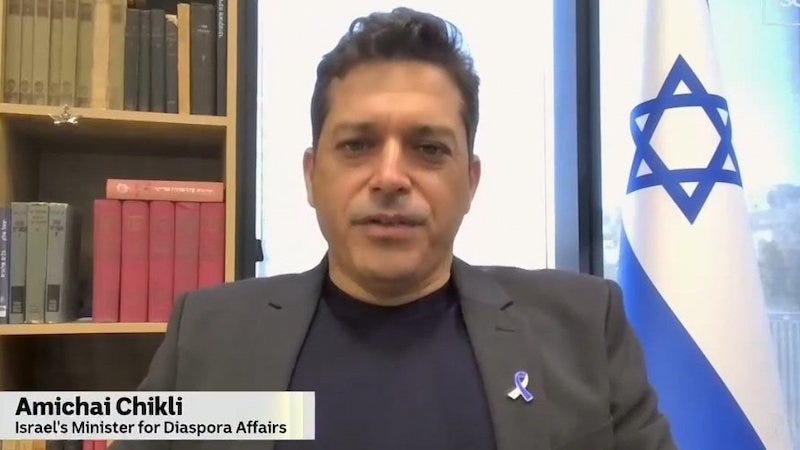
The role of the media also needs to be addressed. Within Australia’s mainstream media, platforms are handed to Israeli officials under indictment or to propagandists, with little or no challenge from their hosts. Recent interviews with Netanyahu by Sharri Markson on Sky News, and propagandists Israel’s Minister for Diaspora Affairs, Amichai Chikli and deputy Minister of Foreign Affairs, Sharren Haskel, on the ABC’s 7.30 – despite active arrest warrants and international condemnation, reveal a disturbing willingness of Australia to normalise actual and accused war criminals, a situation that was well documented in Mark Aaron’s book published in 2000, War Criminals Welcome: Australia, a Sanctuary for Fugitive War Criminals Since 1945. Holding media accountable for amplifying such voices without scrutiny is an essential part of confronting the broader culture of impunity.
The Foreign Press Association has called the Nasser Hospital killings a “watershed moment,” urging governments to act decisively to protect journalists and civilians. Whether that call is listened to will determine not just the future of Palestine, but also the credibility of the entire international legal order. If this international order cannot stop a genocide – one that we’ve been witnessing for the past two years – then what is the point of it?
The fastest pathway to stopping the killing is clear: enforce the ceasefire, guarantee access to aid, accountability backed by co-ordinated embargoes and sanctions that make it difficult for Israel to bypass. The laws and the precedents that can be applied, already exist: what is missing is the political will from the cowardly international leaders that do have the power to act, but do nothing with that power. Australia has a choice: it can choose to continue to hide behind denials and ambiguous diplomatic statements, or step forward with action that matches its words. The world – and Palestine – can’t afford to wait any longer.
Well, it turns out Penny Wong was busy at the time - moving the Australian embassy staff safely out of Iran (as was, rightly, her first priority) and then expelling the Iranian ambassador. She has since been quite scathing (for a diplomat) about this latest Israeli atrocity, and so have Albo and others in his ministry - indeed, even Ssilly Sussan finally has. We can't really find fault with what they say these days, it's just that they never seem to get around to doing anything about it.
But the alacrity with which our government has cut off ties with Iran (apparenty with good reason) contrasts rather blatantly with the sluggishness they have shown about punishing the prime minster who has repeatedly abused ours, and who is directly responsible for over 60,000 actual murders, that we know of. Surely I'm not the only one who notices that? And does the timing of this latest announcement strike others as just too convenient (from the Zionist perspective) to be coincidence? I don't want to sound like a conspiracy theorist, and I hold no brief for the Revolutionary Guards who have spent considerably more time making war on their own people than they have on Israel, but I'd be surprised if there didn't turn out to be more of a back-story than we know so far.
Eddy - thank you. I just wish this article could be published on the front page of every Australian newspaper & media website.