


The controversy began when the Royal Children’s Hospital in Melbourne hastily cancelled a panel discussion on the effects of war on children’s health. The event was scheduled as part of the hospital’s professional development program and had been only promoted internally but just a few days before it was due to take place, the hospital withdrew its support. Why? Because of one complaint from Sydney psychiatrist Dr Doron Samuel, who claimed the event would cause “moral injury” and “vicarious trauma” for Jewish staff and patients.
No evidence was provided to support these claims, nor was there any explanation of how a broad discussion about war’s impact on children could trigger such harm. Despite this, the hospital capitulated without any further investigation, and decided that it was easier to shut down the event than to risk controversy – yet another example of an institution surrendering to the endless pressure from the Zionist lobby in Australia, at the expense of open debate and academic freedom that we’d normally expect to see in an open democracy.
Also, Dr Samuel isn’t some kind of neutral observer – he campaigned for the Liberal Party during the last federal election, where he was active in the inner-west seat of Reid, and gained notoriety by calling the Australian Greens “Nazis” while urging the Liberal Party to adopt the same rhetoric (incidentally, the Liberal Party suffered a swing of 6.8 per cent against them in the seat of Reid, undoubtedly due to this kind of behaviour). That someone with such a record could derail a medical seminar with a single letter raises serious questions about the independence of Australia’s leading public institutions.
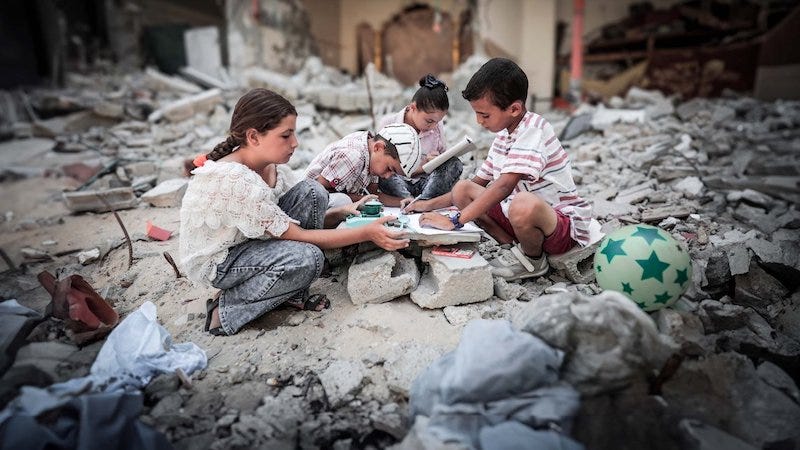
The panel was to examine how war traumatises children and how to redress these issues, and many children that have lived through recent wars in Syria, Sudan, Afghanistan, Gaza and other conflict zones around the world – now reside in Australia. Insights from this type of forum would have been invaluable in helping clinicians in hospitals better support traumatised children in Australia. Instead, the event was silenced, not because of its content, but because of a political fear of offending – real or imagined – a powerful right-wing and ultranationalist lobby.
The irony is that the discussion wasn’t designed to single out Israel. It was to cover conflicts globally – yet the assumption that Israel’s actions would inevitably form part of the conversation was enough to prompt its cancellation. This raises a fundamental question: can open and honest debate about global conflicts – and their impact on vulnerable populations and children – survive in Australia when institutions cave in so quickly to political intimidation and innuendo?
Hospital executives, like too many CEOs of public institutions, are ill-equipped to deal with this type of political pressure, where they take the path of least resistance than defend the principle of open discussion. Similar patterns have played out elsewhere – at the ABC, in schools and in universities – where complaints from politically motivated groups, often with no real relationship or stake in the institution, have resulted in dismissals, censorship or unwarranted public apologies. The trend is clear: a campaign from the Zionist lobby exists to eliminate dissenting voices, and too many Australian institutions are unwilling to resist it.
A pattern of silencing difference of opinion
The cancellation at the Royal Children’s Hospital wasn’t just a one-off incident. It fits into a broader and disturbing pattern that has taken hold across Australia’s cultural and academic life. Of course, this has been an issue in Australia for some time – and it is even more pronounced in the United States and Britain – but since 2023, the climate of fear, silencing and self-censorship has escalated.
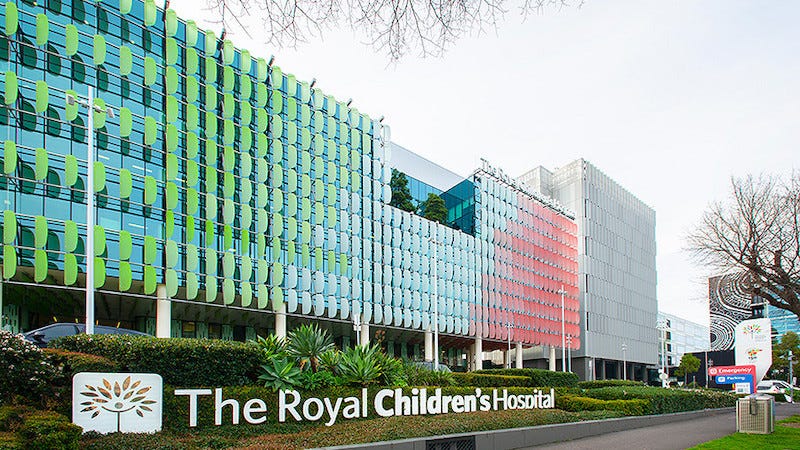
What happened in Melbourne shows how absurd the situation has become: a psychiatrist in Sydney, with no professional relationship to the hospital, was able to derail an educational seminar on children and war, simply because there was a chance that Israel’s actions in Gaza might be mentioned.
This climate of fear goes beyond hospitals: literary magazines have been pressured into closure, cultural festivals have cancelled events, and community forums have been silenced through intimidation. The message is clear: any initiative that might allow discussion of Israel’s conduct, irrespective of how remote that discussion might be, is vulnerable to attack. Public institutions, which should be strongholds of open inquiry, instead find themselves paralysed, more concerned with appeasing lobby groups than fulfilling their responsibilities to the public. The obvious question is: what exactly do they fear?
The answer seems to lie in the way fringe actors on the right have successfully positioned themselves at the centre of the debate. Those aligned with the most extreme Zionist positions insist that any criticism of Israel amounts to antisemitism – which is currently being lobbied for implementation by the Special Envoy to Combat Antisemitism Jillian Segal – and too often, institutions accept that framing, without question.
The Royal Children’s Hospital seminar was not designed to attack Jewish people; it was meant to discuss the psychological and medical consequences of war on children. The fact that it was cancelled reveals the extent to which institutions now bend to political pressure.
This unreasonable behaviour has reached into other community spaces as well. At a small gathering in Marrickville, cardiologist Peter MacDonald raised a provocative question as a member of the audience – not in any official capacity – where he referred to recent reports that Iran was behind alleged antisemitic attacks in Sydney, and suggested that these could have been Mossad-engineered incidents.
“Am I being totally naïve,” he asked, “or has the Zionist lobby infiltrated ASIO as well?” The comment made no reference to Jewish people, nor did it disparage the state of Israel directly. It was framed as a question about intelligence agencies and security affairs, and his full question lasted for less than 20 seconds.
Yet the fallout was immediate: St Vincent’s Health Australia placed MacDonald on forced leave, issuing a statement that it “does not tolerate antisemitism, racism, bigotry or hate,” even though no explanation was provided as to how MacDonald’s remarks fit those categories. No procedural fairness was given to him and no transparent inquiry was undertaken. This action came after a letter from Alex Ryvchin, co-CEO of the Executive Council of Australian Jewry, accused MacDonald of causing “great harm” by indulging in “wild fantasies” and demanded that he be disciplined. And of course, St Vincent’s acted as requested, no questions asked. What other group of people in society have this kind of power?
It’s extraordinary: a cardiologist who saves lives through surgery was pushed out of his workplace on the basis of a lobbyist’s complaint, without evidence of misconduct and without debate. That this could occur at a time when Israel, through its intelligence agencies and military, has been accused by the United Nations of committing genocide in Gaza makes the response even more illogical. Instead of open discussion, Australia now sees the automatic silencing of those who ask uncomfortable questions, and has bureaucracies siding with those bad actors who are causing a genocide in Gaza.
A genocide confirmed
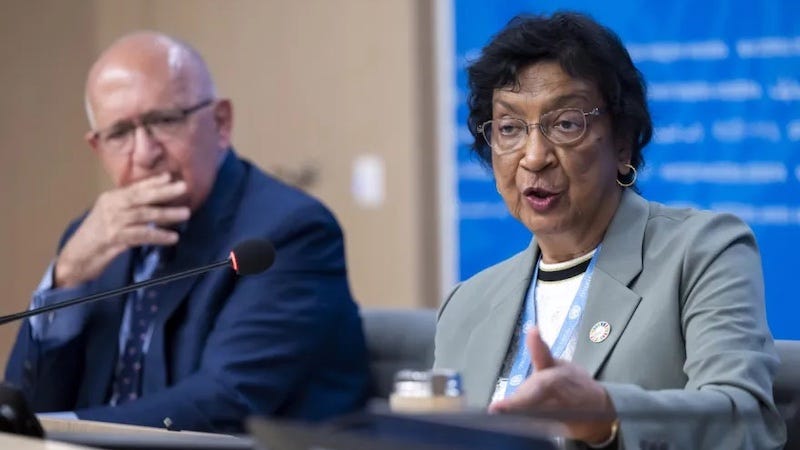
The silencing of debate in Australia comes at the same moment the international community has reached its most damning conclusion yet: Israel has committed crimes against humanity in Gaza, including genocide. The findings of the United Nations Commission of Inquiry are clear: after almost two years of investigation, the commission determined that Israel has committed four of the five acts defined as genocide under the 1948 Genocide Convention, including targeting civilians, mass killings and the obstruction of food, water and medicine to create life-threatening conditions for an entire population.
The UN has gone further, warning that silence on this issue is complicity, and governments that fail to act risk not only their credibility but their own moral and legal standing under international law. For Australia, Prime Minister Anthony Albanese and Foreign Minister Penny Wong cannot claim ignorance anymore and the choice before them is clear: uphold international law or become enablers of genocide.
Chris Sidoti, one of the UN commissioners, put the reality in clear terms: “We are told that the number of children who have had one or both legs or arms amputated is greater than in any other conflict this century,” he said. “We know the number of children who have lost one or both parents. The psychological trauma will last their whole lives.”
These are not accidental deaths, not the tragic “mishaps” Israel insists upon. They are the predictable and direct consequence of a military strategy built on saturation bombing, scorched earth – the so-called “mowing the lawn” – and the deliberate destruction of Gaza’s civilian infrastructure: homes, hospitals, schools, universities, roads, farms, fishing fleets, churches, mosques, even cultural and archaeological sites.
When such overwhelming evidence is presented, the implications extend far beyond the killing fields of Gaza. Every public institution that caves in to the pressure from lobbyists by cancelling events, forums, or academic discussions needs to ask itself: what exactly are you supporting?
By silencing debate on Gaza – whether it’s at a hospital, a university or a small community hall – institutions become complicit in concealing a genocide that the UN has now formally recognised. While no one is suggesting hospital executives or university administrators will face trial at The Hague, their actions contribute to a wider culture of denial and silence that allows atrocities to continue unchecked.
For governments, the stakes for them are much higher. Complicity is not an abstract concept: they are the decision makers. It can mean military exports, intelligence sharing, or simply “looking the other way”, all of which the Australian government has been doing since October 2023, despite their many denials.
But it now has a clear choice: align Australia with international law, take meaningful action, and call out Israel’s policies of genocide and mass destruction – or continue enabling Israel’s campaign and be remembered as a state that chose to stand on the wrong side of history. The choice could not be clearer and it should be a lay down misère.
Is the power of the lobby waning?
Australia has now taken a small but significant step – it’s not the end, but it should be the beginning of the end of Israel’s disastrous and genocidal actions in Gaza and Palestine. At the United Nations General Assembly in New York, Prime Minister Anthony Albanese announced that Australia formally recognises Palestine as a sovereign state, joining more than 150 nations worldwide. “The cycle of violence must end,” Albanese said, framing recognition as part of building momentum toward a two-state solution, although what kind of two-state solution is anyone’s guess, and will still probably take many more years to achieve.
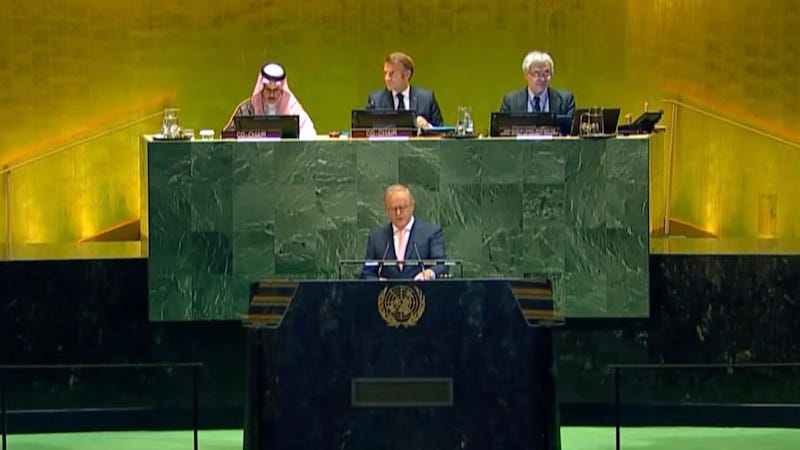
Canada, United Kingdom France, Belgium and Portugal have made similar declarations, but the shift that is starting to take place is clear: Western governments that had long resisted acknowledging Palestinian statehood are now moving towards the global consensus. For Australia, this recognition means that Mahmoud Abbas, President of the Palestinian Authority, will be formally acknowledged as head of state, and official government documents will now refer to the “State of Palestine”.
This recognition though isn’t enough, and it will never be enough: far from it. Acknowledging the State of Palestine today won’t bring back the countless men, women and children who have been slaughtered by Israel Defense Forces, or undo the collective punishment, racism and apartheid inflicted by Israel upon the Palestine people since 1948.
However, symbolism in international relations does matter, and this action is not just symbolic. Recognition is part of a co-ordinated effort to break the deadlock, end the bloodshed in Gaza, secure the release of the remaining hostages, and deliver on the Palestinians’ long-held aspiration for statehood. For decades, Palestine has been recognised by much of the world, yet blocked by a handful of powerful nations unwilling to defy Israel and its supporters. Now, that blockage is beginning to break down.
The question remains: will this recognition diminish the influence of the Zionist lobby in Australia? For years, they have worked to shut down debate, suppress discussion, and label critics as antisemitic, no matter how tenuous the link. Their tactics are the signs of an absolutist and extreme ideology – and the determination to silence all opposition. Yet their efforts failed to stop Australia’s recognition of Palestine.
This doesn’t mean their influence has disappeared: powerful people in these positions rarely throw away their power and, just like the white extremists in South Africa during the last days of apartheid in the 1990s, relinquishing this control will be a slow drawn-out process.
However, the more extreme and unreasonable the demands from these lobby groups become, the more they alienate the mainstream public. When institutions cancel forums on child safety, sack doctors and heart surgeons or silence academic panels at the whim of a small but powerful lobby acting behind the scenes, more questions will be asked by the public about why a democratic country like Australian should accept such interference from such groups, which is more akin to the behaviour of the infamous Stasi police or KGB in the former Soviet bloc countries.
Recognition of Palestine is only one step – far more will be required to end the siege of Gaza, secure justice for Palestinians, and ensure Israel is held accountable for its actions. But it is also a sign that the political ground is shifting. The Zionist lobby will fight hard to preserve its influence, but for the first time in decades, its power shows small signs of decline. And in that space, a new conversation about justice, sovereignty, and accountability will finally begin to emerge.
That is a very good point. Peter MacDonald was scheduled in to do surgeries - while it’s possible for a different surgeon to take on these operations, a hospital can’t just pluck another heart specialist from another ward or hospital, and they’ve probably had to reschedule the patients who were scheduled with Dr MacDonald. And any public patients will go back into the queue and wait a few more months. Where are rights for everyone else?
Actions like these by extremist groups like those aligned to z!onism are destroying lives. It is serious abuse . How is this not a criminal offence?