


This week’s briefing outlines the big issues to look out for: a global conflict hitting the hip pocket… gambling policy shaped by vested interests than the public… and a government with unprecedented power but reluctant to use it.
The US and Israeli war against Iran has quickly transitioned from a faraway geopolitical crisis into something far more tangible for Australians: the price shock delivered at the petrol bowser. Donald Trump’s maniacal foreign policy – coming from a belligerent and abusive fool who sounds like he’s the last drunken sod left in a Texan saloon bar at dawn – has become an economic and political domestic problem for Australia, with rising fuel prices showing just how exposed Australia is at times of global volatility. The federal government’s response – cutting fuel excise by 32 cents per litre and releasing some reserves – might lessen the immediate impact, but it’s a sign of a more concerning reality: Australia is still too dependent on forces way beyond its control, despite years of rhetoric about security of domestic energy supplies.
There’s also an uncomfortable balancing act going on – while leaders such as Anthony Albanese and Penny Wong keep talking up stability and commitment to the US alliance, public sentiment appears to be fracturing and becoming more resistant to Australia’s involvement in this conflict. The gap between what is coming out of the mouths of politicians and the instincts of the electorate seems to be widening, raising questions about how much this strong alignment with the United States is actually in Australia’s national interest. Meanwhile, the economic pain is being globalised – absorbed by many households and small businesses not just in Australia but all around the world – while the broader strategic goals of the US, and Australia’s involvement, remain unresolved and still unclear.
An imported crisis, with local consequences
It’s not so much a case of cost-of-living issues returning – these issues have never really gone away. But, of course, there will always an explanation that can be offered. Where inflation was once pinned on wages, supply chains or the aftereffects of the Covid pandemic, this pressure is now being blamed on global conflict. Fuel prices, transport costs, and food supply disruptions are all being reframed as the unavoidable consequences of the events that are far beyond Australia’s control. Of course, these are all valid reasons, but they are being used to mask over a lot of problems within the economy that successive governments have ignored for far too long.
While this global instability is real, the degree to which it translates into household pain is still shaped by domestic policy choices: the domestic energy supply, market concentration and oligarchies, an inequitable taxation system, and the very thin margins for error that exist in the economy. Years of neoliberalism, privatisation and the reliance on global markets have left Australia exposed to the vicissitudes of unbridled capitalism, and that’s what we’re feeling at the moment. The war is just making a bad problem far worse.
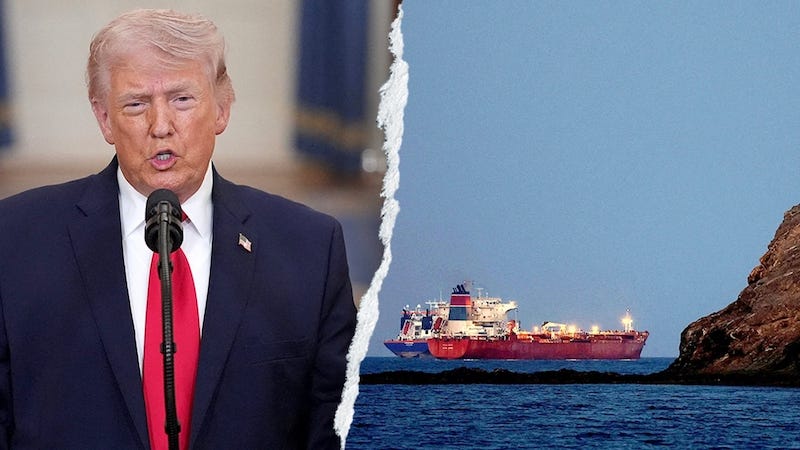
Governments will always argue they are managing a crisis that’s not of their making, and taking into account the volatility and instability of the US President, there is an element of truth to this – one more time: Open the Fuckin‘ Strait, you crazy bastards. But for the electorate, the distinction doesn’t really matter, or how far a potty-mouthed US President throws out the bile, or his cot toys. A government is there to lessen the impact of external events when they do arise, not just panicking into grabbing the low hanging fruit of fuel excise and avoiding the harder task of making the Australian economy far more resilient and equitable than it is at the moment.
The house always wins
Gambling reform has landed in federal politics with that very familiar sound: a big outrage, a careful compromise that Anthony Albanese is now well-known for, and a policy that seems designed to offend everyone just enough (except for the gambling lobby, of course) but which avoids addressing the problem in a serious manner.

The government’s proposal to limit advertising – capped placements, restricted hours, and the removal of logos from sports jerseys – has been framed as a serious step forward, yet it falls short of the sweeping ban recommended by its own inquiry that came about from the passionate lobbying of the late Labor MP, Peta Murphy. This all raises another obvious question: if the evidence presented at the inquiry – and the final recommendations – was so clear and succinct, why the hesitation?
Of course, much of the answer lies in the structures that have grown around gambling revenue. Commercial television, professional sport and community sports are all financially enmeshed with gambling companies, as well as the political donations and largesse provided to federal ministers. And that’s even before we get to the massive amounts of government revenue from gambling – that governments themselves are now addicted to.
Pull this funding away too quickly, and the entire business model falls apart. But leave it in place, and the social costs of addiction, financial stress, and the normalisation of gambling, will continue to grow. The federal government is trying to balance these two factors, but its actions will always favour the gambling companies, which often means preserving existing arrangements with some tinkering at the margins. The house will always win.
The federal government often speaks of harm minimisation, but they’ve done very little to confront the very activity that they claim to be regulating. They’re shallow words, of course. The debate should now be about how to force governments to address this serious issue because, so far, there’s been absolutely no will or backbone to end this dependency on the gambling industry.
The complacency of leadership
The Prime Minister’s response to developing issues – the conflict in Western Asia, rising fuel costs, and domestic reform – has been tightly controlled, procedural and managerial, culminating in a bizarre national address last week which, when stripped down, was sending out a message of please use less petrol and catch public transport.
Sure, it was only three minutes in length, but it probably would have been more effective to produce a government advertising campaign – Albanese attempted to assure the nation of stability at a time of instability, but all he did was send the nation to sleep set and himself up for ridicule.
Governments will often default to language about stability when the underlying choices that they have in front of them are politically uncomfortable or unpalatable: aligning too closely with an unstable and deranged US ally will create public unease; not being close enough invites the accusations of weakness which, as we know and expect, will always be made by the conservative legacy media and the Sky-After-Dark brigade. Which then extends into debates about the economy: too much intervention is communism™ and poor fiscal discipline; not enough is the sign of weakness and political inaction. The result for Albanese is a kind of ambiguity that satisfies no one, but still, an ambiguity that Albanese seems to specialise in.
Contemporary political leadership always has to involve risk management – risks do have to be taken by governments, but it’s a process of avoiding mistakes, minimise the volatility, and trying to stay true to the values of the government. But a crisis like this one, provides a different type of reward for a leader if they can provide a strong and clear sense of direction.
The danger for the Prime Minister and his government is that it appears too wimpy and cautious at a time when the events are moving so quickly. And in politics, perceptions can set like concrete at a far greater speed if decisions are delayed, and are poor and weak decisions when they are finally made.
All the power, but not the will
Australian politics is entering a strange phase: a government that is in an incredibly powerful position, but led by a Prime Minister who is unprepared to use that power in a meaningful way, aside from the business-as-usual approach. The gambling debate is an excellent example of this.
Pressure for stronger action has come not from within the government – even though there are some backbenchers who were trying to force change, without success – but from independents and minor parties, forcing a response that was determined by parliamentary numbers, rather than any sort of conviction on policy. The same dynamic is emerging in foreign policy and economic debates, where other voices are not heard within parliament and there’s not much pressure on the federal government to change tack on the many key issues that do need to change.
Yes, there is a quieter shift underway, as we can see in opinion polls, where voters are fragmenting from the major parties because they no longer see themselves reflected in the broader party platforms, but these are opinion polls – at this stage – and we’ll have to wait until the 2028 federal election to see if this shift translates into change. At the moment, we have a political environment where influence from unelected lobby groups is far too strong, accountability is concentrated, and the gap between community expectations and delivery by government continues to widen.
So true David and Eddie.
I have been a lifelong (mostly) Labor supporter. I had thought that with such a huge majority in parliament there would be some gumption to tackle the big issues that abound here in Australia. I was hoping for some action, maybe like Canada and Carney, to turn Australia around and get us on a better footing and to distance ourselves from the US. The US has proven itself to be not a reliable partner, especially under this current Epstein administration.
At the very least there should be an inquiry into AUKUS, the NCCC should investigate the Robodebt Royal Commission’s excellent report and some backbone to increase unemployment benefits to a liveable amount, and to show some concern for refugees. There are also many other areas of concern that need to be fixed.
Alas, it seems that’s all a bridge too far. We seem to be doomed to follow as lapdogs for an increasingly crazy US.