


Australia currently has a federal government with one of the largest parliamentary majorities on record. But it also faces a housing crisis, a gambling industry that can always depend on other vested interests to protect its obscene project, and an AUKUS deal that is going to influence the relationship with the United States for the next forty years or so.
And there’s aways a reason offered to why things can never change, or another time in the distant future to act, or review, or assess whether these actions from government are in the public and national interest.
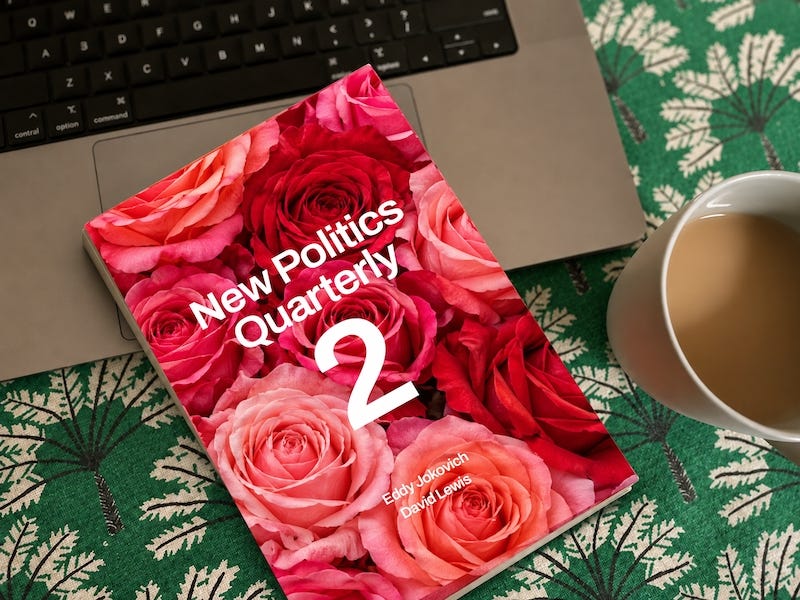
These are the big issues at the heart of The Politics of Possibility, the second edition of New Politics Quarterly, produced by Eddy Jokovich and David Lewis. Our first edition looked at the breakdown of the old political certainties that have existed for over a century – this edition asks why it’s always the same people to get to decide what’s possible in Australian politics, and what it will take to change this.
Across the six chapters, we examine:
The arrogance of power. How Labor’s parliamentary numbers and the way its leadership manages internal dissent makes it easier to resist much-needed reform.
The rise of One Nation. How insecurity over housing and economic frustrations have opened the gates for populists, and why blaming migration serves politicians more than it serves the people trying to find a place to live.
The reach of vested interests. What the fight over gambling advertising reveals about who holds the real power over politicians.
The limits on dissent. How the political response to Gaza and Palestine by federal and state government has tested the freedom of expression and the right to protest in Australia.
The quiet Americanisation of Australia. How AUKUS and deeper military integration with the US is affect Australia’s ability to make its own sensible decisions about war and peace.
The cost of outsourcing government. What the decades of privatisation and contracting have done to the public sector’s ability to build housing, plan infrastructure and deliver essential services.
It’s not all bad news! – we end with a series of practical proposals, ranging from tighter controls on donations and lobbying, to stronger whistleblower protections, more public housing and greater parliamentary scrutiny of the military commitments that being made in our name. It’s never going to be easy work – but the hard work has to start now.
Vested interests are exerting too much pressure on decision makers in between elections – while the rest of only get to make a verdict once every three years. The politics of possibility begins with what we can do in those intervening years, too.
An exclusive benefit for paid subscribers
One of the goals of New Politics has been to build a community that directly supports independent journalism, rather than relying on advertising, corporate sponsorship or mates in politics.
For that reason, we’ve created the New Politics Quarterly an exclusive benefit for our paid subscribers.
If you’re already a paid subscriber, thank you very much! You can access our report at: https://www.newpolitics.com.au/perks or under the “New Politics Quarterly” tab on the home page.
If you’re currently a free subscriber...
You’ve already shown that you value independent political analysis.
By becoming a paid subscriber, you’ll receive immediate access to New Politics Quarterly and free downloads of our published books, along with every future quarterly edition, in addition to supporting independent Australian journalism that isn’t restricted by commercial interests or partisan talking points.
In a media environment increasingly driven by outrage, speed and algorithms, we’ve chosen a different path that slows down a bit, provides deeper, more thoughtful and more challenging material, and looks at the bigger picture.
Thanks for supporting independent journalism!
