


This week’s briefing outlines the big issues to look out for: the political panic over Labor’s property tax reforms… the concocted backlash to the federal Budget… the fragmentation of conservative politics… and how rising fuel and cost-of-living pressures are exposing deeper problems in Australia’s economy.
The great Australian property panic
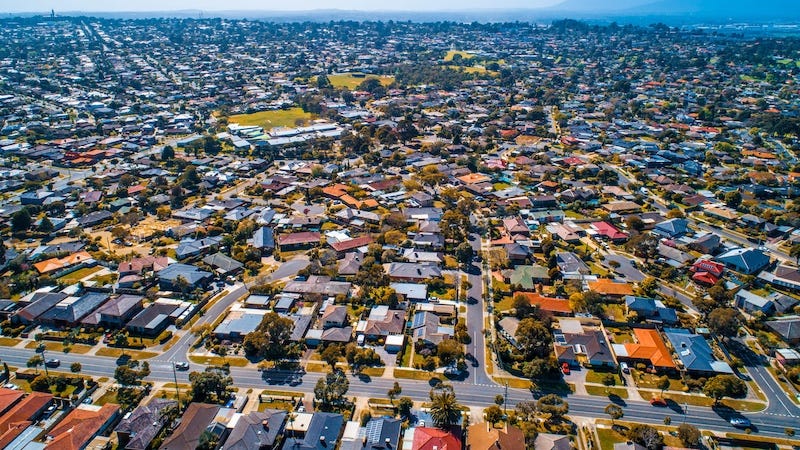
Australian politics has tried to set foot in that sacred temple of property speculation, and the reaction from the conservatives has entirely predictable. Labor’s modest attempt to wind back negative gearing concessions – and that’s what it is: modest – and reduce the capital gains tax discount has triggered a full-scale panic from the establishment, as though the government had announced the socialist takeover of Toorak, Dalkeith and Mosman all at once, rather than a small recalibration of tax policy that overwhelmingly favours wealthy asset holders.
For decades, Australia’s political and media class has built an economy around inflated house prices, tax minimisation and intergenerational wealth transfer, while younger Australians were told to stop buying coffee and smashed avocadoes if they wanted to live in their own home. Now that even a very limited reform is being discussed, the same vested interests that have benefited from the system are suddenly warning of “economic collapse”, “housing shortages” and “investor flight” – without any evidence to back their claims – despite investors already treating housing less as shelter and more as a wealth creation mechanism.
What makes the politics even stranger in this case is the collapse of traditional party loyalties beneath the surface. Despite their political dominance, the Labor primary vote remains soft. The Liberals are still imploding, although Angus Taylor has appeared as the preferred prime minister in the latest Resolve opinion poll, commissioned by the Sydney Morning Herald, a rag that’s been consistently pushing the “broken promise” narrative.
And One Nation – a permanent protest vehicle powered up by resentment, grievance and media stunts – is harvesting disillusionment from the conservative base at an extraordinary level. The recent defections of figures like former Liberal Party figures Teena McQueen and Hollie Hughes confirm what has become increasingly obvious: much of the Australian right is no longer interested in debating and implementing policy that’s to the benefit of the country, but seeking a more destructive form of oppositional politics, as if what they’ve provided over the past 30 years or so hasn’t been destructive enough.
The bigger question – as always – is whether any of these parties are genuinely prepared to confront the structural failures of Australia’s housing sector – or whether this is just another reshuffling of the bipartisan factions inside a political system that’s still terrified of upsetting the propertied class and vested interests. The Australian Greens seem to be the only ones prepared to take on these issues, but the mainstream media is far too interested in pushing the case of vested interests and getting on with attacking the Labor government: who’s got time for fairness and equity?…
The Budget and the collapse of the old consensus
The Budget narrative that’s being pushed by the mainstream is increasingly becoming negative, as they try to find a way creating that inane commentary of “winners and losers”, and “what’s in it for you”, rather than focusing on what’s best for our society.
What was presented by Treasurer Jim Chalmers as a small attempt to rebalance an overheated housing market is now in conflict with the decades of political mythology about property, wealth and economic management. The reaction has been ferocious because the reforms – albeit small – expose the harsh truth of Australian politics: the economy has been structured for years around protecting asset inflation while wages for workers have stagnated, inequality has widened and younger Australians were increasingly locked out of economic security. Governments do have choices, and there are the choices they have made.
This government finds itself trapped between these competing issues – on the one hand, voters are angry about housing affordability and economic inequality, and are demanding a change to this. On the other, older investors, financial commentators and property interests – the ones with the loudest voices – are treating even this level of reform and tinkering at the edges as a political heresy. The result is this strange environment where the Labor government is being accused simultaneously of reckless and overly cautious. It can be one or the other, but surely it can’t be both.
At the same time, the government’s push to “slow growth” in the NDIS – or massive cutbacks in anyone else’s language – has deepened that cynicism that “budget responsibility” still means asking ordinary people to absorb the burden while defence contractors and corporate interests remain unscathed.
Meanwhile, the political system continues on the path of fragmentation – it’s affecting the conservative side of politics at the moment, but it will affect Labor and progressive politics, it’s just not clear at this stage how that will occur. The danger for Labor is that while it attempts to cautiously retreat from parts of neoliberalist thinking – ever so slightly – the public may already have already worked out that the entire political class remains incapable of delivering meaningful economic security for as many people as possible, or the social change required to do this.
Petrol politics and the crisis economy
Australian politics is once again discovering how fragile the country’s economic model really is. The continuing instability in Western Asia/Middle East has immediately reignited the fears about fuel prices, inflation and supply chains, exposing the uncomfortable reality that one of the world’s largest energy exporters remains deeply vulnerable to global oil shocks.
After decades of privatisation, refinery closures and “market efficiency”, Australia now imports most of the fuel that it needs to keep the economy functioning, while governments quietly scramble to secure emergency diesel shipments every time geopolitical tensions escalate, as they have done on this occasion, with agreements made with Singapore, South Korea, Indonesia, Malaysis, Brunei and Japan.
And, of course, the political opportunities that this crisis presents to leverage against are already being exploited. Conservatives are attacking the government’s energy transition plans, insisting that Australia should double down on fossil fuel dependence in the name of “energy security”, despite the fact that decades of deregulation and corporate consolidation helped to create this vulnerability in the first place. Meanwhile, the government is attempting to present itself as economically responsible while carefully avoiding any serious confrontation with the market structures driving price instability across housing, energy and transport.
Underneath all of this is a far greater problem: the electorate is exhausted by this permanent economic anxiety and continuing crisis. Mortgage stress, soaring rents, grocery prices and electricity bills have created a political mood far more volatile than our political leaders would be willing to admit. The government talks about “productivity”, “supply constraints” and “fiscal discipline” – the old language of neoliberalism that pleases the markets – but voters increasingly see a system where massive defence spending, corporate profits and speculative wealth remains protected while ordinary households are told to accept sacrifice.
Even the housing debate now reveals a larger crisis in the delivery of essential services. Politicians endlessly announce housing targets and infrastructure plans, yet governments struggle to physically deliver projects on time or at scale, as has been the case with the Housing Australia Future Fund – 839 dwelling created after 18 months.
Labour shortages, planning chaos, developer speculation and collapsing construction firms have turned the idea of “nation building” into a kind of permanent Powerpoint presentation that’s dragged out on Budget night and then put back into the archive. Real change needs to be activated right now, not tomorrow, next month, next year. Right now.


Once again, Gentlemen, I concur completely with your views. Moreover, I have a proposition, a five-year economic plan, A High-Wellbeing Australia. You can read it here: https://drive.google.com/file/d/1_I7QU_O8QvbHDAP1KFe6tu8TuDOCL2QC/view?usp=sharing