


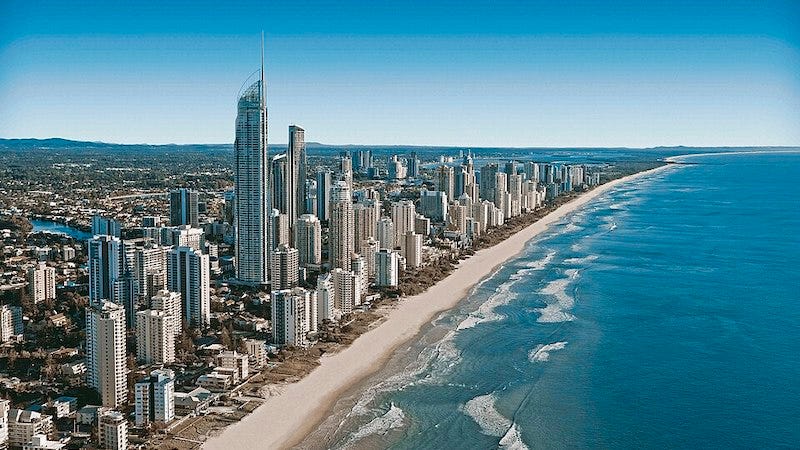
The recent Australian Mayors Summit Against Antisemitism was presented as a “community safety initiative” but its agenda was far more political than that. Over several days on the Gold Coast, local mayors and councillors from across the country were given all-expenses-paid trips to hear from speakers carefully chosen by the US-based Combat Antisemitism Movement to push their particular agenda. While the event advertised the idea that it was address antisemitism within Australia, in reality, it was a platform designed to discourage criticism of Israel and its ongoing genocide in Gaza.
The Movement, which organised and financed the Summit, is heavily funded by Republican-aligned donors in the United States and has a history of targeting pro-Palestinian academics, attacking human rights organisations, and amplifying political rhetoric and attacks against the United Nations.
Its ultimate goal is to universally implement the International Holocaust Remembrance Alliance’s definition of antisemitism – a definition that many legal experts and civil liberties groups warn is being used to link critiques of Israel with antisemitic hate speech, which would then be used to legally sanction anyone who makes any kind of criticism of Zionism or Israel’s genocidal actions in Gaza.
Australia’s Special Envoy for Antisemitism, Jillian Segal – who incidentally has been very quiet about the recent spate of neo-Nazi fascist attacks throughout Australia – was a keynote speaker at the event and has been one of the most vocal advocates for embedding this definition into public policy. Former neo-Nazi leader Jeff Schoep also appeared on the program, while one of the conference co-chairs, businessman and political donor Stan Roth – the brother-in-law of Segal – contributed $50,000 to the far-right lobbying group Advance Australia, which has run campaigns against “mass migration”, and advocated for the recent right-wing March For Australia event.
The presence of these types of figures just shows how ideological this Summit was, and far from it being a neutral or inclusive forum on community safety, it just reflected the agenda of a narrow, hard-right movement, exporting US-style Zionist culture wars and violence into Australian politics.
What makes the Summit particularly concerning is the expectation that will now be placed on the attendees. As we know, nothing is free in politics: when councillors accept funded trips to glossy conferences and propaganda talk-fests – all expenses paid – there is a strong chance that they will return to their councils and communities carrying the ideological baggage of their hosts, with the expectation that they will deliver on their agenda. The message delivered at the Summit was clear – advocacy for Palestinian rights and criticism of Israeli government actions are to be stigmatised and silenced, even at the local council level of Australian politics.
And it has now reached the point of pure ridicule. Among the items officially deemed “antisemitic” are watermelons displayed in solidarity with Palestinians; the simple slogan “Free Palestine” (of course); wearing a keffiyeh; the phrase “All Eyes on Rafah”; or referring to Israel as a “settler colonial state” and Gaza as an “open-air prison”. It’s the politics of the preschool playground and it’s as absurd as the Bundestag in the 1930s outlawing pretzels or accordions as symbols of resistance and foreign influence – although, given the mindset of that era, it’s quite possible that it would have been considered.
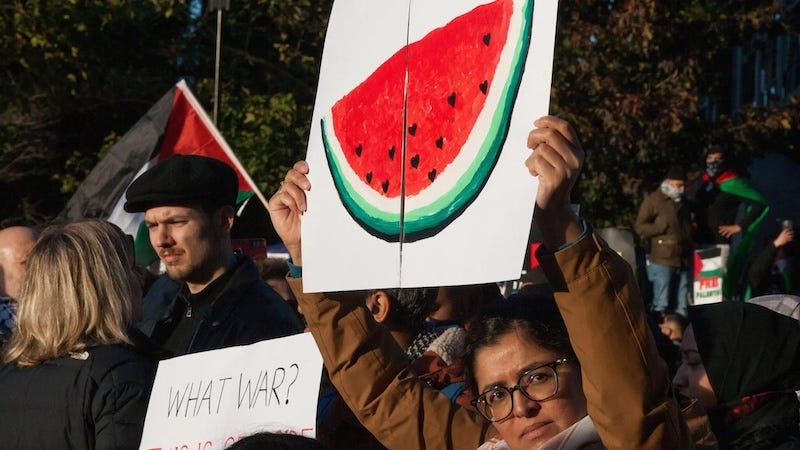
But we have already arrived at – or even surpassed – that point where the absurdity or extremity of these measures no longer matters. The image of the innocuous watermelon is now treated as a threat, all because this stubborn fruit – through the process of evolution – landed on the colours of green and red, and dotted itself with black seeds: antisemitic, guilty as charged and to be hanged from the neck until dead.
And yet, despite their ridiculous and infantile demands, there is no shortage of local councillors and politicians eager to enforce the dictates of the Zionist agenda and accept their political proctology, fearful of jeopardising funding or support from the Israel lobby. As we have seen with the proscription of Palestine Action in Britain – where pensioners and even people in wheelchairs have been arrested for simply holding up a sign – political leaders of all persuasions are increasingly choosing to make themselves the object of ridicule rather than risk the opprobrium of the Israel lobby. That’s how bad this has all become.
None of this should distract from the fact that antisemitism itself is abhorrent and must always be condemned. We always need to point this out as a ballast of any commentary about Palestine, because it always opens the unreasonable “what-about-ism” and accusations of antisemitism. Of course, we will condemn antisemitism, but we will also condemn the actions of Israel and Zionist supremacy.
The Holocaust revealed the consequences of state-sanctioned antisemitic hatred. Yet, matching up legitimate criticism of the political project of Zionism with that same hatred does a disservice both to Jewish communities and to democratic freedoms in Australia. Zionism, after all, is a political ideology – one shaped as much by English evangelical Christianity and European colonial interests as by Jewish nationalism, and historically influenced by currents of antisemitism that sought to remove Jewish populations from Europe rather than embrace them as equal citizens.
By aligning with organisations that push for this conflation, political leaders in Australia continue to narrow the space that exists for open and democratic debate. Councillors who attended the summit should now be pressed to explain not only what they learned, but whose interests they now serve and allow voters to decide at the next election whether a practice that prioritises excusing Israel from its genocidal actions over addressing the genuine threats posed by rising far-right extremism is acceptable or not.
Communities are rejecting the agenda of this Summit
Many unions, grassroots community organisations, and even Jewish groups themselves, have called out this Summit – the Jewish Council of Australia, for example, was one of the most prominent voices urging councillors to boycott the event. Their position was clear and unambiguous: this was not a summit to combat antisemitism, but rather a carefully packaged exercise in pro-Israel propaganda, advancing the right-wing political ideology of Zionism under the guise of community safety.
And the criticisms have gone far beyond “the fringe” which usually the terminology used to dismiss these voices. The Australian Services Union, Democracy in Colour, Jewish Voices for Peace, councillors from the Inner Sydney Greens, and a range of other civil society groups have all warned that these events compromise accountability. The message is clear: antisemitism is real and must be condemned, but political junkets financed by foreign-linked organisations with explicit ideological agendas must also be condemned and have no place in Australian public life.
Transparency International and other governance watchdogs have long argued that while accepting travel and hospitality from lobby groups might not technically breach the law, it erodes public trust in local decision-making, irrespective of which level of government it occurs. Ratepayers don’t elect local representatives so that they can accept paid trips from overseas interest groups and return with a pre-packaged political program, ready to be foisted upon them. Councillors are meant to be accountable to their communities, not to donors in Washington or Tel Aviv.
At the heart of this is also a deeper philosophical point: to suggest that opposing Zionism – or Israel – is inherently antisemitic is not only intellectually dishonest but actively harmful to democratic institutions. Zionism is not synonymous with Judaism, nor is it universally embraced by Jewish people. Indeed, some of the loudest critics of Zionism today are Jewish organisations and individuals – as we saw on the weekend in Bondi at the event organised by Jews Against the Occupation ’48 to show their support for Gaza and the Sumud flotilla – and includes conservative religious communities who reject the idea of a nation-state on theological grounds.
To label these critics as “not real Jews” or the offensive “Kapos” and dismiss their arguments as antisemitism, is to deny the diversity of Jewish voices and to reduce centuries of debate into a single, state-sanctioned right-wing extremist narrative. This process punishes pro-Palestine advocacy, it stifles dissent and silences people. It’s also a process that undermines democratic principles and restricts what people in Australia can say about foreign governments and their actions.
There’s no question that the work against antisemitism needs to continue – but it can’t be hijacked by bad ideas requested by small minority of ideologically-driven zealots. Zionism, as an ideology, should be open to the same scrutiny and criticism as any other political project. To shut down that conversation is to confuse faith with politics, and to make the mistake of blind allegiance to a state, over solidarity against racism.
Why the Summit will fuel the antisemitism it claims to fight
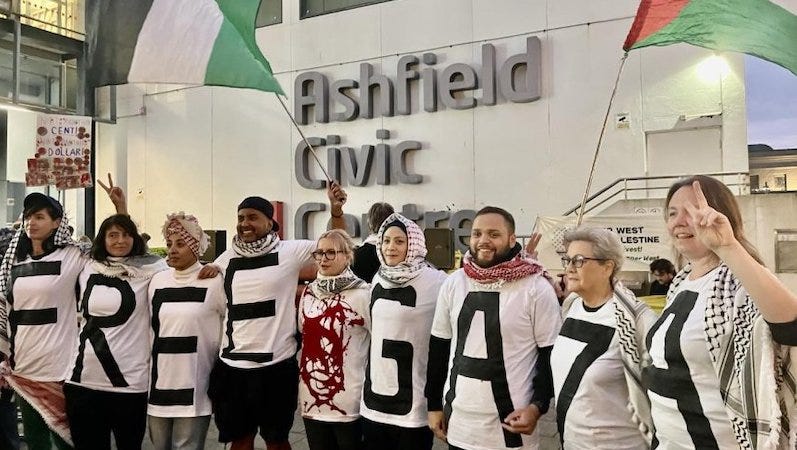
The 250 local council representatives who attended the Summit will now have to return to their communities and justify why they were there. One councillor in particular – the mayor of Sydney’s Inner West Council, Darcy Byrne – took part despite opposition from his fellow councillors. The Council had been on the verge of adopting a modest and watered-down Boycott, Divestment and Sanctions resolution against Israel in 2024, but this was blocked after Byrne’s intervention – a move that left many people in the Inner West community bewildered and disillusioned.
The astroturf Better Council group, backed by the Zionist movement to campaign against pro-Palestine initiatives at the local government level, threw its weight behind Byrne and the Labor Party during the 2024 council elections, rewarding his role in shutting down the BDS resolution. His prize was a junket to the Gold Coast and the promise of political support in future elections, provided he continues to do the right thing. This is how the process works. Why support action against the state of Israel – even if that’s what fellow councillors and the local community are demanding – when there’s an election to be won?
However, this issue goes far beyond the one mayor. This Summit was bankrolled by some of Australia’s wealthiest pro-Zionist organisations and corporations, including entities in heavy industry and peak Jewish lobby groups. Their ability to provide unlimited funding for such events is precisely what should raise many red flags about influence and integrity but all it’s doing is raising the flags for more political interference and opening up the gates for more donations.
When elected representatives accept hospitality and travel from lobbyists with clear political agendas, the line between independent governance and corporate capture becomes dangerously blurred. This is a problem that has long been associated with the federal and state levels of politics and needs to be stamped out. But to now see it more obviously entrenched at the local government level – where transparency and accountability should be at their strongest – is really concerning.
If the stated aim was to counter antisemitism, it has already failed. In the week leading up to the Summit, neo-Nazi groups marched openly through Australian streets, presenting – at least on the surface – the most immediate threat to Jewish communities. Yet the Summit gave no meaningful reaction to these movements: not a single word against the neo-Nazis and fascists visible in our cities, as though it went out of its way to accommodate ideological bedfellows, a trilogy of Nazism, fascism, and Zionism.
Instead, the Summit focused almost entirely on redefining antisemitism to shield Israel from criticism, targeting symbols such as watermelons and keffiyehs. The important parts of antisemitism. Paradoxically, this approach will probably add to antisemitism rather than diminish it. When people witness elected officials attending lavish junkets – bankrolled by foreign-linked lobby groups – to defend the policies of a corrupt, hard-right genocidal Israeli government, resentment and cynicism will only get worse.
At its core, the Summit was not about protecting Jewish Australians from harm – if it was, Jillian Segal would have condemned the shameful actions of the Zionists against the Jews Against the Occupation ’48 at Bondi Beach on the weekend. Instead, the Summit was about shielding Israel’s current government from accountability, exporting American-style lobby politics into Australia, and embedding a culture of silence around one of the most pressing human rights crises of our time. When this ugly edifice eventually crumbles – and it inevitably will – local political leaders who attended will have to explain why they sided with influence peddlers and propaganda merchants instead of defending free speech, democratic principles, and the fight against genuine antisemitism.
Hi Jenny, thanks for your comment. I fear that Australian politics is not robust enough to deal with populism and US-styled influences. The Antisemitism Summit on the Gold Coast was organised by the US CAM, yet instead of rejecting it outright or having an indifferent tolerance, over 250 local councillors attended, and Richard Marles went out of his way to go there and make a speech, Sussan Ley provided a video recording, because of the fear of missing out. It’s all about the money and influence, many politicians are not clever enough to manage these influences, which means they will pander to these extremists, which will result in absurd legislation that will ban the watermelon icon, a red triangle, and certain words and garments that offend certain people. It’s not going to end well.
Hi Eddie and David, another excellent article, thank you!
Recently I’ve been reading a lot about US politics and thinking how lucky we are here in Australia that the brazen excesses of US politics mostly by-passes us except for occasional idiots, like Advance and Pauline Hanson. I fear that this ‘summit’ will change our politics to be more like the US style, where we won’t be able to trust anything any of the attendees say, and not just about Israel. Far right propaganda seems to be inserting itself more and more into mainstream thinking, with many people not even noticing (or maybe not caring?)
I also wonder why US far right extremists feel they have a right to bring their views to other countries?