


This week’s briefing outlines the big issues to look out for: the collapse of US–Iran talks… volatile oil markets and Australia’s continuing fuel insecurity… growing questions over foreign policy… freedom of speech curtailed on campus… the Roberts-Smith case… and the Greens push to become a serious political force.
Peace talks collapse, the profits of war rise
The collapse of the talks between the United States and Iran in Islamabad is being presented as a diplomatic failure – but that’s only half the story. While a fragile ceasefire had been agreed to – if the continuing bombing of Lebanon by Israel and the killing of thousands of civilians can actually be called a ceasefire – the Strait of Hormuz is still clogged up, physically and geopolitically, the global oil markets are still highly volatile and will continue like this for some time to come. For Australia, this translates into the usual vulnerabilities: exposure to volatile energy prices because we haven’t guarded our own reserves, more security panic, and a government that continues to behave like an outpost of the United States.
US President Donald Trump is manipulating the global markets with a conductor’s baton in one hand, with a yo-yo in the other and, one day, we’ll realise that this is exactly what he’s doing. The oil barons and the warlords managing the military corporations all around the world will be the ones to benefit from these manipulations, and it seems like the rest of the world will just have to put up with it until these guys – and they are mainly guys – have accumulated enough profits, which will surely find their way into the pockets of the Republican Party, and Donald Trump himself.
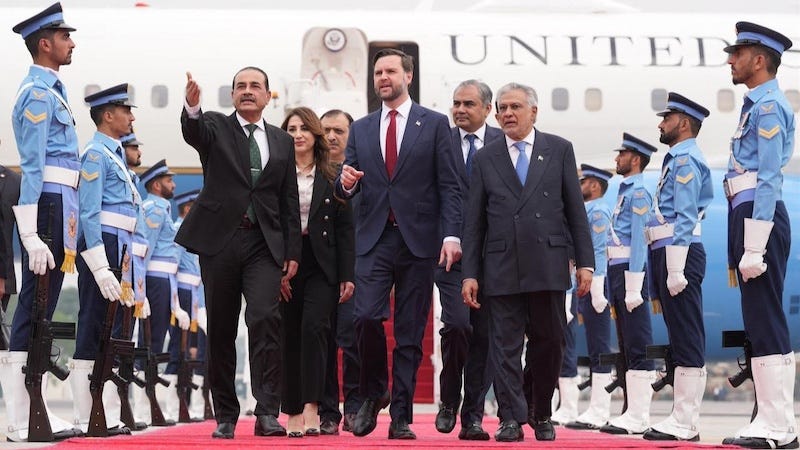
Australia has limited autonomy in this situation, yet bears real economic and political costs – from fuel prices to domestic electoral unrest. The public scepticism keeps growing, and questions will continue to be asked about whose interests our foreign policy is actually serving. Diplomacy may have failed in Islamabad – and perhaps that was the real purpose of the visit by Vice-President J.D. Vance – but the mechanisms of the conflict continue to spin around, and Australia will continue to suffer, along with the rest of the world.
Silencing the voices of Palestine on campus
The University of Sydney’s low-key rollout of a dedicated antisemitism advisor and “trainer” raises more questions than it answers, especially about the processes involves, the power behind the scenes, and the precedent that it sets. Appointing the academic Michael Abrahams-Sprod to the role before formal approval, then disclosing it only after the fact, is the sign of a university that’s more concerned about managing its reputation and unrepresentative powerbrokers, than maintaining academic and administrative transparency.
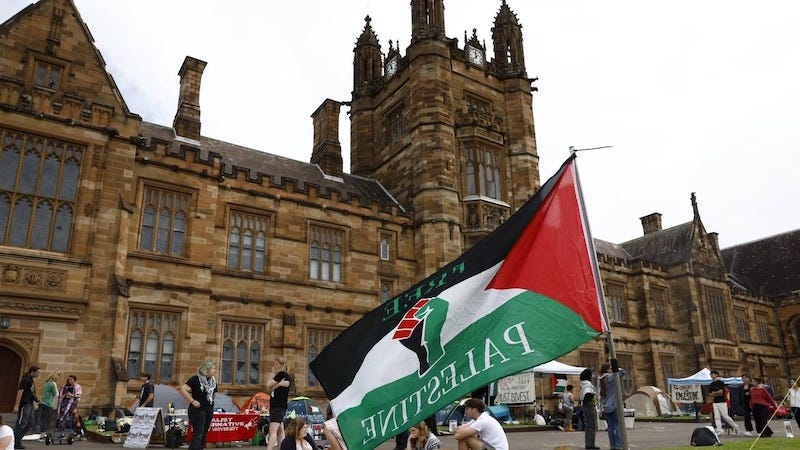
But the deeper issue lies in what this role of Abrahams-Sprod is supposed to do. His role includes implementing training programs targeting HR, security and senior staff on what antisemitism is, and how complaints are to be interpreted, how the university responds to incidents – presumably determined by Abrahams-Sprod – and, ultimately, how freedom of speech is defined on campus. Abrahams-Sprod is a senior member of the pro-Israel Australian Academic Alliance Against Antisemitism (5A), which considers Palestine activism as antisemitic, has co-ordinated attacks on university staff who hold pro-Palestine positions, and was behind the debacle of the Bendigo Writer’s Festival, targeting the academic Dr. Randa Abdel-Fattah and causing the mass boycott of the festival by 50 writers.
This is being forced upon the University of Sydney by Zionist groups in Sydney, and once these systems are in place, they are rarely wound back. And, of course, it’s only a matter of time before this program of severely curtailing academic freedom is implemented at many other universities around Australia, a further dumbing down of our educational institutions, just at a time when they need to be smartening up.
Running on empty: Australia’s fuel reality
Australia’s fuel insecurity is no longer something that exists in theory – it’s a significant weakness that’s exposed every time there’s global tensions anywhere in the world. The collapse of the US–Iran talks and pressure on the Strait of Hormuz off the coast of Iran have highlighted this situation yet again, and despite many years of warnings, Australia still operates with fuel reserves of around 29 days – well below the recommended level of 90 days – and this will barely sustain the country through a disruption that’s likely to be a lengthy one. Governments have talked up this idea of stockpiles and energy “resilience”, but much of that capacity sits offshore or remains incomplete – and seems to be more about political management, rather than actually doing something to rectify the problem.
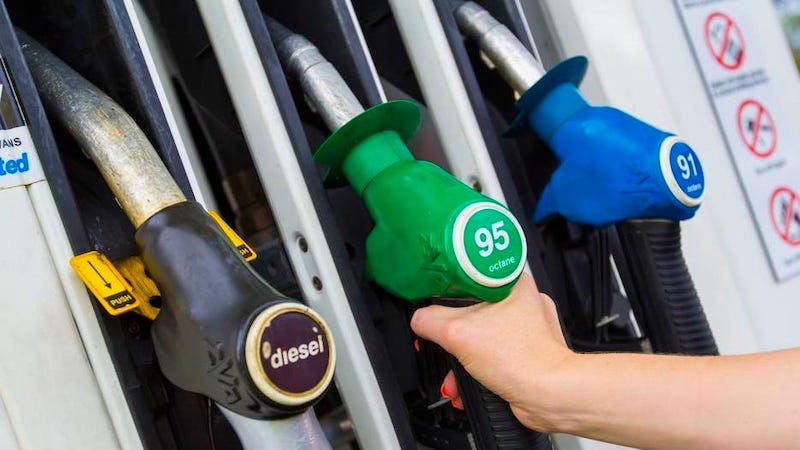
There’s also an uncomfortable contradiction at play here. Australia positions itself as a stable, resource-rich nation, yet depends heavily on imported refined fuel with minimal domestic backup. We’re not suggesting the odious “drill baby drill” approach of Donald Trump, Gina Rinehart or Pauline Hanson but the question needs to be asked about why a wealthy, energy-exporting country has failed to secure something as basic as its own fuel supply, or at the least, look at alternative energy sources at a comprehensive level.
No more heroes
The arrest and impending prosecution of Ben Roberts-Smith has become more than a legal case – it’s also a question of how certain political figures on the right view the rule of law, and how entertained they are by the myths of war, and the continuing Anzac legend. For decades, the Anzac tradition has been treated almost like a sacred event, shielding soldiers from scrutiny under the banner of sacrifice and service. But allegations of war crimes don’t fit neatly into that story, and the instinct is to protect this sacred legend, even if it means sidelining the truth and ignoring the rule of law.
This isn’t just about the one individual – it’s about whether Australia is willing to confront the more sordid parts of its military history. The allegations against Roberts-Smith concern the killing of five Afghani civilians, and a court of law will determine if this constitutes murder and, therefore, war crimes. And murder, irrespective of where in the world it happens, is still murder. If five Australian civilians had been murdered in Kabul at the hands of Taliban fighters, would we suggest this is a “fog of war event” and just ignore the calls for justice?
A form of accountability that’s selective and decided by a panel of conservative politicians, mining magnates and media proprietors, is not worth hanging onto. Let the courts decide if Roberts-Smith is guilty or innocent, not the barrackers who are shouting too loudly from the sidelines and don’t know any better.
The Greens are starting to realise they need to get serious
The relaunch of the Green Institute with the former MP Max Chandler-Mather as the CEO, isn’t just another juggling exercise – it’s a sign that the Australian Greens are done waiting for right political or electoral moments, and are now trying to force these moments and create them.
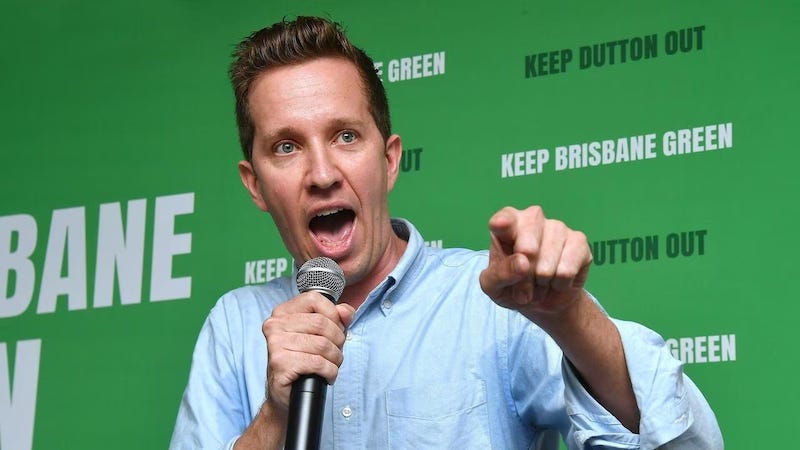
The Greens had a big electoral reality check in 2025, when they lost three of their four seats in the lower house – including the leader, Adam Bandt – and it seems that they are moving to a more populist model that’s currently being used successfully by the Green Party in Britain, under the leadership of Zac Polanski. The new model seems to be much clearer: build a permanent campaigning process that operates all year-round – and not around election time – shapes the narratives, build a base of activists, and develop policies that can build a wider electoral base.
One Nation has become a populist movement on the right of politics, and it’s clear that the Greens want to replicate the splintering of the right, and apply that to the centre-left of politics. It’s surprising that it’s taken them so long to come to this realisation: every major political party eventually had to build a strong institutional backbone – a research centre, a discipline on their messaging, and an analysis of electoral voting patterns in a far more coherent way. And the policies.
It seems to be a highly ambitious change, and it doesn’t seem to be about poking Labor from the sidelines anymore and being a minor irritant; it seems to be about replacing them. And this means appealing not just to the disillusionment that exists in the community, but developing a stronger sense of economic credibility, and working towards becoming a party of government, not just a party of dissent. It will take a great deal of work, but it can be done.
Particular thanks for the trenchant perceptive reframing of the Roberts-Smith situation, its antecedents, players, spin and obfuscation.
Thanks, New Politics. It's definitely time for Australians to wake up to what's going on here.
Our fossil fuel lobby is still being given whatever they ask for by the ALP (now standing for Another Liberal Party, if the results define the party), making both culpable the slow pace of our transition from fossil fuels to renewables. But hey, plenty of lobbyist jobs will exist for Labor ex-pollies until 2070, which is the main consideration!
https://www.deepcutnews.com/p/the-gas-industry-is-all-bluster-and
The US' Military Industrial Complex is still growing its soft (cultural) and hard (infrastructure) power interference in our country:
https://www.sydneycriminallawyers.com.au/blog/the-us-is-covertly-propagandising-australians-whilst-monitoring-our-migrant-crime/
Our ALP and military (no doubt with US' MIC orders) is still turning a blind eye to settler colonial genocides near and far:
https://www.sydneycriminallawyers.com.au/blog/indonesian-police-go-on-killing-spree-as-crackdown-escalates-in-west-papua/
https://www.sydneycriminallawyers.com.au/blog/apartheid-israel-is-invading-and-colonising-southern-lebanon-in-plain-sight/
I'm sorry to have to witness it, but the Palestinian g3n0c1de by Israel (with unconditional complicity by US, Germany, and other dehumanizing governments) appears to be just another step in the MIC dehumanization program being run at full throttle by ICE in the US, and to disturbing degrees in many other democratic chop-shops.