


For much of the 20th century, Australia imagined its security through the imperial structures of the world: first of all, the British Empire, and after 1942, the American-led order. The transition was abrupt at that time, but the prevailing logic remained the same. A familiar great power kept Australia safe, Europe bought its goods, and Asia supplied the opportunities, mixed in with a high level of anxiety. The alliance with the United States gave rise to a de facto imperial protection, an insurance policy underwritten as much by culture relationships, as by the desire for a deterrence. Even as trade and diplomacy deepened with our own region, the deeper Australian strategic identity remained Atlantic (northern) and Anglophone.
The idea that security could arrive from across the Pacific comes way before the systems of treaties were first established. When the United States “Great White Fleet” visited Sydney and Melbourne in 1908, Australians greeted the sailors not as foreigners but as their cultural brothers. This visit occurred during a period of imperial anxiety, four years after Japan’s victory over Russia at Tsushima, and Britain becoming increasingly absorbed by the affairs of Europe in the pre-war period. This didn’t displace Britain, but it widened the strategic possibilities of Australia: there were now two Anglophone naval centres, one in the Atlantic and Europe, and the other one emerging in the Pacific. When Britain failed to defend Singapore in 1942, the psychological path for turning to Washington had already been prepared.
After the war, the architecture of Australian security settled into a dual pathway. ANZUS offered assurance through alignment with the United States, while the United Nations Charter, the growth of international law, and the emergence of the protocols of post-colonial sovereignty offered a high degree of reassurance through the so-called “rules-based-order”. Australia came to believe – at times implicitly, other times explicitly – that the best way for a medium-sized state to survive was through a careful blend of an alliance and law. The alliance provided deterrence against major threats, and law constrained the ability of large states to rework territory or coerce their weaker neighbours. The two reinforced each other so reliably that Australian foreign policy internalised them into a single framework.
The emergence of AUKUS in 2021 is often treated as a comfortable extension of that process, as if Australia was simply updating the software, rather than amending the operating system or creating a new one. But AUKUS marks a shift from sentiment to a new structure: not just enthusiasm for the alliance, but welding together defence plans, industry, the flow of intelligence, and a future force designed with the United States and Britain. It’s a multi-decade commitment made at a time when the international order seems to be less settled than at any point since the early parts of the Cold War in the 1950s.
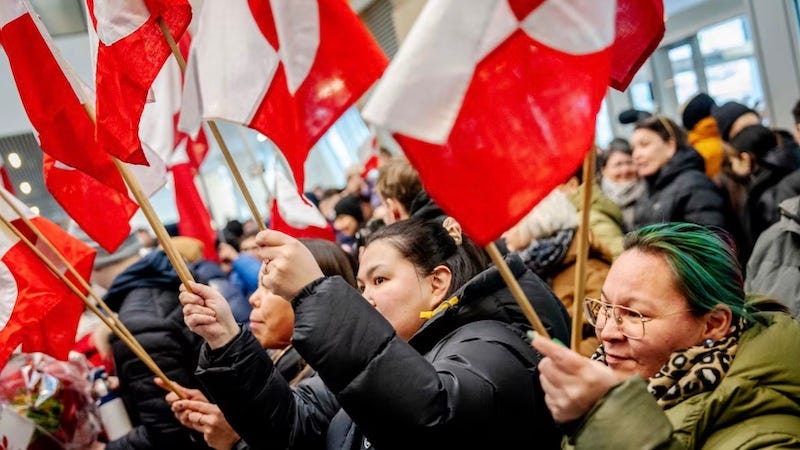
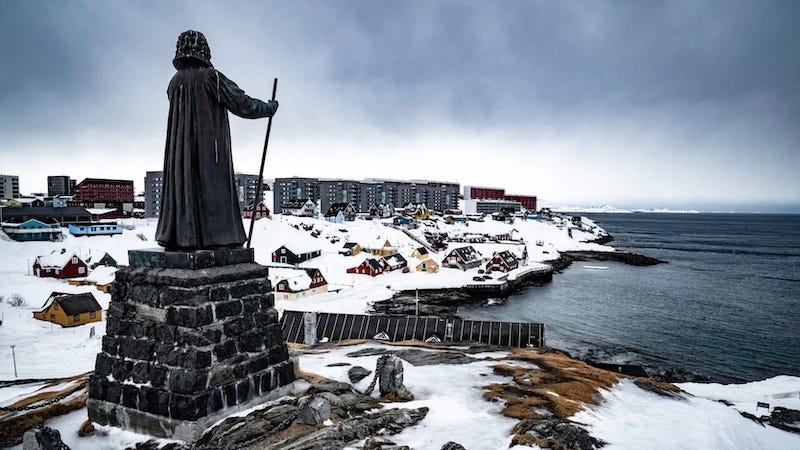
The question of Greenland makes that tension more visible. Over recent years, elements of the United States political class have spoken – sometimes jokingly, and sometimes not – about acquiring or otherwise asserting control over Greenland. Denmark and Greenland have rejected these notions with the clarity of politics that’s rooted in 20th-century history. For Europeans, especially those within the zone of NATO, Greenland is not a playground. It refers to the post-1945 rule that borders do not change through force, through whim or some kind of misplaced historical nostalgia.
Australia has handled this current situation with the usual diplomatic niceties: that Greenland is a matter for Denmark and its people, the alliance remains strong, and there’s nothing more to see here. That response seems serviceable at the moment, but it reveals a deeper tension within Australian diplomacy. Officially, Australian foreign policy rests on two main pillars: the American alliance – as if that wasn’t half-obvious – and the rules-based order, although we can see that this order of rules is applied selectively, in deference to the first pillar. The first offers deterrence through power, and the second offers security through law. Those pillars have worked together for decades because the United States was both the creator and enforcer of that order. The issue of Greenland suggests that those two roles may now be diverging.
There are precedents for this type of divergence. In the Suez Crisis of 1956, Britain and France attempted to seize the Canal, and the United States, to their shock, sided with sovereignty, than the imperial habits of yesteryear. For Australia, the message at the time was blunt: legitimacy had moved over from empire to order. If the United States was to invert that pattern during this Greenland crisis, Australia would face the uncomfortable choice between power and protocols, rather than being conveniently aligned with both.
The 1999 intervention in East Timor is probably the sole moment that Australia stepped in to protect the rights of a state to decide its own future – it was framed as “peacekeeping” at the time but, essentially it was about the issue of sovereignty, in the face of Indonesian oppression. However, Australia continued to interfere afterwards. In the months following East Timorese independence, Australia withdrew from the dispute settlement systems of the United Nations regarding maritime borders, and then went on to infamously bug the cabinet offices of the new government during the negotiations over the Greater Sunrise fields, and secured a deal that was far more favourable to Australia and Woodside Petroleum, than it was for the East Timorese. All of this was uncovered in the “Witness K” case, and it went on to show that the promotion of independence for East Timor wasn’t about principle at all, but a tactic to exploit resources for Australia’s interests.
There’s a similar lesson to be found in Crimea. The annexation by Russia in 2014 wasn’t condemned because of its strategic position, but because the act itself violated the territorial protocols that helped to stabilise Europe after 1945. The issue of Greenland virtually sits in the same position – if the United States is to use the same logic that Russia applied in 2014, then Europe’s reaction would be exactly the same and, so far, its responses to the current deliberations by the United States over Greenland suggest that this would end up being the case.
And what about China? China has expanded reefs in the South China Sea, made sweeping claims over territory and disregarded rulings by the United Nations. Australia has condemned these actions – although using far softer terms – but if it has the habit of condemning China, it can’t be silent when the United States does the same in the Arctic region.
Within this context, AUKUS changes that balance of protection through alignment, and restraint through law. It’s a program that fully embeds Australia into the American and British defence systems at least until 2070 and, more than likely, for many years beyond that, and once these systems are established, it’s very difficult to dismantle them.
And the structure itself reinforces this dependence. Nuclear-powered submarines are designed for high-end operations through this coalition, it can’t be done unilaterally. Their use depends on American naval engagement in the Indo–Pacific region and the sharing of intelligence, targeting and operational planning. In any conflict serious enough to need this, Australia would not be operating as a neutral or independent party.
Leasing Virginia-class submarines from the United States, building domestic nuclear-powered boats, training nuclear-qualified sailors and building the infrastructure to support all of this will unfold across many decades. By the time these arrangements develop and mature, allied nuclear operations out of Western Australia will be normalised and the domestic industrial base will be tied to US export control and intellectual property. At that point, a policy reversal by any future government would constitute a complete disruption, rather than a simple and routine adjustment.
The regional perceptions already reflect this situation. In Southeast Asia, AUKUS is viewed as a shift in Australia’s defence strategy that contributes to firming up of the alliance with the US. The message that Australia keeps pushing – that AUKUS is just a technical solution to a small gap in capability – is not the dominant one, but neither will it shape the environment in which the boats will eventually operate in, if indeed that’s what it ends up coming to.
Australia’s strategic environment is now shaped less by what Canberra believes about itself than by how other states understand power, territory and their own vulnerabilities, and these understandings are not uniform across different nations. Japan, India, the many states of Southeast Asia, China, the Pacific Islands and Europe all approach sovereignty and alignment through different historical experiences, and it is those experiences that will determine how they interpret both AUKUS and any future actions on Greenland by the United States.
The Greenland issue also introduces a second layer of risk for local geopolitics, if there ends up being a divergence between realpolitik and pre-existing protocols within Australia’s own diplomatic circles, or within the federal government. If the United States is to continue to pressure or attempt to acquire Greenland by force, Denmark and Europe will interpret this as a coercive act – how could they not? – and Australia will be forced to decide whether sovereignty is a universal principle or if there is a regional preference to pick and choose.
A silence on this matter would weaken Australia’s credibility when opposing Chinese actions in the South China Sea, or its position on Taiwan. A stronger alignment with the United States could potentially alienate Europe, and stronger alignment with Europe could also strain the alliance. To not make a choice wouldn’t cause a rift in the short-term, and the issue can’t be delayed indefinitely.
A third risk lies in domestic politics and expectations within the electorate. Australia’s political culture has not prepared the public for the possibility of war between major powers in the Indo–Pacific region, although governments of all persuasions like to ramp up these fears about conflict with China, whenever it fits their respective narratives.
Discussions about conflict is kept abstract, often confined to commentary about Taiwan or navigational rights in the South China Sea but the real consequences of a serious conflict – disruption to trade, energy shortages, cyber-attacks, the flight of capital, mobilisation, casualties and the prospect of an escalation – have not been publicly inserted into the mind of the electorate yet.
None of this makes war or conflict inevitable but it does, however, make sleepwalking possible. The post-1945 order wasn’t just a set of institutions that were created for no reason, but for the management of power, global interests and protocols in an imperfect way that at least made those institutions meaningful. Today, all of those elements are starting to drift apart, with the power dispersing and the interests diverging in different ways. The well-established protocols are now being tested and contested by players who should know better, and the laws that once held back territorial aggression and ambition, are being ignored by a foolish president in the United States.
In 2021 through AUKUS, Australia chose to strengthen its alignment with the United States, and to a lesser extent, Britain, and that seemed to be a choice that’s consistent with our history and geopolitical concerns. But it’s a choice by the Morrison government – and now continued by the Albanese government – that’s looking more foolish by the day. The challenge isn’t just to materially acquire submarines, regulate nuclear infrastructure or expand the defence workforce, it’s to reconcile this alignment at a time when one of the primary creators of that order is no longer abiding by its own rules. The question raised by Greenland is not about an island that’s made of ice and glaciers, and possesses substantial geopolitical importance and resources, but about the structure of Australian security: whether it rests on power, on law, or on the hope that the two will continue to coincide.
If that fails, the choices that have been hypothetical for such a long time will become real, where Australia will have to decide between principles or slogans, and whether this dependency is going to become an obstacle that’s going to be too difficult to remove. These decisions won’t be clean and easy, but they might be critical decisions that will affect our future for some time to come.
Australia has long relied on two connected strategies: deterrence through an alignment with the United States, but a commitment to an international order that restricts territorial ambitions. What will Australia do when that deterrence is aligned to a country that now intends to smash that international order? If the United States proceeds with these ambitions in Greenland, Australia will face the kind of choice it hasn’t had to make since 1942.
And that choice won’t be between the United States and China, as has been often suggested, but between those two strategies, and the choice between power and protocol – between the alliance that protects, and the legal order that helps to keep the peace, however imperfectly that might be. Australia has built its security on these dual objectives, but we might be reaching a stage where it might not be possible to keep both and survive.
Further reading
Bell, Coral. Dependent Ally. Allen & Unwin, 1988. A clear account of how alliance dependence and fear of abandonment shape Australian strategy.
Bull, Hedley. The Anarchical Society. Macmillan, 1977. The canonical work on order, sovereignty and norms; key for understanding why “rules” matter to middle powers.
Gyngell, Allan. Fear of Abandonment. La Trobe University Press, 2017. The best narrative history of Australian foreign policy since 1942, written without sentimentality.
Medcalf, Rory. Indo-Pacific Empire. La Trobe University Press, 2020. Defines the Indo-Pacific strategic system and situates Australia within emerging great-power competition.
White, Hugh. How to Defend Australia. La Trobe University Press, 2019. A pointed argument about U.S. staying power and what an independent Australian defence posture would require.
Krasner, Stephen D. Sovereignty: Organized Hypocrisy. Princeton University Press, 1999. Influential examination of how sovereignty operates in practice, relevant to Greenland and the South China Sea.
Fravel, M. Taylor. Active Defense: China’s Military Strategy. Oxford University Press, 2019. Authoritative treatment of PLA strategic thinking, cutting through Western assumption and projection.
Snyder, Glenn H. Alliance Politics. Cornell University Press, 1997. The definitive study of alliance behaviour, entrapment and abandonment – the exact dilemma the essay describes.
I think Mark Carney shattered the illusion of the “international rules‑based order” yesterday. It has always been a misnomer for American imperialism, even if that reality was obscured by the language of shared values and rule‑making. Australia and Europe have long been willing participants in this system, benefiting materially from American imperial capitalism and military protection. This arrangement felt acceptable because it was invited and mutually advantageous. But as the United States has shifted from consensual leadership to coercive behaviour, the scales have fallen from the eyes of its allies. Whether this moment reflects a temporary aberration in a rogue presidency or the emergence of a new world order remains to be seen. A compelling analysis of Australia’s position within this hierarchy is Clinton Fernandes’ Sub‑Imperial Power, which outlines how Australia operates within, and reinforces, this broader imperial system. I wrote a review of it here: https://callumscolumn.substack.com/p/book-review-sub-imperial-power-by
Personally, I think we should cancel the US 'Virginia' submarine arm of AUKUS and focus on building the more advanced 'Astute' subs with the UK.
We could have had French nuclear subs, but Morrison is a fan of the US.
If the USA invades Greenland, just as Russia invaded Ukraine and China threatens against Taiwan, then we must condemn the US and side with Europe and international law.
We have considerable trade leverage over both the US and China.
We should use it to support freedom against national predators like Trump.