


The Liberal Party’s present difficulties are being described, with weary predictability, as a “leadership crisis” but this is just a convenient framing, as well as being totally insufficient. Leaders are the most visible factor in politics and replacing them creates the appearance of movement and change. Leadership is important, but just making a change for the sake of it suggests there’s a deeper gap between what that party has to offer, and then going on to reach the electoral success that’s required to achieve majority government.
The 2025 election result made that gap impossible to simply wave away as a bad cycle or a mood swing by the electorate, and the final tally at that election had Labor on 94 seats and the Liberal–National Coalition on 43. That’s not a narrow loss that can be repaired by a change of the face appearing at the dispatch box in Parliament. This has been a massive contraction of electoral reach and it’s a result that tells you the party has lost relevance in too many places at once, and that the parts of the electoral map it once relied on to get into government can no longer be relied on.
It is tempting, inside politics and in the press gallery, to treat this as a question of “who” rather than “what”. A party room can vote for a leader but it can’t just easily vote itself into a new metropolitan coalition. That takes years, hard work, and it takes substance: policies that look real, and not performative, and a culture that is mature, not childlike and amateurish. The 2025 result shows the Liberals are still failing in many areas.
The metro collapse and demographic shift
Kooyong is the clearest example of how the ground moved before the collapse became visible in the national numbers. In the 2016 federal election, the former Liberal MP and Treasurer Josh Frydenberg won this seat with a primary vote of 58 per cent. That figure dropped to 49 per cent at the 2019 election, and then dropped even further to 42.6 per cent, when he lost his seat at the 2022 election – a 15 per cent drop over two election cycles.
Kooyong didn’t “suddenly” become more hostile. It drifted, quite measurably, under the direction of a senior Liberal who was meant to embody the party’s most elite level of competence and credibility. It’s the decline in the vote that’s the real story and his actual defeat was the just the end result of this decline.
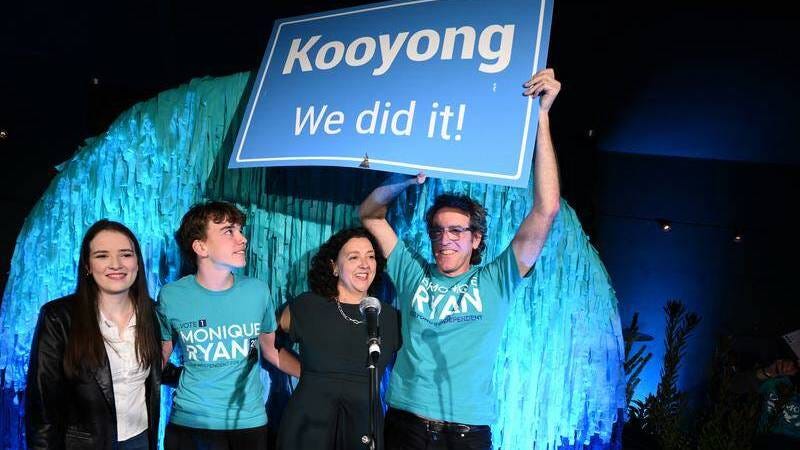
The community independent Monique Ryan retained the seat at the 2025 election, even though the primary vote for the Liberal candidate went up slightly to 43 per cent, while Ryan’s vote held at 34 per cent. This is an important factor to consider: the Liberals can lift their primary vote in this type of seat, and even be nine or ten percentage points ahead, and still lose the seat. When the talk is based around a solution to this issue just being a sharper or more aggressive leader for the Liberal Party, it’s ignoring how the preferential voting system is behaving in a far more fractured electorate. You can be “competitive” on the primary vote and still be structurally unable to win the two-candidate contest because you have become the second or lower preference, and not the first.
The national figures in 2025 also reinforced that this is not confined to a handful of inner-city seats. Labor’s national primary vote was 34.5 per cent. The Liberal Party’s was 20.7 per cent, with the Nationals on 3.8 per cent, the combined entity of the LNP in Queensland on 7.1 per cent, and independents at 7.3 per cent. The Coalition’s vote is now distributed across multiple political brands and different regional identities, while Labor’s support is more coherently consolidated. This isn’t just about ideology, it’s about having an organisational coherency which the conservative side of politics seems to be lacking at the moment. Parties that look fragmented in their purpose, then become fragmented at the ballot box and people don’t feel obliged to stay loyal to a Coalition that can’t explain what it’s there for.
If you want to understand why this has happened, you have to start with the demographics. The seats that matter for a Liberal recovery are increasingly educated and professionals-type seats. The ABS Census from 2021 shows the long rise in tertiary qualifications: over 33 per cent of Australians held a bachelor degree or higher by 2021, up from roughly 22 per cent in 2001. You don’t need to romanticise “the educated voter” to see what that shift does politically. It produces electorates that are more policy-literate, more alert to legitimate political operatives, and less tolerant of what looks like unseriousness, whether that be moral, administrative or intellectual.
And that connects directly to gender. You can pretend gender is a side issue and keep losing elections. The 2025 Australian Election Study materials and associated analysis point to a continuing gender gap, including explicit reporting that fewer women than men voted for the Coalition in 2025. This is not simply about “messaging to women” – it’s about whether a major party appears to have an internal culture that respects women, promotes women, listens to women, and responds credibly when serious allegations are made. Metropolitan professional electorates also have a high proportion of women in senior roles. They are not persuaded by performative outrage about “cancel culture” or by thin claims that the party has been unfairly maligned. They watch how a party behaves when it is under strain and they infer what it would do with power when it has the power.
The teal wave was never about socialism – it was always more about credibility. Teal candidates, for all their differences, converged on a small cluster of issues: integrity, climate change, and a style of politics that looked like it was being engaged with by adults. That matters in electorates that see themselves as “institutional” electorates. These voters are not uniformly progressive in the old sense, and many are economically conservative, cautious about spending, and completely turned off by ideological theatrics. They defected not because they have become leftists overnight, but because the Liberals stopped feeling like the natural custodians of competence and maturity. In a preferential system, once that trust is broken, you can remain a viable first preference for a chunk of the electorate and still lose because the broader preference pool sees you as the risk.
Housing, productivity and the “Taylor test”
This is where the “leadership crisis” framing becomes lazy. It treats the problem as a personality or even a character deficit rather than a credibility deficit. It also implies that if the party can find a “better communicator”, it can win back seats that have, in effect, reclassified the Liberals as a second-order option. The 2025 result suggests otherwise, as does the scale of the loss. The persistence of this metropolitan pattern also suggests otherwise.
The policy problem sits at the centre of this issue. Not the fact that people disagree with the Coalition, but the fact that the Coalition does not look like it has an alternative governing program which is relative to the issues that the country faces. Opposition critique is cheap but a pathway to government requires serious block building and deep intellectual rigour. In 2025, the Liberals and Nationals had cheap critique, but not a system in place to build these blocks.

Housing is the clearest example, because this is where the lived experience is now too widespread to be managed through the ongoing culture wars. The 2025 AES commentary and related coverage identifies housing affordability as a major issue, including among renters. The issues contained within the crisis are not mysterious: constrained supply in the places people want to live, planning and zoning regimes that block density, infrastructure that lags, and tax settings that have long favoured asset inflation.
Any serious party that wants to govern Australia again has to speak about housing in a way that shows it understands the elasticity of supply, the state–federal coordination that needs to be in place, and the political economy of vested interests. If your “housing policy” is basically a complaint about migration, you are not solving housing. You are just shifting blame onto a variable that you can’t credibly control without doing the hard work.
The deeper electoral problem for the Liberals is that metropolitan professional voters can easily tell when a party is hand-waving and shirking the issues. If this sector is to be persuaded back to the Liberal Party, there has to be a wide range of substantial policies on offer in the area of housing. Without that, you’re not offering substance, just another round of “feel-good” therapy for sake of the party room, or the audience of Sky News.
Productivity is the other test. The Productivity Commission’s Advancing Prosperity report points to the long stagnation in productivity growth and the need for reform that goes beyond small-business sentimentality. You can preach “red tape reduction” forever, but that is not a productivity agenda. A productivity agenda needs to encompass a wide range of areas: competition reform, diffusion of technology, human capital, regulatory simplification that actually reduces transaction costs, and reforms that often cut against the party’s own donor ecosystem.
If the Liberal Party wants to be seen again as the party of economic competence, they need to develop detailed and credible policy that will actually work and can also withstand the test of parliamentary scrutiny.
Perhaps this is where Angus Taylor might become relevant, not so much as a personality but as a symbol of economic credibility for the Liberal Party. Taylor has long been positioned as a leadership contender because he holds economic and organisational power inside the party. Yet the skepticism that circulates around him is not just ideological. It’s the belief that he has not demonstrated the capacity to build and prosecute a coherent economic and productivity argument at the level that’s required for government.
He has never looked like a Treasurer-in-waiting who can prosecute a believable economic narrative, and bring the public with him. This is a critical perception, because it shapes whether, ultimately, the Liberal Party can be taken seriously by the public service, the business sector and, most importantly, the metropolitan voters who decide elections.
After losing the leadership contest after the 2025 election, in 2026, the leadership of Angus Taylor has returned as the farce after the tragedy. You do not need to be a romantic to see what this does electorally. A party that is publicly fighting about leadership – irrespective of how long Taylor remains in the position – while still unable to articulate a program commensurate with housing and productivity pressures, does not look like a government-in-waiting. It looks like an organisation that’s fighting over the steering wheel and who’s turn it is to drive, while the engine is missing.
This is also where Labor and other parties can exploit the situation. Leadership spills and changes are not just internal party events, they send out an external message of dysfunction. The government can continue to frame the opposition as unserious and unstable. The community independents and minor parties can frame the major parties as exhausted and self-absorbed. Even parties that are nominally “aligned” with the Coalition’s base can exploit the vacuum by presenting themselves as the authentic conservative alternative. There’s something there for everyone!
The outcome of the 2025 election clearly shows what the electoral arithmetic is: the Coalition won’t be able to form a government by trying to shore up the vote in regional seats – there’s just not enough seats out there. It needs metropolitan seats. It needs educated, professional electorates that will not vote for it if it looks culturally backward or intellectually thin. That’s the bargain of modern Australian politics: you can have a base, but you can’t govern without breadth.
We can now see that the events in Western Australia were a portent for the federal party in 2022 and 2025 – the WA Liberal Party was decimated in 2017, and then decimated again in 2021, winning only two seats in a parliament of 59. If it responds federally with another internal knife fight rather than seeking a rebuild, it may end up being decimated yet again at the 2028 federal election.
A credible rebuilding strategy needs to involve three items, and all three are essential. The first is to announce a housing program that is blunt about supply constraints and honest about all the trade-offs to achieve its goals, including a willingness to confront vested interests and the inertia that exists across all levels of government. The second is a productivity program that is specific and targeted, rather than rhetorical, that treats reform as a serious process rather than just another pithy slogan.
The third is a cultural reform that is obvious in its behaviour and actions, not just empty declarations, especially around the treatment of women – which will be difficult to do, considering they’ve just removed their first federal woman leader, Sussan Ley. The party does not have to become supposedly left-wing to do any of this, it just has to become adult.
You can tell how serious a political organisation is by what it does after it loses. A serious party reads the defeat as critical information and feedback and does the hard work. An unserious party reads the defeat as an insult and lashes out. The 2025 was not just a brutal defeat for the Liberal Party, it was an electoral message to the party – reform, or die. Performative leadership change is meaningless, irrespective of who the leader is, as is keeping the current leadership team. Only a structural reform will work. The Liberal Party may end up changing its name. Or it may keep it. The drama over this 2026 spill suggests the party is still interpreting the last election result as an insult. That’s not a leadership crisis. It’s a crisis of governing.
References
Australian National University/Griffith University. The 2025 Australian Federal Election: Results from the Australian Election Study (AES).
ANU College of Arts, Society & Education. 2025 Australian Election Study reveals factors (gender gap, housing concern among renters).
Australian Bureau of Statistics (ABS). Census of Population and Housing 2021 (tertiary attainment; gender attainment patterns).
The conservative takeover of the Liberal Party is now complete, but only after the Teals cemented their seats, and after One Nation dropped the shackles of being a fringe far‑right party to become, somehow, more compelling than the Coalition. The right‑wing politics of Australia has splintered, and the damage is already done. An Angus Taylor transition will not fix that. Taylor may be conservative, but he is not competent--just look at his time as shadow treasurer--and, as Malcolm Turnbull said, Taylor “is the best qualified idiot they’ve ever met.”
How long can it take to cook an Angoose? Not long I would think. His most likely strategy is to swing towards One Nation policies. He has already attacked on immigration and climate. We can expect Laura Norder to appear before long.