


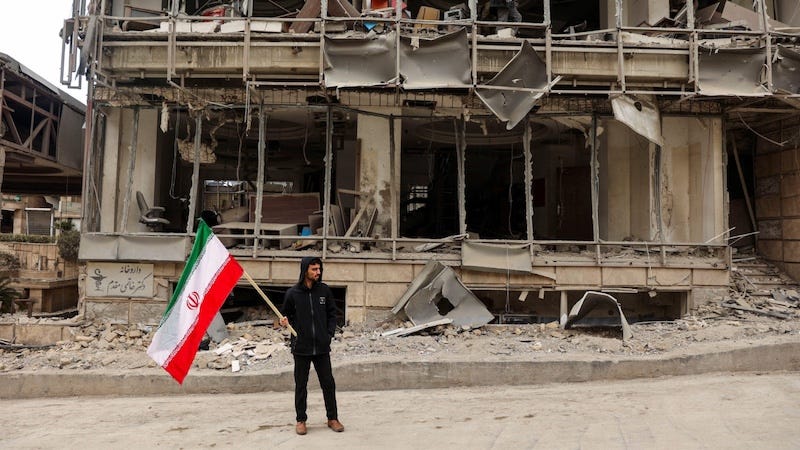
There’s a new pattern that’s emerging in Donald Trump’s version of the “new world order”, first of all in Gaza, and we’re now seeing it in Iran: the language of so-called “peace” is replacing the language of war, and de/reconstruction is becoming the new strategy of influence. Build it and they will come, but first of all, it needs to be destroyed, just like the United States did in the village of Bến Tre during the Vietnam War.
The template was created during the 2003 invasion of Iraq, where there was much rhetoric about stabilisation, democracy and rebuilding, with the country opened up to foreign contractors and, of course, implementing American geopolitical interests according to George W. Bush or, more accurately, former Vice-President Dick Cheney. More than two decades later, it’s a similar logic applied to Gaza under the “Board of Peace” initiative created by Trump, and although it’s being formally framed as a benevolent tool for new governance and reconstruction, it’s about something completely different: a consolidation of post-war authority that erases Palestinian people and creates the next attempt in changing the regional balance of power, particularly in relation to Iran.
The proposed structure for Gaza as presented by the Board of Peace has raised issues among many Palestinians and international critics who argue that any long-term settlement – if that’s what the intention is – needs to include meaningful political participation of the Palestinians and comply with international law, which has so far been absent.
There’s also the controversy about who’s involved with this Board of Peace. Former British Prime Minister Tony Blair is now a part of this group, but will be forever linked with the 2003 invasion and war in Iraq, which was launched on the basis of the now-discredited claims of weapons of mass destruction – which were never found and confirmed to have never existed – and resulted in the deaths of up to 600,000 Iraqis. Blair shouldn’t be anywhere near the reconstruction of Palestine and, if anything, should be securely locked up in The Hague, for his role in the destruction of Iraq.
In classic doublespeak, Blair has outlined a vision of rebuilding Gaza with functioning institutions and economic opportunity – for the people of Gaza – and while these goals wouldn’t be controversial if they were being mentioned by most other people, Blair’s reputation was shredded during invasion of Iraq and is not to be trusted. Anything he claims will be created for the benefit of Palestinians should be taken with a grain of salt, especially when considering the biggest donor to the Tony Blair Institute for Global Change is one of the biggest supporters of Israel and Zionism, Larry Ellison – donations of $US375 million – and he’s hardly going to donate these large finances for Blair to create anything that could benefit the people of Palestine.
The core problem for this Board of Peace is its well-shrouded geopolitical ambitions and where it goes after the reconstruction of Gaza commences. Since 1979, Iran has been a major thorn in the regional dominance that the United States and Israel has wanted to impose, and is now the only country in the region that hasn’t acquiesced to the bullying tactics of the West.
Any reconstruction model that sidelines the future of Gaza and Palestine, while consolidating Israeli land grabs, will inevitably cross over into the issue of Iran. Taking this into account, the “Board of Peace” isn’t a humanitarian and well-intentioned body at all, it’s just an attempt to institutionalise a new regional order using the language of peace that Orwell would be applauding from his grave.
The United Nations should also be accountable for its inaction as well. Of course, it’s clear that in 1945, it was set up to fail and act as a tool for the benefit of the five permanent members of the Security Council. In the case of Gaza, all the power now resides with the Board of Peace, and it’s clear that the United Nations won’t be able to do much to stop it, or have influence over, and it’s evident that despite the strong language from the UN Secretary-General António Guterres, it won’t be able to do anything about Iran.
If this confrontation with Iran intensifies, the region won’t see anything that consolidates peace but will just continue Israel’s preference for their “forever wars” and entrench that perception that its existence is under threat – and it will end up being another chapter in a long cycle of attack, intervention and resistance.
Why the Trump’s strikes won’t deliver regime change in Iran
If the first phase of this emerging “peace through war” strategy involves reconstructing Gaza through imperial intervention, the second phase is aimed the one regional power that has consistently resisted American–Israeli dominance since 1979. Iran has consistently humiliated the United States – as did Vietnam and Cuba in the 1960s – and irrespective of how wrong and maniacal its behaviour was in these cases, America implemented punishing trade embargos as a payback against these countries, and its actions against Iran for deposing the West’s favoured despot, Mohammad Reza Pahlavi, continues in this vein. Resistance to Western imperialism needs to be punished at every opportunity.
These new U.S–Israeli strikes were accompanied by an ultimatum from Trump, who urged the Iranian Revolutionary Guard to surrender or face “certain death”, which he hoped would result in the regime collapse that the U.S. and Israel has been trying to manufacture for some time. Instead, Trump got a different answer: Iran responded with co-ordinated missile and drone attacks on Israel and a 27 U.S. military bases in the region. Did he really expect that a country as large as Iran was going to roll over and let these attacks go unanswered?
The killing of Supreme Leader Khamenei was also a key military and political error, and was based on the assumption that removing an 86-year old spiritual leader would cause confusion within Iran and create an uprising. But Iran hasn’t been biding its time and waiting for an attack to arrive without any preparation – like many other leadership groups in the region, Iran political structures are not based on a single figure, and the authority has been distributed across a wide range of clerical networks, leadership groups, intelligence agencies and, more importantly, the Revolutionary Guard.
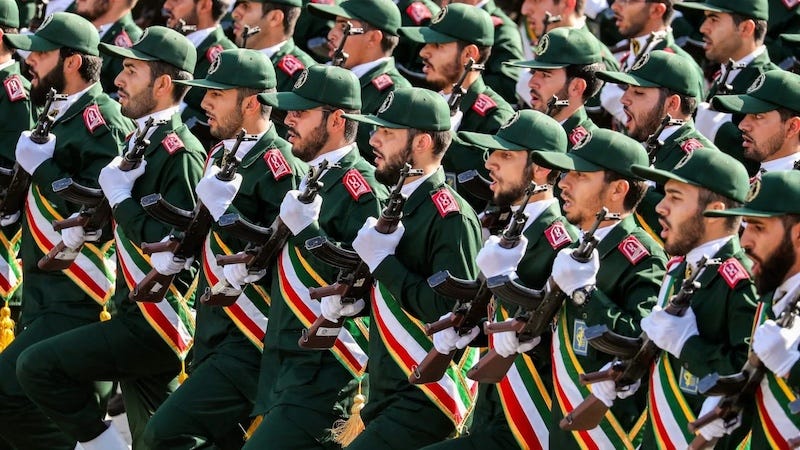
Whatever the West might think of the Revolutionary Guard, it’s a powerful and dedicated force of around 190,000 personnel, and if it is to be defeated, the U.S. will need to commit the ground troops that it’s so far been unwilling to commit. And with the mid-term elections coming up later this year, the news coverage of U.S. personnel returning in coffins is something a sitting President would want to avoid at every opportunity.
The other issue is that bombing Iran just reinforces that domestic Iranian narrative of being under siege and, historically, the external pressure through sanctions and assassinations has strengthened the positions of hardliners rather than weakened them. Although Iran faces genuine internal turmoil – economic hardship caused by sanctions, youth discontent and protest movements – domestic dissatisfaction doesn’t mean strong support for a foreign intervention and, historically, whenever support for this gains traction, it usually dissipates whenever the West has interfered in Iran.
Yes, the Iranian population wants internal reforms and change, but they don’t want a return of Western intervention and political influence. Although the Iranian revolution occurred almost 50 years ago, many people remember the oppressive regime of The Shah and the exploitation of Britain and the United States of its resources, and would hardly want to see a humiliating return of that.
The demolition of international law
If strikes on Iran are unlikely to result in “regime change”, they raise a number of other questions: what is their purpose, and whatever happened to the international legal order that was meant to deter this kind of unilateral action? It’s clearly an illegal act – as was the recent United States act of kidnapping the President of Venezuela Nicolás Maduro and stealing Venezuelan oil – so why has the Australian government been so supportive?
The rules governing any use of force comes from the United Nations Charter, drafted in 1945 to prevent unilateral military aggression which had caused the Second World War, and prohibits force against the territory or political independence of any state in the world.
Australia has long presented itself as a defender of this rules-based order – it was instrumental in the creation of the League of Nations in 1919 and its successor, the United Nations – condemning Russia’s invasion of Ukraine and calling on the observance of international and maritime law in the South China Sea. But following the strikes on Iran, Foreign Minister Penny Wong couldn’t outline whether this action was according to international law or not, and said that the legal justification was for those states to articulate, not her.
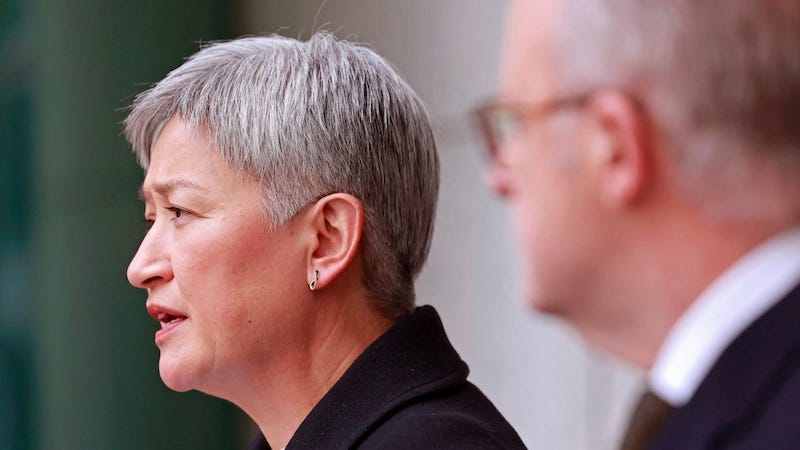
Perhaps Senator Wong should have a closer look at the UN Charter: force against another member state is lawful and permitted only in two circumstances, either through Security Council authorisation, or self-defence in response to an armed attack, neither of which occurred in the case of these attacks on Iran.
Along with Australia, the international responses have been inconsistent, some governments support restraining Iran’s nuclear ambitions – even though they were supposedly wiped out by previous strikes in 2025 – while others have clearly questioned the legality of these attacks. But the point is that the selective application of international law erodes its credibility, as it does within any legal system. A rules-based order can’t function correctly if a power such as America acts unilaterally and attacks countries at a whim, based on the wishes of Israel. If the U.S. can decide – either by itself or through its Israeli proxy – to attack a sovereign nation, why can’t Russia continue its military actions in Crimea and Donbas? Or a Chinese invasion of Taiwan, or another country in the South China Sea?
For Australia, this inconsistency does have a risk. As a middle but increasingly weaker power, it relies on stable legal protocols and practices to protect its own sovereignty and strategic interests, and these are the reasons that it was so instrumental in the creation of the United Nations. If legal principles are ignored in one region, they are weakened everywhere else. And over time, the erosion of these practices normalises unilateral force.
Recent conflicts – from Ukraine, Sudan, Gaza – have already exposed the post-war system and the international compact that has existed – more or less – since 1945. Australia’s political dilemma is now a two-fold strategic and philosophical issue: how can it uphold the Charter of the United Nations, while maintaining commitments of the alliance with the United States, which is now operating as a lawless and rouge state?
If the escalation against Iran entrenches its current leadership – which seems likely – it will also weaken the legal order that is meant to preserve global stability. The test for Australia – and for all states claiming to defend international law and the “rules-based order” – is whether these principles remain when its allies, and not its adversaries, become the ones that are bending the rules so blatantly and forcefully.
All the way with Donald J. Trump
Australia moved quickly to endorse the American–Israeli attack on Iran – subordinating itself to the whims of Trump and Benjamin Netanyahu in his quest for the Greater Israel Project – with Prime Minister Anthony Albanese framing it as a “necessary response” to Iran’s nuclear ambitions and consistent with defending the “rules-based order”. But what does this mean? Invoking a “rules-based order” – which killed well over 100 school children in southern Iran during the week – while refusing to say whether an attack on a sovereign country was legal or not doesn’t inspire much confidence in those rules.
Albanese once again linked Iran to hostile acts in Australia, including the 2024 firebombing of the Adass synagogue in Melbourne, attributing responsibility to Iran’s Revolutionary Guard, even though no evidence has ever been provided, nor was it clear why Iran would want to attack a synagogue over 12,000 kilometres away.
It’s becoming more evident that this link was created by Albanese to reinforce the perception of Iran as a “direct threat” – the same language used by Trump – and provide the groundwork for a future attack against Iran, but it also raises questions about Albanese’s ethical and political standards, which have deteriorated rapidly in recent times.
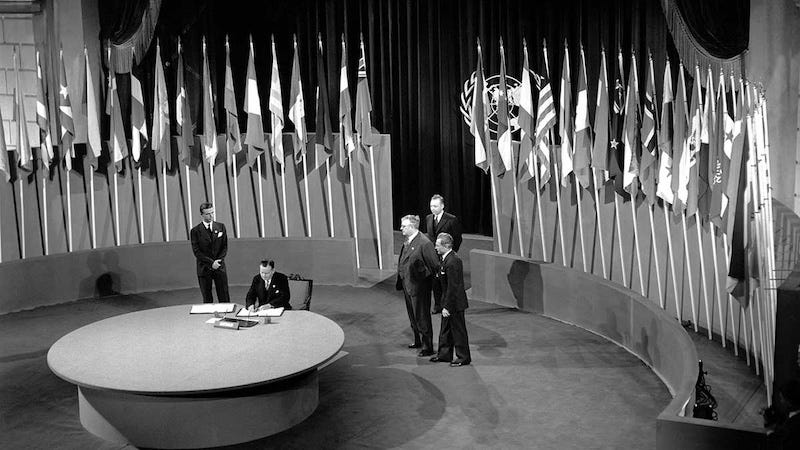
It’s also clear that Australia doesn’t have any independent thinking when it comes to many of these international issues. While Australia’s opinions might not make that much difference, whether it be in Palestine or within Iran, we have to remember that it once did have great influence and prestige in international circles – in 1945 at the United Nations, and one of the key instigators of the Gleneagles Agreement in 1977 that precipitated the end of apartheid in South Africa. But it’s now a minnow in world influence, and the only prestige that it seeks is to sell its rare minerals, gas and iron ore to whoever wants it, and at the cheapest price.
Australia has traditionally maintained at least some space for independent judgement with its allies, but there has been not one slither of independent thought on this illegal American–Israeli attack on Iran. Perhaps this government is more interested in ensuring it doesn’t jeopardise those U.S. mineral deals that don’t even work in our favour, or affect the contracts with Israel to supply parts for their F-35 fighter jets, some of which might have been used to kill those innocent children in southern Iran.
Selective application of international law and protocol – and not being able to call out allies when they’ve gone rouge – is eroding Australia’s credibility. Of course, supporters of these attacks will argue that Iran’s actions over the past 47 years justify taking this harder military path but, essentially, this is a concocted imperialist act that is based on the geopolitical and territorial ambitions of both Israel and the United States, and it’s a narrative readily supported by its allies, including Australia.
These issues – an imperialist reconstruction in Gaza, and an escalation against Iran by those same players – are setting off the world towards a more transactional-based international system, rather than the so-called “rules based order” that Albanese frequently refers to. But there are no rules and, perhaps, there never have been. Australia has chosen to support an international law of the jungle where the powerful countries decide for themselves what’s right and what’s wrong, and is watching on and allowing the system they so carefully constructed over the past 80 years, to completely fall apart.
Thank you Eddy and David.
With Albanese and his triumvirs Wong and Marles supporting the illegal war of aggression, they can’t tell you if a crime has been committed. The Albanese regime elected on 34.6% of the vote has shown itself incapable of knowing right from wrong.
Albanese shows himself as someone who should have only ever risen to Marrickville councillor. His open contempt for international law with the kidnapping of President Maduro and the bombing of Iran in 2025 and 2026 show his principles change depending on who is doing the act. A sinister figure.
“Perhaps Senator Wong should have a closer look at the UN Charter” . Senator Wong and the PM. What a disgrace they are ,
choosing to go along with The Law of The Jungle instead . Well said , and correct in every detail .